
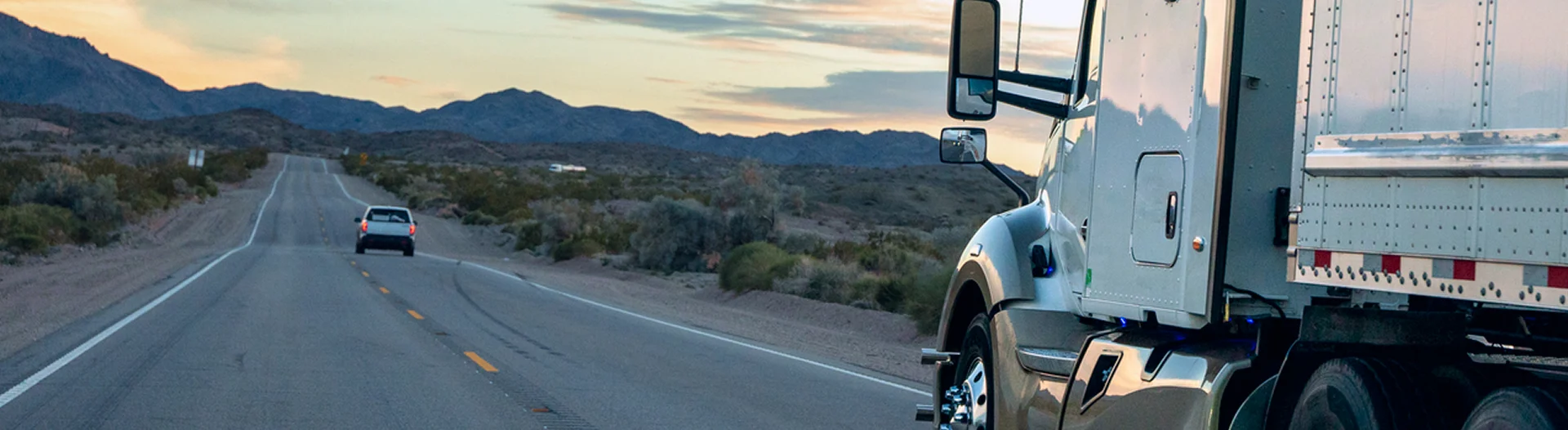
Every serious commercial truck crash triggers an immediate question that cannot be answered from physical evidence alone: was the driver impaired? The body metabolizes alcohol within hours. Drugs other than cannabis flush from detectable range within days. By the time an investigation begins in earnest, the biological evidence may be gone unless someone collected it promptly at the scene or shortly after.
Federal regulations address this gap directly. Under 49 C.F.R. Part 382, employers (not law enforcement, not investigators) bear the primary obligation to ensure that a qualifying crash produces a drug and alcohol test result for the involved Commercial Driver's License (CDL) driver. Without that obligation, the question of the driver's status at the time of the crash would likely go unanswered.
When a carrier fulfills its testing obligation, the results gathered either confirm or dispel impairment. When a carrier fails that obligation (whether through inaction, missed time windows, or a driver who becomes conveniently unavailable) the question of impairment stays open.
Post-Accident Testing Requirements
Under 49 C.F.R. § 382.303, post-accident alcohol and drug testing is triggered by three specific scenarios involving a commercial motor vehicle operating on a public road in commerce.
In scenarios involving an accident with loss of human life, testing of each surviving driver who was performing safety-sensitive functions is mandatory. There is no additional citation requirement or minimum severity threshold beyond the fatality itself. The death of any person involved in the crash triggers testing, and the driver's fault or lack of fault in causing the crash is irrelevant to the testing obligation.
The second and third scenarios involve two other categories of crash severity: bodily injury requiring immediate medical treatment away from the scene, or disabling vehicle damage requiring a tow. In both scenarios, testing is required only if the driver receives a citation within 8 hours of the occurrence, under state or local law, for a moving traffic violation.[1]
The citation requirement creates a gap that is frequently misunderstood in the immediate aftermath of a crash. A crash in which someone is transported to the hospital, but the driver does not receive a citation because law enforcement determines fault lies elsewhere, or because the officer does not issue one at the scene, will not trigger the mandatory federal testing obligation. Of the three scenarios, only the fatality scenario is not citation-dependent; the injury and tow-away scenarios both require a citation to trigger testing.
Disabling damage, though not separately defined within Part 382 itself, is understood consistently with the parallel definition FMCSA's sister transit-safety regulation uses: damage that precludes departure of a motor vehicle from the scene in its usual manner in daylight after simple repairs. Temporary repairs at the scene and tire disablement without other damage are excluded from that understanding.[2] Whether a vehicle meets the disabling-damage threshold is a factual question that carriers must assess in real time, and one that investigators can examine again after the fact.
Time Windows and Their Scientific Meaning
The time limits in 49 C.F.R. § 382.303 are not arbitrary. They reflect the pharmacology of alcohol and controlled substances and define how long test results will have evidentiary relevance.
For alcohol testing, if the required test is not administered within two hours following the accident, the employer must prepare and maintain on file a record stating the reasons the test was not promptly administered. If the test is not administered within eight hours, the employer must cease attempts to administer an alcohol test and must prepare and maintain the same kind of record.[3]
The two-hour threshold is the ideal window. Alcohol is absorbed quickly and metabolized steadily; the liver eliminates roughly one standard drink's worth per hour.[4] A test administered at three or four hours post-crash can still be meaningful, but the concentration will be lower than it was at the time of the crash. A test administered after eight hours may reflect a significantly different blood alcohol concentration than existed when the accident occurred, making it less useful as evidence of impairment at the time of the collision. The regulation acknowledges this by creating a hard cutoff: after eight hours, the test is no longer required and, by implication, no longer expected to produce reliable impairment evidence.[5]
For controlled substance testing, if the test is not administered within 32 hours following the accident, the employer must cease attempts and maintain a record explaining why.[6] The longer window for drugs reflects their longer detection periods: most controlled substances remain detectable in urine for one to several days after single use, and considerably longer after chronic use or for cannabis specifically.[7] The 32-hour window is still a practical constraint, and after that point the regulation no longer requires the employer to pursue testing.
A driver who is subject to post-accident testing must remain readily available for such testing or may be deemed by the employer to have refused; a refusal is treated the same as a positive test result under 49 C.F.R. Part 382. The prohibition on post-accident alcohol consumption is equally explicit: no driver required to take a post-accident alcohol test may use alcohol for eight hours following the accident, or until undergoing the test, whichever occurs first.[8] A driver who drinks during that window has both consumed evidence and committed a separate regulatory violation.
Law Enforcement Testing and Substitution Limits
When law enforcement responds to a qualifying crash, officers may independently administer alcohol or drug testing as part of their own investigation. That testing can substitute for the federally required test under specific conditions, but the substitution is not automatic.
The results of a breath or blood test for alcohol use, conducted by federal, state, or local law enforcement or public safety officials having independent authority for the test, are considered to meet the requirements of § 382.303, provided the tests conform to the applicable federal, state, or local alcohol testing requirements and the results are obtained by the employer. The same rule applies to urine tests for controlled substances conducted by law enforcement.[9]
Two conditions must both be met for the state or local test to satisfy the federal requirement. First, the test must have followed procedures that conform to applicable federal, state, or local alcohol testing requirements—not every field sobriety check or blood draw ordered for other purposes meets this bar. Second, the employer must obtain the results of the test. A carrier that assumes the police handled it, but never requests and receives the test documentation, cannot claim the law enforcement test as a substitute. FMCSA's own guidance takes the position that testing done by law enforcement to document a possible DUI investigation should be allowed to substitute for an FMCSA-required test, but the carrier still bears the burden of obtaining that documentation.[10]
In practice, getting official toxicology results from a law enforcement agency in the hours immediately following a crash can be difficult; reports may not be finalized for days. The safest approach for a carrier trying to comply is to conduct its own independent test and treat law enforcement results as supplementary, not as a substitute that relieves the testing obligation.
Documentation & Records
The documentation obligations under 49 C.F.R. § 382.303 apply to missed tests, delayed tests, and tests that cannot be completed. They are not optional, and they are not satisfied by silence.
Carriers must have a valid reason if tests were not conducted within the required time limits, must document any information related to why the tests were not conducted, and must submit those records to FMCSA upon request.[11] The regulation thus creates a paper trail that runs in both directions: a completed test produces a result, while a missed or delayed test produces a documented explanation.
That documentation requirement matters well beyond the regulatory audit context. In a crash where testing was required but not completed, the documented explanation becomes part of the evidentiary record. A one-line entry that simply notes "unable to locate driver" is a different document than a detailed log showing the carrier's timeline of attempts, the contacts made with law enforcement and medical personnel, the specific obstacles encountered, and the time each attempt was made and abandoned. The thoroughness—or lack of it—in that documentation tells its own story about whether the carrier genuinely pursued its testing obligation.
Records documenting why testing was not completed must be maintained on file and submitted to FMCSA upon request.[12] These records are also discoverable in civil litigation. A carrier that produces complete, contemporaneous documentation of a genuine testing obstacle is in a materially different position than one that produces a bare-bones record created after litigation begins.
Failure to Test & Litigation
The failure to conduct a required post-accident test under 49 C.F.R. § 382.303 is not simply a regulatory violation. In litigation involving a crash where impairment is a possible contributing factor, a missing test creates an evidentiary gap that the carrier cannot later fill.
The logic runs in both directions. A carrier that conducted the test and produced a negative result can point to that result as evidence that impairment was not a factor. A carrier that failed to conduct the test has no such option. The question of what the test would have shown remains permanently open, and the carrier is the one who chose to leave it unanswered, whether through inaction, carelessness, or missed windows.
In a civil lawsuit, plaintiffs' counsel will often argue that a carrier's failure to conduct a required post-accident test, or its failure to adequately document why the test could not be completed, supports an inference that the carrier was indifferent to a known safety risk. Courts do not treat this uniformly—some require independent evidence of impairment before giving a missing-test inference real weight, rather than treating the absence of a test as proof of impairment on its own. But the absence of a result, and the quality of the carrier's documentation explaining why, is a live issue that both sides typically litigate, and the regulation itself explains why the argument has force: the testing requirement exists precisely because impairment is a possibility regulators considered serious enough to require investigation. A carrier that did not investigate has not demonstrated that impairment was absent. It has demonstrated that it did not try to find out.
Where the driver's post-accident availability is also at issue—for example, where the driver fled the scene, delayed availability for testing, or consumed alcohol before testing was complete—49 C.F.R. Part 382's refusal framework treats a refusal identically to a positive test. A carrier that permitted a driver to leave without completing the testing obligation, and then treated that departure as an innocent logistical problem rather than a potential refusal, may have made a decision with significant consequences for what can be proved.
Discovery in a crash involving a potential missed test should target the carrier's post-accident testing checklist or protocol, any logs of attempts to reach the driver or testing facilities, communications between the carrier's designated employer representative and the driver in the hours after the crash, and the documentation file required under § 382.303(d). If the carrier has a documented protocol and followed it, that record will show it. If the protocol exists but was not followed, that gap is itself relevant. If no protocol existed, that absence is a standalone compliance failure.
Sources
- [1] 49 C.F.R. § 382.303(a)(2), Post-accident testing; cf. 49 C.F.R. § 655.4, Definitions (parallel transit-industry definition of "disabling damage").↩
- [2] 49 C.F.R. § 382.303(d)(1), Post-accident testing.↩
- [3] California Dept. of Alcoholic Beverage Control, Alcohol Facts; National Institute on Alcohol Abuse and Alcoholism, Alcohol Metabolism.↩
- [4] 49 C.F.R. § 382.303(d)(1), Post-accident testing.↩
- [5] 49 C.F.R. § 382.303(d)(2), Post-accident testing.↩
- [6] Verstraete, A.G., Detection Times of Drugs of Abuse in Blood, Urine, and Oral Fluid, Therapeutic Drug Monitoring, 26(2):200-205 (2004), https://pubmed.ncbi.nlm.nih.gov/15228165/.↩
- [7] 49 C.F.R. § 382.209, Prohibition on alcohol use following an accident.↩
- [8] 49 C.F.R. § 382.303(g), Post-accident testing.↩
- [9] FMCSA, Regulatory Guidance: Why Does FMCSA Allow Law Enforcement Test Results to Substitute for a Post-Accident Test?.↩
- [10] FMCSA, Safety Planner, Testing Types and Requirements.↩
- [11] 49 C.F.R. § 382.303(d)(1)-(2), Post-accident testing.↩
- [12] Cf. 49 C.F.R. § 655.4, Definitions (parallel transit-industry definition of "disabling damage").↩