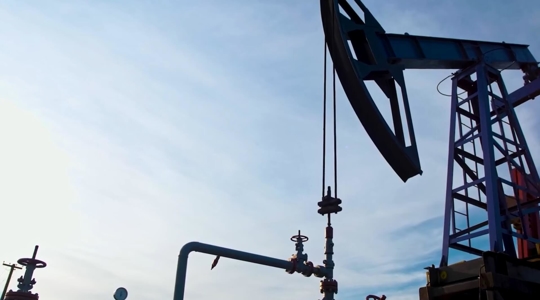
Why Permian Basin Roads Are So Dangerous
A Texas A&M Transportation Institute study for the Permian Road Safety Coalition looked at Permian Basin crashes from 2018 through 2022 and found the region averaged roughly one fatal crash every other day. Commercial vehicles hauling property accounted for almost half of the fatal crashes on rural Permian roads, twice the statewide share.
Permian Basin Roads By The Numbers
2x
The statewide rate of deadly crashes: nearly 15 of every 1,000 Permian crashes killed someone
~50%
Share of the region’s fatal crashes that happened in Midland and Ector counties
45
Road deaths in Midland County in 2025, up from 34 in 2024
Source: Texas A&M Transportation Institute for the Permian Road Safety Coalition; Permian Road Safety Coalition 2025 year-end report
Oilfield workers carry a large share of that risk. NIOSH tracked 470 oil and gas extraction worker deaths from 2014 to 2019. Vehicle incidents caused 26.8% of them, mostly on the road, and the Permian Basin accounted for more of the 470 deaths than any other basin (31.5%). When NIOSH checked Texas crash records for 2017 to 2019, it found 56 more oilfield worker crash deaths that hadn’t been counted. Half of those workers died in pickups, more than half weren’t wearing a seat belt, and more than half of the crashes happened between midnight and 9 a.m.
The Oilfield Trucks Behind These Crashes
Many oilfield trucks make short, repeated runs between a yard, a disposal well, and a lease, on rural roads that carry far more heavy traffic than they used to. The most common include:
Oilfield Trucks on Permian Roads
Water Haulers
These trucks bring fresh water in for fracking and haul flowback and produced water out. A partly full tank can shift in a turn, a common factor in tanker rollovers caused by liquid surge.
Frac Sand Trucks
Completing a single new Permian well takes dozens of sand loads, according to the Texas A&M Transportation Institute.
Crude Oil Tankers
Tankers haul oil from tank batteries to pipelines and terminals, often on two-lane highways.
Vacuum Trucks
These service wells, pits, and tanks, moving between leases throughout the day.
Hotshot Trucks
Pickups pulling flatbed trailers carry parts and equipment on short notice. Some non-CDL hotshot setups run below the weight that requires a commercial driver’s license, so the driver may have little formal training.
Company Pickups & Crew Trucks
These carry workers to and from the lease, often at the end of a long shift. In the Texas crash records NIOSH reviewed, half of the oilfield workers killed were in pickups.
Hours-of-Service Rules Work Differently in the Oilfield
Federal hours-of-service rules limit how long a commercial driver can drive and work before resting.
The oilfield has two exceptions, and both come up in crash cases.
From the Video: The Rules That Apply
“There’s a series of laws and rules that matter that are in place to protect all of us from drivers and vehicles that shouldn’t be on the road.”
- The first is a shorter restart. Most drivers need 34 hours off to reset their weekly limit. Drivers whose trucks are used only for oilfield work, including hauling water, sand, and equipment to well sites and taking waste or product away, can reset after 24 hours off.
- The second is waiting time. Trained drivers of trucks that are built to service wells, such as frac pumps, wireline trucks, and cement pumps, can log time spent waiting at a well site as off duty. FMCSA has said this exception doesn’t apply to drivers who haul sand, water, or other supplies to and from the well. When a water hauler logs hours of waiting on location as off-duty time, the carrier is using an exception that doesn’t cover that truck.
Texas has its own rules for trucks that stay inside the state. Intrastate drivers can drive 12 hours after 8 hours off and can’t drive after 15 hours on duty. Oilfield drivers in Texas intrastate work can also restart their weekly limit after 24 hours off.
After a crash, we compare the driver’s logs and electronic logging device records against GPS data, fuel purchases, and well-site records to find out how long the driver had been working. GPS and logbook discrepancies are one of the clearest ways to show a driver was over hours.
Who Can Be Held Responsible for an Oilfield Truck Crash
Oilfield trucking usually involves several companies. The truck may belong to a small hauling company working for a service company that was hired by the operator, and a broker may have arranged the load.
Depending on the facts, responsibility can fall on:
- The driver, for speeding, fatigue, distraction, or impairment.
- The trucking company, for hiring unqualified drivers, skipping maintenance, or setting illegal schedules.
- The operator or service company, if it controlled the schedule, dispatch, or route and pushed drivers past safe limits.
- A freight broker, if it arranged the load with a carrier it knew or should have known was unsafe. Our broker liability work is how we won the $604 million verdict against C.H. Robinson.
- A manufacturer or maintenance vendor, if a brake, tire, or coupling failure caused the crash.
From the Video: More Than One Party
“In some cases, in really complex cases, there can be more than one party responsible. You can have a trucking company. You can have a loading company if the vehicle was overloaded or loaded improperly.”
If you were working when the crash happened, workers’ compensation shapes the claim. When your employer carries comp, comp is generally your only remedy against your employer and your coworkers, which matters when a coworker was driving the company pickup. You can still collect comp and bring a claim against any other company whose negligence caused the crash, such as a different company’s truck. If a worker is killed and the employer’s gross negligence caused the death, the surviving spouse and children can seek exemplary damages from the employer.
Texas lets private employers opt out of workers’ comp, and some oilfield employers do. If yours is a nonsubscriber, you can sue your employer directly, and the employer can’t defend by saying you were partly at fault, that you assumed the risk, or that a coworker caused the crash. You still have to prove the employer was negligent.
Evidence That Matters After an Oilfield Truck Crash
Most of the evidence in an oilfield truck case is electronic, and much of it, like a truck’s engine control module data and dash camera footage, is overwritten or deleted on a schedule. Early in a case, we send written demands that the trucking company, the operator, and any other company involved preserve all of it, including post-accident drug and alcohol test results.
Evidence We Work to Preserve
Engine control module data
Electronic logging device records
GPS and telematics
Dash camera footage
Dispatch messages
Load tickets
Fuel purchase records
Well-site records
Maintenance and inspection records
Driver qualification file
Post-accident drug and alcohol tests
From the Video: Evidence in Trucking Cases
“We’ve got GPS tracking of trucks. We’ve got speed monitors on trucks. There’s driver-facing video cameras, so you can see the impact of the truck and how the driver was doing.”
Filing Deadlines & Fault Rules in Texas
Texas Deadlines and Fault Rules
2 years
To file an injury lawsuit, generally counted from the date of the crash
2 years
To file a wrongful death claim, counted from the date of death
50%
The most fault you can carry and still recover damages
Source: Tex. Civ. Prac. & Rem. Code §§ 16.003, 33.001
In a wrongful death case, the surviving spouse, children, and parents can bring the claim. Texas reduces your recovery by your share of fault, and trucking companies often argue the other driver caused the crash, so the evidence above matters even in cases that look clear.
Talk to Our Midland Oilfield Truck Accident Lawyers
Our Midland office is at 1030 Andrews Hwy, Suite 204, Midland, TX 79701, and meetings are by appointment. Call (888) 493-1629 for a free consultation. We handle Midland truck accident cases of every kind, Odessa truck accident cases in Ector County, and oilfield accidents on Midland-area leases. The Permian Basin crosses into New Mexico, where oilfield truck crashes in New Mexico fall under different rules, including a three-year filing deadline.