E-Bike Laws & Injury Claims
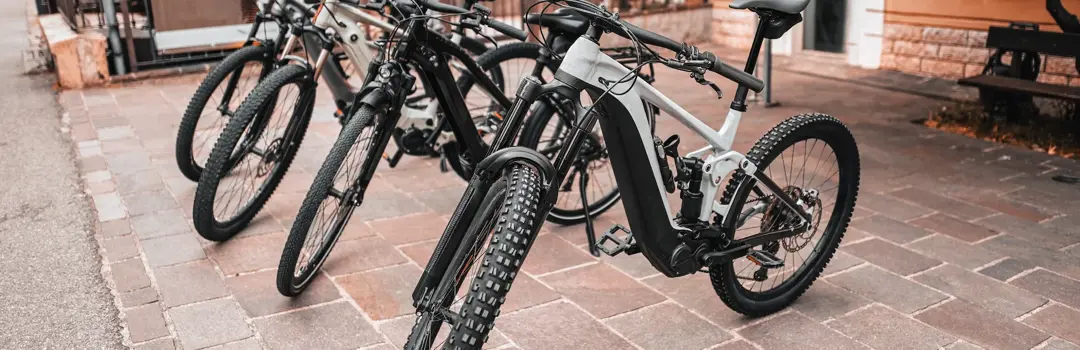
Electric bicycles have transformed American transportation over the past decade. What began as a niche product for cycling enthusiasts has exploded into mainstream travel, with hundreds of thousands of e-bikes now sold annually. They promise convenience, speed, and eco-friendliness, capable of replacing car trips, flattening hills, and cutting commute times in half.
But this rapid adoption carries a steep cost. Emergency department visits from e-bike crashes surged 30-fold between 2017 and 2022, with nearly 23,500 riders seeking hospital care in 2022 alone. E-bike-related fatalities now account for more than half of all micromobility deaths. Trauma surgeons report injury patterns resembling motorcycle crashes rather than bicycle falls. And children, particularly those aged 10 to 13, suffer the most severe consequences.
The regulatory response has been fragmented and reactive. States have scrambled to implement new laws, school districts have banned certain e-bike classes from campuses, and cities have imposed speed limits and certification requirements. Yet the technology evolves faster than the rules governing it, leaving riders, pedestrians, and policymakers struggling to keep pace. For anyone involved in an e-bike accident—whether as a rider, pedestrian, or parent of an injured child—the legal landscape is equally complex. Insurance coverage is uncertain, liability rules vary by jurisdiction, and the line between a legal e-bike and an illegal electric motorcycle is often invisible.
How E-Bikes Work: A Quick Primer
Electric bicycles are bicycles equipped with an electric motor that assists the rider’s pedaling effort. Unlike motorcycles or scooters, e-bikes don’t replace pedaling—they amplify it. When you press down on the pedals, the motor kicks in to multiply your effort, making hills feel flatter and long distances shorter.
The motor typically sits inside the wheel hub or at the bike’s pedal crank (called a mid-drive motor). Hub motors are simpler and more affordable; mid-drive motors offer better performance on hills by leveraging the bike’s gears. Most e-bikes sold in the U.S. feature motors rated at 750 watts or less, though peak output during acceleration can exceed 1,500 watts.
E-bikes fall into three classes that determine their speed capabilities and where they can legally be ridden:
- Class 1 e-bikes provide pedal-assist only, meaning the motor works only when you’re pedaling, and cut off assistance at 20 mph. These bikes enjoy the broadest access, allowed on most bike paths, trails, and roads.
- Class 2 e-bikes add a throttle that can propel the bike up to 20 mph without any pedaling. The throttle feature makes them convenient for stop-and-go commuting, but some trail systems restrict them.
- Class 3 e-bikes provide pedal-assist up to 28 mph, making them genuine alternatives to car commutes. However, they face tighter restrictions: most states require riders to be at least 16 years old, mandate helmet use, and prohibit them from multi-use paths.
These classifications shape both the riding experience and legal access. A Class 1 bike delivers a gentle tailwind effect; a Class 3 bike can keep pace with urban traffic. But with these higher speeds and heavier weights come significantly greater risks.
Common E-Bike Injuries: What the Data Shows
E-bike accidents don’t just happen more frequently than traditional bicycle crashes; they result in significantly more severe injuries. The combination of higher speeds, heavier bikes, and increased motor vehicle involvement creates injury patterns that trauma surgeons say more closely resemble motorcycle accidents than bike crashes.
Head injuries represent the most alarming category. Between 2017 and 2022, head trauma from e-bike accidents increased 49-fold nationally, with nearly 8,000 riders seeking hospital care for head injuries in 2022 alone. Traumatic brain injuries occur at substantially higher rates in e-bike crashes compared to conventional bicycles, particularly when riders aren’t wearing helmets—and helmet use among injured e-bike riders has actually declined even as accidents have surged.
Orthopedic injuries have also become more severe. Pediatric orthopedic surgeons report treating 13-year-olds with shattered kneecaps that previously required implants reserved for adults in motor vehicle collisions. Broken bones, fractured limbs, and joint injuries requiring surgical intervention appear in 44% of serious e-bike trauma cases.
The hospitalization rate tells the severity story clearly: 11.5% of e-bike crash victims require hospital admission, compared to just 4.8% for conventional bicycle accidents. One in eight e-bike trauma patients at MarinHealth Medical Center died from their injuries—a death rate 37 times higher than traditional bicycle crashes.
Motor vehicle involvement compounds the danger. Cars, trucks, or other vehicles involve 35.4% of all e-bike incidents, the highest rate among all micromobility devices. When an e-bike traveling at 28 mph collides with a vehicle or fixed object, the forces can cause catastrophic spinal cord injuries, internal bleeding, and multiple-system trauma.
Children face particularly severe risks. The 10-to-13 age group comprises 44% of pediatric e-bike injuries, with 97.3% of injured child riders not wearing helmets at the time of the crash.
The Regulatory Patchwork: How E-Bike Laws (Don’t) Work
E-bike regulation in the United States is a study in fragmentation. There is no single, unified legal framework governing where e-bikes can be ridden, who can ride them, or what safety equipment they require. Instead, riders navigate a complex patchwork of federal manufacturing standards, state operational laws, and local access rules that often contradict one another.
At the federal level, the Consumer Product Safety Commission defines a “low-speed electric bicycle” as a two- or three-wheeled vehicle with operable pedals, a motor under 750 watts, and a motor-only top speed below 20 mph. But this definition governs only manufacturing safety standards. It says nothing about who can ride these bikes or where they can go.
Operational rules come from states, and approximately 39 states plus Washington D.C. have adopted the three-class system distinguishing Class 1, Class 2, and Class 3 e-bikes. This system, originally championed by PeopleForBikes and first enacted in California in 2015, creates a tiered approach: Class 1 bikes enjoy broad access to bike infrastructure, Class 2 bikes face moderate restrictions, and Class 3 bikes are confined primarily to roads and must meet stricter age and helmet requirements.
But not all states follow this model. Alaska classifies e-bikes as “motor-driven cycles” requiring a driver’s license. Massachusetts requires both a license and registration. New Jersey recently abandoned the three-class system entirely, reclassifying all e-bikes as “motorized bicycles” that require driver’s licenses, registration, and in some cases insurance, making it the most restrictive e-bike law in the nation.
The Enforcement Challenge
These regulatory inconsistencies create profound enforcement challenges. Law enforcement officers cannot easily distinguish a legal Class 3 e-bike from an illegal “e-moto,” a high-powered electric vehicle with a 2,000-watt or 3,000-watt motor capable of reaching 40 to 65 mph. Both look like bicycles at a glance, but one is street-legal transportation and the other is an unregistered motorcycle.
The problem intensifies because many overpowered e-bikes are marketed and sold as if they were legal. Aftermarket “tuning” devices costing as little as $50 can defeat speed limiters, allowing a Class 1 or Class 3 bike to far exceed its legal maximum. California’s AB 1774 now criminalizes selling these modification kits, but enforcement remains challenging when the devices are widely available online.
Unlike mopeds, which require license plates and registration, e-bikes lack vehicle identification numbers or any system for tracing ownership. When an e-bike is involved in a hit-and-run, there is often no practical way to locate the rider or the vehicle.
The Age & Access Dilemma
Perhaps the most contentious regulatory challenge involves age restrictions and access to bike infrastructure. A 12-year-old cannot legally drive a 50cc moped, which tops out at 25 mph and requires a license in most states. But in many jurisdictions, that same 12-year-old can legally ride a Class 2 e-bike capable of 20 mph—on sidewalks, bike paths, and multi-use trails shared with pedestrians.
School districts have responded with their own restrictions. Rocklin Unified in California banned Class 2 e-bikes from elementary and middle school campuses after documenting a surge in crashes. Bend-La Pine Schools in Oregon prohibited students under 16 from riding e-bikes to school altogether.
The result is a transportation category that has outgrown its original regulatory assumptions. When the three-class system was designed in 2015, e-bikes were niche products used primarily by cycling enthusiasts. Today, they are mainstream transportation, with hundreds of thousands sold annually, and the legal framework has not kept pace.
Legal Options After an E-Bike Accident
E-bike accidents create complex legal scenarios that differ significantly from traditional bicycle or motor vehicle crashes. Whether an e-bike rider struck you or your child was injured while riding one, understanding your legal options requires navigating an evolving area of personal injury law.
If an E-Bike Rider Struck You
Pedestrians, cyclists, and motorists struck by e-bike riders may have grounds for a personal injury claim, but recovering compensation can be complicated by the fact that e-bikes occupy a regulatory gray area between bicycles and motor vehicles.
Negligence claims form the foundation of most e-bike injury cases. To prevail, you must demonstrate that the e-bike rider owed you a duty of care, breached that duty through careless or reckless riding, and directly caused your injuries. Evidence might include the rider’s speed at impact, whether they violated traffic laws, whether they used a throttle in a pedal-assist-only zone, or whether they failed to yield right-of-way.
The challenge lies in identifying who will pay. Unlike motorists, e-bike riders are not required to carry liability insurance in most states. Many riders assume their homeowners' or renters' insurance will cover them, but these policies typically exclude motorized vehicles, and whether an e-bike qualifies as “motorized” often depends on its classification and the specific policy language.
If the rider is uninsured or underinsured, you may need to turn to your own insurance coverage. Uninsured motorist coverage sometimes extends to e-bike collisions, particularly if the e-bike meets your state’s definition of a motor vehicle. However, insurance companies frequently dispute these claims, arguing that e-bikes are bicycles, not motor vehicles, and therefore fall outside UM coverage.
If Your Child Was Injured Riding an E-Bike
Parents whose children suffer serious injuries while riding e-bikes face a different set of legal considerations. These cases often involve multiple potential defendants:
- Claims against retailers or manufacturers may be appropriate if someone sold the e-bike to a minor in violation of age restrictions, if it was marketed deceptively (such as an overpowered “e-moto” sold as a legal e-bike), or if it contained defects that caused the crash. California’s new laws explicitly prohibit selling Class 2 e-bikes to anyone under 16, and violations could support negligence claims if the illegal sale directly led to injury.
- Product liability claims are especially strong when battery fires cause injuries. The surge in lithium-ion battery fires has led to new certification requirements in California and New York, but many e-bikes still in circulation—particularly those purchased online from overseas manufacturers—lack proper safety certifications.
- Third-party liability comes into play when another party’s negligence contributed to the crash. If a motor vehicle struck your child while riding legally, the driver may be liable. If the accident occurred due to a dangerous road condition—such as a poorly maintained bike lane, inadequate signage, or a hazardous intersection design—the municipality responsible for road maintenance might bear responsibility.
- School district liability is more limited but not impossible. If a school negligently supervised students during an e-bike safety program, or if school officials knew students rode illegally modified e-bikes on campus and failed to intervene, liability could attach. However, governmental immunity often protects public schools from such claims unless you can show gross negligence.
The Insurance Gap
Perhaps the most significant challenge in e-bike injury cases is the widespread lack of insurance coverage. Most e-bike riders, especially minors, have no liability insurance specific to their bikes. This means that even if you win a lawsuit, collecting damages may be difficult or impossible if the at-fault rider lacks personal assets.
Some homeowners and renters policies do cover e-bike liability, but only if the bike qualifies as a bicycle under the policy’s definition, which is typically limited to Class 1 bikes or bikes under a certain wattage. Higher-powered Class 2 and Class 3 bikes are frequently excluded.
Why Legal Representation Matters
E-bike injury cases require lawyers who understand both the technical distinctions between e-bike classes and the rapidly evolving state and local regulations that govern them. An experienced personal injury attorney can investigate whether the e-bike involved was legally compliant, whether someone tampered with speed limiters, whether batteries met safety certifications, and whether insurance coverage exists in unexpected places.
If you or your child has been seriously injured in an e-bike accident, documentation is critical. Preserve the e-bike itself if possible, as it may contain evidence of modifications or defects. Photograph the accident scene, gather witness statements, and seek immediate medical attention even if injuries seem minor. E-bike crashes can cause traumatic brain injuries and spinal cord damage that don’t manifest symptoms until hours or days later.
The legal landscape around e-bikes is changing rapidly, with new laws taking effect across the country. What was legal last year may be prohibited today, and the responsibilities of riders, manufacturers, and municipalities continue to evolve. Getting legal guidance early ensures your rights are protected while evidence is still fresh.
If you have further questions about e-bike injury claims, reach out to us for a free consultation: (888) 493-1629">(888) 493-1629.