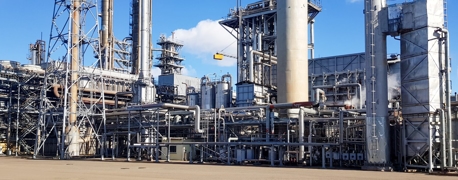
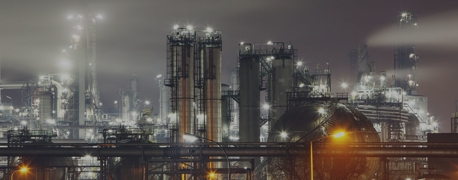
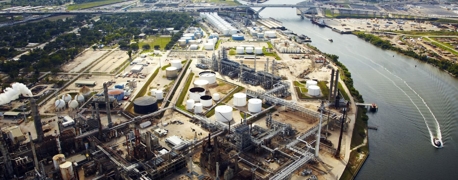
The ExxonMobil Baytown Complex: Over 100 Years on the Houston Ship Channel
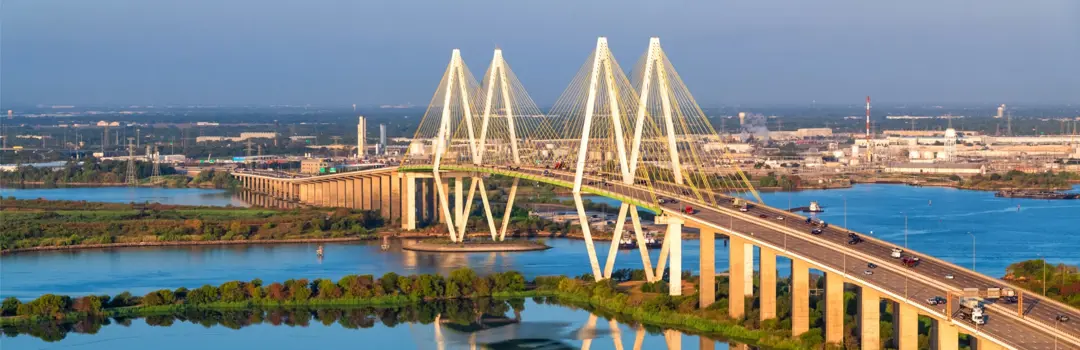
Located about 25 miles east of Houston, Texas, the ExxonMobil Baytown Complex sits on 3,400 acres along the Houston Ship Channel. It is one of the largest integrated refining and petrochemical operations in the world. The refinery processes up to 584,000 barrels of crude oil per day. The adjacent olefins plant is one of the largest ethylene facilities on the planet, producing approximately 10 billion pounds of petrochemical products per year. Combined, the complex manufactures fuel, plastics, synthetic rubber, lubricants, and specialty chemicals that reach virtually every corner of the consumer economy.
The facility has been in continuous operation for more than a century. What began as a modest refinery built by a group of Texas oilmen in 1920 has grown through two world wars, corporate mergers, and decades of expansion into a sprawling industrial campus that employs thousands of workers around the clock.
The Baytown Complex at a Glance
- Location: 3,400 acres along the Houston Ship Channel in Baytown, Texas
- Established: 1920 (refinery); 1940 (chemical plant); 1979 (olefins plant)
- Owner: ExxonMobil Corporation (originally Humble Oil & Refining Company)
- Refining Capacity: Up to 584,000 barrels of crude oil per day
- Petrochemical Output: About 10 billion pounds per year from the olefins plant alone
- Ethylene Production: 3.6 million metric tons per year
- Workforce: Approximately 2,067 ExxonMobil employees and 1,987 contractors
- Products: Gasoline, diesel, jet fuel, lubricating base oils, waxes, asphalt, polypropylene, paraxylene, butyl rubber, synthetic lubricant base stocks, and performance polymers
How Baytown Became Baytown
The story of Baytown begins with the Goose Creek oil field, a prolific deposit discovered along Galveston Bay in 1903. By 1908, drillers had struck oil at 1,600 feet, and by 1916, the American Petroleum Company brought in a well gushing 8,000 barrels per day. The rush was on.
Ross S. Sterling, president of the Humble Oil Company, saw the opportunity. In 1917, he reorganized the firm as Humble Oil & Refining Company, merging several smaller operations under a single state charter. To finance the construction of a new refinery, Humble sold 50% of its stock to Standard Oil of New Jersey. Construction began in the fall of 1919, and the first oil was pumped into a still on May 11, 1920. They called their site Baytown.
The location was chosen for three strategic reasons:
- Direct access to the Houston Ship Channel's shipping lanes.
- Proximity to the Goose Creek oil field (which peaked at nearly 9 million barrels in 1918).
- Railroad connections via the Dayton-Goose Creek Railway.
A community grew around the Baytown refinery. At first it was little more than tents, barracks, and small shacks, but in 1923, Humble began laying out streets, selling lots, and providing utilities. The company offered low-interest financing for workers' homes and built a large recreational building for the growing settlement. Over the following decades, the refinery's expansion and the wartime industrial boom drew thousands more workers to the area, and three neighboring communities that had grown up alongside one another, Goose Creek, Pelly, and Old Baytown, formally consolidated into the city of Baytown on January 24, 1948.
A chemical plant joined the refinery in 1940, and both facilities expanded dramatically during World War II. The Baytown complex's wartime contributions were extraordinary. On December 14, 1944, the refinery produced its billionth gallon of 100-octane aviation gasoline, outproducing every other refinery in the world. The War Production Board sent the American flag that had flown over the U.S. Capitol the day before as a gift to the plant.
The refinery's role in the war effort extended well beyond aviation fuel. The $12 million Baytown Ordnance Works, government-owned but Humble-operated, produced 239 million gallons of toluene, the essential ingredient in TNT. That output represented nearly half the entire U.S. supply. Humble president H.C. Wiess told assembled workers that at least one of every two bombs used by the Allies since Pearl Harbor had contained toluene from Baytown. The facility also produced butadiene for synthetic rubber after Japan seized 90% of the world's natural rubber supply.
By 1944, Baytown was designated the largest refinery in the United States.
As the decades passed, the Baytown complex continued to grow. An olefins plant began operations in 1979, making Baytown one of the largest ethylene production sites in the country. Meanwhile, Standard Oil of New Jersey gradually increased its Humble stake until reaching full ownership. The need for a unified national brand identity led to the creation of the Exxon name in 1972, and the 1999 merger of Exxon and Mobil created today's ExxonMobil Corporation.
An “Integrated Refinery & Chemical Plant”
“Integrated refinery and chemical plant” describes more than physical proximity. At Baytown, the refinery, chemical plant, and olefins plant operate as an interconnected system, with outputs from one process feeding directly into another.
The refinery processes crude oil and, in doing so, produces hydrocarbon byproducts like naphtha that are less valuable as fuels. Rather than selling those byproducts at a lower margin, they are routed directly to the chemical plant as feedstock.
The olefins plant cracks (breaks down) ethane and liquefied petroleum gas into ethylene and propylene, which flow to on-site production units that turn them into plastics and other materials. Other units recover aromatics like benzene and paraxylene from refinery streams, while the synthetics section produces the base stocks used in Mobil 1 motor oil.
This integration is supported by shared infrastructure: pipelines, steam systems, hydrogen networks, and on-site gas turbine power plants. The result is a system designed to extract maximum value from every barrel of crude, reducing transportation costs and eliminating the inefficiencies that standalone refineries and chemical plants face when they operate independently.
A Nelson Complexity Index of 13.7 reflects how sophisticated the refinery side of this system is. That score indicates extensive secondary conversion units, including fluid catalytic crackers, hydrocrackers, and cokers, that allow Baytown to process heavy, high-sulfur crudes that simpler refineries cannot handle. On the chemical side, three world-scale ethylene steam crackers produce 3.6 million metric tons of ethylene per year, along with propylene and butadiene.
The sheer volume of material moving through the ExxonMobil complex in Baytown is what makes integration at this scale so significant.
What the Baytown Complex Produces
The products that come out of the ExxonMobil Baytown Complex touch nearly every part of daily life.
On the refining side, crude oil is converted into gasoline, ultra-low-sulfur diesel, jet fuel, lubricating base oils, waxes, petroleum coke, and asphalt. These fuels supply Texas and most East Coast states via pipeline, with waterborne shipments reaching Latin America and Europe.
According to the 2024 facility fact sheet, 74% of refinery products move by pipeline, 24% by water, and the remainder by rail and truck. Baytown is also one of the world's largest producers of lubricant base stocks, including the synthetic base stock that goes into Mobil 1 motor oil.
On the chemical side:
- Polypropylene is used in battery cases, automotive interior trim, carpet fiber, medical supplies, and food packaging.
- Butyl rubber and bromobutyl go into tire inner liners, pharmaceutical stoppers, and adhesives.
- Paraxylene is a building block for polyester fabric and PET plastic bottles.
Chemical products follow their own distribution pattern: 37% waterborne, 29% pipeline, 25% rail, and 8% truck, reflecting the global export market for polyethylene and specialty chemicals through the Port of Houston.
The People Who Keep It Running
The workforce at the ExxonMobil Complex in Baytown fluctuates depending on construction activity. Figures from 2024 show approximately 2,067 ExxonMobil Corporation employees and an average of 1,987 contractors, with the total workforce reaching as high as 7,000 or more during major construction projects. Work ranges across a wide array of construction, engineering, management, and administrative duties, including technicians, operators, pipefitters, welders, machinists, electricians, safety specialists, and more.
Three unions represent portions of the workforce at Baytown. United Steelworkers Local 13-2001 is the largest, with approximately 500 members covering mechanical, lab, operations, and instrument employees. Machinists are represented by the International Association of Machinists and Aerospace Workers, Lodge 1051, and electricians are represented by the International Brotherhood of Electrical Workers, Local 527.
Across its broader Baytown-area operations, which include nearby affiliated facilities like ExxonMobil Chemical in Mont Belvieu, the company estimates a regional economic contribution of more than $7 billion per year, supporting nearly 15,000 direct and indirect jobs and more than $100 million in total annual taxes.
Safety & Incidents
The ExxonMobil Baytown Complex has a safety record that includes notable achievements. The chemical plant and refinery have been recognized by the American Fuel and Petrochemical Manufacturers (AFPM) and other organizations, with recent safety awards that include the Sam Mannan Award for Zero Process Safety Incidents, Zero Incidents (Employees and Contractors), Caring for Texas Award, Elite Silver Safety Award, Distinguished Safety Award, and Distinguished Service Award.
At the same time, significant incidents in recent years have caused worker injuries, property damage, and community disruptions.
July 31, 2019 – A buildup of popcorn polymer (an industrial byproduct) created excessive pressure in a line at the olefins plant, rupturing it and producing a fireball approximately 900 feet tall. 66 workers sought medical evaluation, and 37 were treated for non-life-threatening injuries. A shelter-in-place order affected thousands of nearby residents.
December 23, 2021 – A pipe ruptured in the refinery’s hydrodesulfurization unit, causing an explosion and fire. Four workers were injured, three of whom were airlifted to the hospital.
March 17, 2024 – A fire at a fired heater caused $32 million in property damage when debris left inside tubes after a maintenance turnaround restricted flow, causing temperatures to exceed 1,200°F.
What’s Next for the ExxonMobil Baytown Complex?
ExxonMobil had planned to build a massive facility at Baytown that would produce hydrogen from natural gas while capturing the carbon dioxide generated in the process and storing it underground, rather than releasing it into the atmosphere. The project, which attracted significant outside investment and more than $330 million in federal funding, was paused in November 2025.
Other investments continue to move forward. An advanced recycling facility using ExxonMobil's proprietary Exxtend technology started operating in December 2022 and has processed over 100 million pounds of plastic waste, breaking it down into raw materials that can be used to make new products. In January 2025, ExxonMobil successfully tested furnace burners running on 98% hydrogen fuel at one of its steam cracking units at Baytown, demonstrating a 90% reduction in direct CO2 emissions from that unit. And a Refinery Reconfiguration Project, groundbreaking in 2026, will expand the refinery’s ability to produce high-performance lubricant base stocks.
A Century of Scale
The ExxonMobil Baytown Complex has been converting crude oil into products the modern economy depends on for more than 100 years. From the first oil pumped into a still in 1920 to the billions of pounds of petrochemicals flowing through the system today, the facility's history is inseparable from the story of American industrialization.
The facility’s future, like its past, will depend on industrial demand, environmental accountability and safety, and the people who show up every day to keep it running.
- Categories