Indoor UV Radiation Hazards That No One Warned You About
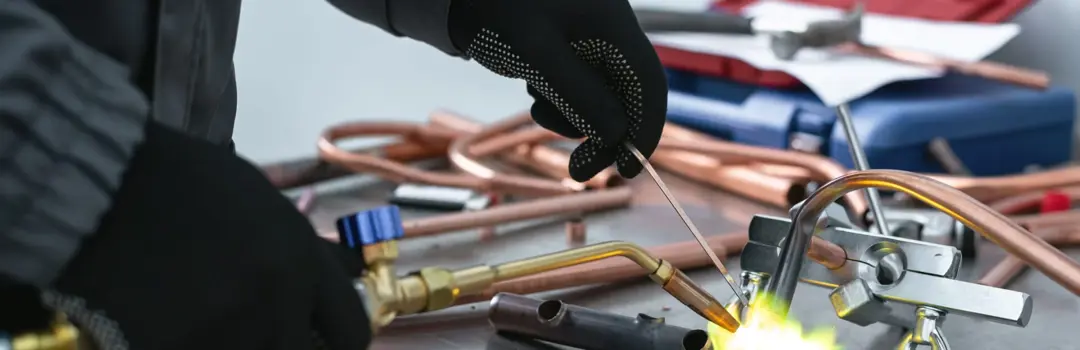
The welder across the floor is properly equipped: face helmet, heat-resistant gloves, durable jacket that protects from UV radiation. But there is no enclosure around that work area, and the coworker just a station over, who is focused on an entirely different task, has no reason to think that they are in range of anything dangerous. That coworker goes home later with burning eyes and reddened skin on their face and neck. The sensation is like a sunburn, yet they were never outside.
What the coworker was exposed to was invisible, symptom-free in the moment, and never explained to them. Their employer had built a workspace where UV radiation from an industrial arc could reach anyone near that station, even passersby, and yet that employer never installed the shielding or barriers that could have prevented such exposure.
Indoor ultraviolet radiation is a well-documented occupational hazard that injures workers during routine shifts. It comes from welding arcs, UV-curing lamps, germicidal equipment, industrial lasers, and other sources that operate in workplaces every day. Whether workers are protected from it depends almost entirely on decisions that their employers make about equipment, workspace design, and worker training.
Where Indoor UV Radiation Comes From
Industrial equipment produces UV radiation as a byproduct of normal operation, often at intensities that far exceed outdoor ambient exposure at close range, and without the signals that would ordinarily prompt a person to take precautions. There is no heat on the skin, sometimes no visible glow from the source, nothing that registers as a warning.
Some of the primary sources of indoor UV radiation in American workplaces include:
- Welding arcs, which produce UV-A, UV-B, and UV-C radiation simultaneously
- UV-curing lamps used in printing, coatings, adhesives, plastics, and electronics manufacturing
- Germicidal UV lamps in healthcare, water treatment, and food processing
- High-intensity discharge lamps in manufacturing and inspection
- Industrial lasers in automotive, aerospace, electronics, medical device, and jewelry manufacturing
As a more detailed example, laser systems carry UV hazards that can be frequently underestimated outside of the industries that use them. Lasers emit UV radiation from laser discharge tubes, pumping lamps, and laser-welding plasmas. The workers who are exposed are not only laser technicians and engineers but also electricians, operators, and anyone who is near laser processing equipment during normal facility operations. What all of these sources share, along with welding arcs, curing lamps, and other sources of indoor UV rays, is the same fundamental problem: both the worker using or operating on such equipment as well as workers standing nearby can be exposed to doses of UV radiation that they are entirely unaware of.
The distinction between indoor and outdoor UV exposure is not simply one of location. The earth’s atmosphere can absorb virtually all UV-C radiation and a substantial portion of UV-B before it reaches ground level. Most of the solar UV hazard people will encounter comes primarily from UV-A exposure. Industrial equipment operates without that filtration. Welding arcs, germicidal lamps, and certain laser systems can produce all three UV types at close range, exposing workers to wavelengths and intensities that have no parallel in ordinary sun exposure. Damage that would take hours outdoors can accumulate in seconds.
What Indoor UV Radiation Does to the Body
One of the most common occupational UV eye injuries is photokeratitis, also known as arc eye or welder’s flash. This happens when UV radiation damages the outer layer of the cornea in a process that is closely analogous to sunburn. Symptoms typically emerge 6 to 12 hours after exposure: severe eye pain, sensitivity to light, excessive tearing, and a persistent sensation of grit in the eyes. A worker who is exposed at noon may feel nothing until the middle of the night. Photokeratitis generally resolves within 24 to 48 hours, but the damage accumulates with repeated exposures. Chronic occupational UV exposure significantly increases cataract risk, and unlike skin, the eyes develop no protective tolerance to UV radiation over time.
Skin follows the same delayed-symptom pattern. UV-induced erythema can develop on exposed areas of the face, neck, and forearms without any sensation during the exposure itself. Over time, repeated exposure to industrial UV sources is associated with actinic keratitis as well as elevated rates of basal cell carcinoma and melanoma.
Some of the most common types of indoor UV radiation injuries include:
- Erythema (sunburn): a rash that can be painful, itchy, and blister
- Cataracts: clouded or dimmed vision, may require a routine surgery to fix
- Total blindness: direct exposure to laser beams or reflection beams can cause this
- Actinic keratitis: a precancerous skin issue, exhibits as rough, scaly spots
- Basal cell carcinoma: The most common type of skin cancer
- Melanoma: usually skin cancer, but it can also be eye cancer
While the skin and eyes are the most at risk from dangerous UV radiation, many indoor sources of UV radiation also carry a host of electrical shock and other related electrical injury risks. They also carry burn injury risks from the fire hazards that come from working with lasers, welding torches, etc. Because of this, and the delay in UV radiation symptoms that can disconnect the symptom from its cause, many UV radiation injuries can go underreported or misattributed.
NIOSH has established criteria for a recommended standard on occupational UV exposure that identifies artificial UV sources in workplaces as a category that requires active engineering controls, not merely personal protective equipment (PPE). The biological basis is direct: the eyes and skin can sustain serious, permanent damage from UV sources that the body has no way of detecting in real time.
Who Is Actually in the UV Exposure Zone
Many workers in industrial settings are using or working close to UV-curing lamps, high-powered lamps for inspections. Anyone who works in food processing, water treatment, or manufacturing could face indoor UV radiation. Manufacturing can cover everything from automotive, HVAC, and furniture industries to medical, aerospace, jewelry, and electronics. Electricians and engineers may also have to work regularly with potential sources of artificial UV radiation.
Healthcare workers face UV risks from germicidal irradiation systems that are structurally similar to those in industrial settings. In operating rooms and procedure suites, where UV-C sterilization equipment is in use, the Anesthesia Patient Safety Foundation has documented that standard surgical attire does not uniformly protect personnel from UV-C energy. Some gowns, headwear, and masks provide adequate shielding; others do not. The gap depends on what equipment is in the room and what each person happens to be wearing.
Laboratory workers who use UV transilluminators or spectroscopy equipment face documented exposure risks. These incidents show how PPE and process standards were not sufficient to protect workers.
UV Radiation Injuries in Laboratory Settings
Among welding, soldering, and brazing workers, the Bureau of Labor Statistics (BLS) recorded 550 eyes injuries in 2020, which represented 7.9% of all nonfatal injuries in that occupational group. Because this data captures reported injuries only, and not the direct cause either, it’s difficult to say exactly how many of these injuries were due to occupational UV radiation. But keratitis and other optical injuries are some of the most common injuries suffered by welders, per OSHA, and at such an elevated risk of eye injury, including UV radiation, it’s recommended that welders be equipped with adequate PPE.
Welders are not the only ones exposed to UV radiation from their work, however. Welding arcs travels outward and reflects off metal surfaces, floors, walls, and nearby machinery, reaching other workers who are simply present in the vicinity. Workers adjacent to welding areas need to be protected from arc rays by noncombustible screens, shields, or enclosures; just looking away isn’t enough.
Similarly, if a curing lamp, laser system, or some other UV equipment is on, the people who work directly with these systems and the people working in proximity to them need to be made fully aware of the risks and how to protect themselves. Many of the workers who are exposed to indoor UV radiation are not the ones who are working with those sources of artificial UV rays. They are the coworkers and passersby.
How Workspace Design Determines Who Gets Hurt
When production volumes increase, when companies want more welding torches running, workers take longer shifts, or more equipment is being used on footpaths within range of UV radiation, it is up to employers to make sure that shielding and PPE measures keep up. If, however, because of production or cost-cutting pressure, workers are expected to cut corners and work without enclosures and proper, inspected PPE, then employers have failed their duty to create hazard-free workspaces.
A major difference between a workplace that protects workers from UV radiation and one that does not comes down to engineering controls. That means physical features built into the space, not equipment handed to individual workers. Physical shielding is the most effective intervention possible. That includes UV-absorbing curtains, enclosures, and noncombustible screens help to contain arc radiation and laser emissions, preventing them from reaching anyone beyond the immediate operator.
Warning signs should also be in place to make sure that no one walks through areas where lasers, UV lamps, welding torches, or other such equipment without proper credentials or PPE.
While engineering controls are critical, that does not get rid of the need for PPE that covers all potentially exposed skin, gloves that weaken UV radiation, face shields, protective eyewear, and also UV-deflecting gear that remains scratch-free and well-maintained, with no vulnerable spots.
Other administrative solutions would allow workers to be as distanced from UV radiation as possible, using remote controls when practical, and keeping sources on low power as much as possible. Reducing the time spent working with or near such equipment is also key to keeping employees safe. Lockout/tagout procedures are always vital to protect workers who perform maintenance and repairs o equipment that emits UV rays, and only qualified personnel should be working with or on sources of UV radiation.
Workers are owed specific training for all the hazards they can face in the workplace, including artificial UV radiation, how to use engineering and administrative controls, and standard safe operating procedures. It’s also recommended that employers provide workers with chronic exposure with routine medical exams, monitoring any developing signs of skin or eye disorders, and ensuring that they also remain healthy enough to work with sources of UV radiation.
It is important to note, that this is mainly a compilation of recommendations from OSHA as well as non-government entities.
There are no OSHA standards specific to artificial ultraviolet radiation.
Even so, many agencies have laid out guidelines for keeping workers safe in indoor environments where UV radiation takes place. This means that there are clear standards for employers to implement to keep workers safe, but it does not mean there are ways for these specific standards to be enforced.
The question is almost never whether workers had shielding and PPE available to them. It is whether all exposed workers were made aware of their need for such safeguards and whether their employer provided proper barriers, enclosures, and other protection.
What Employers Are Required to Provide
There is no single OSHA standard to establish UV exposure limits and safeguards across all industrial settings, but this does not mean that employers are operating without clear legal obligations.
OSHA does have standards for welding, cutting, and brazing, such as the use of noncombustible screens to protect coworkers. There are general eye and face protection measures for welding and cutting jobs, as well as PPE that protects construction employees from molten metal, “injurious light radiation”, and other welding hazards.
OSHA does also have safety programs and control measures specific to laser systems in the workplace, including limited access to laser beams through various engineering controls and warning signs.
For all other types of indoor UV radiation, there is the General Duty clause, where OSHA mandated that employers protect their workers from known hazards that could cause serious injury or death on the job.
For UV sources beyond welding, there are some guidelines and threshold limits from NIOSH and non-government entities, such as the American National Standard Institute and the American Conference of Governmental Industrial Hygienists (ACGIH). These do not carry OSHA’s enforcement authority, but their existence establishes industry benchmarks for safe exposure levels and protective measures for these. These are well-documented guidelines that are available to any employer. An employer who places UV curing equipment in a shared workspace without barriers, who doesn’t ensure that all workers are aware of safe procedures for working with industrial lasers, or who operates a germicidal system without informing workers of the exposure risk and providing safeguards, is not acting in a void of guidance.
While agencies with enforcement power should step up their regulations and demand more of corporations, it is employers who ultimately must take worker safety seriously.
The Conditions for Indoor UV Radiation Were Already Set
The worker who goes home from a routine shift with burning eyes and reddened skin did not experience an unlikely event. The worker who now has worsening vision or a precancerous skin disorder is dealing with something that their employer could have predicted would happen due to repeated UV exposure. Whether it was from acute or chronic UV radiation, workers like these were in an environment that was set up to trigger their conditions: little to no shielding, no warnings, and no explanations of the full risk presented by the equipment around them. It is almost never a freak accident.
Indoor UV radiation is invisible, but it is not unknown. Its biological effects are documented. Its industrial sources are catalogued. The controls that prevent these injuries are codified in federal standards and industry guidelines. When workers are hurt by indoor UV radiation, those injuries trace back to decisions about how the workplace was built and how it has been maintained ever since. The hazard was foreseeable. So was the harm. When that harm occurs, it is often because employers decided that protection was someone else’s problem.
Arnold & Itkin is a trial firm that represents workers across the manufacturing, healthcare, and industrial sectors after injuries caused by unsafe working conditions, inadequate safety equipment, and employer negligence. The firm’s personal injury lawyers in Houston handle cases involving occupational exposure, burn injuries, and other harm that results from employers failing to follow established safety standards. With offices in Texas, Louisiana, and New Mexico, Arnold & Itkin has recovered billions for injured workers and their families and takes on cases nationwide.