Industrial Roofs Are Quietly Falling Apart & Workers Are Paying the Price
In October 1987, a 24-year-old plumber was installing fixtures on the roof of a new building when he stepped into a 4- by 4-foot skylight opening and fell 22 feet to a concrete floor. He died on impact. The openings on the roof were framed with lumber, but none of them were covered. There were no guardrails, no fall protection of any kind, and no one had warned him the openings were there.
In 2025, nearly 40 years later, a 34-year-old subcontractor fell through a skylight on the roof of a snack food factory in Hanover, Pennsylvania, and was pronounced dead. OSHA investigated, ultimately ruling the incident an accident and closed the case with no citations against the facility owner.
In the decades between these two deaths, little has changed when it comes to the safety of workers being sent onto roofs to perform routine tasks. Every day, workers are required to access aging industrial roofs and step onto surfaces that were never safe to walk on in the first place. We see the same patterns over and over: a deteriorated surface, an unmarked weak spot, an unguarded skylight—and no fall protection, no safety training, no safeguards for those who needed them most.
A Closer Look at Industrial Roof Accidents
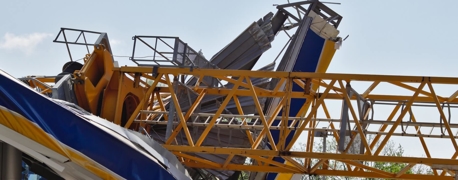
When most people hear about a fall from a roof, they picture a construction worker or roofer losing their footing, slipping, and falling off a pitched roof. But the reality inside industrial facilities is much different. Workers don’t fall off roofs; they fall through roofs. The surface itself gives way, and a person drops straight down to a concrete floor 20, 30, or 40 feet below. In some cases, the structure collapses entirely under loads it was never able to carry.
These falls are sudden, vertical, and often fatal. The people they happen to aren't usually doing anything unusual. They're conducting maintenance, checking a leak, or servicing an HVAC unit, all while walking a path across a roof they may have walked dozens of times before.
Between 2011 and 2016, 763 workers died in falls from roofs across all industries. In 2013, roofs were the single largest source of fatal fall injuries, responsible for 22% of all fall deaths, ahead of ladders, vehicles, and scaffolding. This is not just a construction problem. It is happening in warehouses, factories, processing plants, and distribution centers across the country, and the people most at risk are nearly always doing some of the most routine work imaginable.
How Routine Maintenance Lands Workers on Dangerous Roofs
In most cases, there's nothing unusual about the work that sends people onto industrial roofs. HVAC maintenance is one of the most common reasons. Rooftop heating and cooling units are standard on commercial and industrial buildings, and they require routine service. After severe weather, workers may get sent up to check for leaks or to make repairs. Drains and vents need to be cleaned out periodically, equipment needs to be installed or swapped out, sealant needs to be reapplied, and debris needs to be cleared. It's all unglamorous, routine building upkeep, the kind of work that gets assigned without a second thought.
It’s also the exact type of work that puts people at risk.
In one case investigated by OSHA, a worker was carrying two buckets of roof sealer across a door manufacturing plant when he stepped on a fiberglass skylight dome and fell 20 feet to the factory floor. In another, an HVAC installer was trying to unjam a saw stuck in a metal roof when the saw jerked loose and he lost his balance, falling through an unguarded skylight 15 feet to a concrete floor. In a third, a worker stepped on a skylight after dumping debris off a warehouse roof and dropped 19 feet. In all three instances, the workers passed away due to their injuries.
None of these workers were doing anything reckless. They were doing the job they were assigned. The question in every case is the same: Did the employer assess the condition of the roof before sending someone onto it? Did anyone check whether the skylights were guarded? Was fall protection provided? In case after case, the answer is no.
Employers decide who goes on the roof, when, and with what equipment. That decision is where accountability begins.
Why These Hazards Are Almost Impossible to Spot
The most dangerous thing about an aging industrial roof is that it doesn't look dangerous. The hazards that kill workers—things like corroded panels, degraded skylights, and weakened decking—are invisible from the walking surface. A roof can look the same all over while hiding spots that will collapse under a person's weight. Without a current structural assessment, workers have no way to tell the difference between solid footing and a death trap.
Metal Roofing Corrosion
Metal roofing, the most common type of industrial roofing, corrodes in predictable patterns. Over time, moisture works into panel laps and sheet ends, creating what the roofing industry calls cut-edge corrosion, one of the most common problems on industrial sites.
Cut-edge corrosion happens when:
- Thermal cycling from temperature swings loosens fasteners
- Chemical exposure from industrial emissions accelerates oxidation
The result is metal that's been slowly thinning for decades, but this thinning isn't visible from above. A worker walking across a corroded metal roof may not know anything is wrong until the panel gives way under their weight.
Skylight Degradation
Fiberglass skylights and translucent roof panels are even more deceptive. Ultraviolet radiation causes a process called "fiber blooming," where the glass fibers in the panel weaken and become exposed at the surface, progressively destroying the panel's structural integrity. Early on, the degradation looks like ordinary chalking or dust. A deteriorated fiberglass skylight can appear completely intact while lacking the strength to support a person. OSHA treats all plastic skylights as fall hazards for exactly this reason—they deteriorate with exposure to sunlight and environmental contaminants. NIOSH engineers have estimated that a 200-pound person stumbling or falling against a skylight can transmit 400 to 500 pounds of force, far exceeding what a degraded panel can handle.
Structural Overloading
Structural overloading turns even sound roofs into hazards when no one monitors the loads being placed on them. In January 2014, a catastrophic structural collapse at International Nutrition's plant in Omaha, Nebraska, killed two workers and injured nine others. Nine storage bins on the building's roof level had been overloaded with limestone, and the excess weight caused the east side truss to fail. The bins collapsed through three floors in approximately 30 seconds. One worker had been cleaning on the second floor. Another was performing maintenance. Four workers were trapped in the rubble and had to be rescued by the fire department.
Later, OSHA determined the company had willfully failed to protect workers from the hazards of overloading the roof structure and cited International Nutrition with one willful violation, one repeat violation, and 11 additional safety citations. Proposed penalties totaled $120,560, and the company was placed in OSHA's Severe Violator Enforcement Program.
Standing Water on Flat Roofs
Then there's ponding water, or standing water that remains on a flat roof more than 48 hours after rain. Ponding creates a feedback loop: The weight of the water bends the structure, which collects more water, which adds more weight. A ponding area of just 1,000 square feet at one inch of depth adds roughly 5,200 pounds. Ponding areas deteriorate 40–60% faster than properly draining sections, and the overload can eventually cause catastrophic failure.
The Same Failures, Over & Over Again
A review of OSHA industrial roof fatality investigations shows an alarming pattern. While the locations may change and the industries may be different, these incidents involve the same underlying factors time and time again. Roofs are not assessed. Skylights and openings are unguarded. Workers lack fall protections, adequate training, and warnings, leading to falls that shouldn’t have ever happened.
But while workers may be unaware of the risks, the same cannot be said of their employers. In case after case, investigations reveal that employers know about the existing dangers yet do nothing to mitigate them. The DME Construction case on Long Island may be the most troubling example.
In August 2021, a worker fell 18 feet through an unprotected skylight at the Town of Oyster Bay Solid Waste Disposal Complex and died. The OSHA investigation found that workers had been walking and working near uncovered, unsecured, unmarked fiberglass skylights with no fall protection of any kind. One skylight had been covered with a metal roof panel that wasn't secured and wasn't marked. Another wasn't covered at all. OSHA proposed $1.2 million in penalties because DME had been cited seven times since 2011 for fall-related hazards, with more than $50,000 in unpaid fines already on the books. The penalty was ultimately settled for $600,000, and the company's owner pleaded guilty to a criminal OSHA violation.
Even with seven citations over a decade and tens of thousands in unpaid fines, a worker still died the same way workers have always died on these roofs—because nothing was guarded and nothing had changed.
The pattern doesn't persist because no one understands the risk. It persists because addressing it costs money, takes time, and requires the kind of sustained attention that industrial roofs rarely get.
What Employers Are Supposed to Provide vs. What Actually Happens
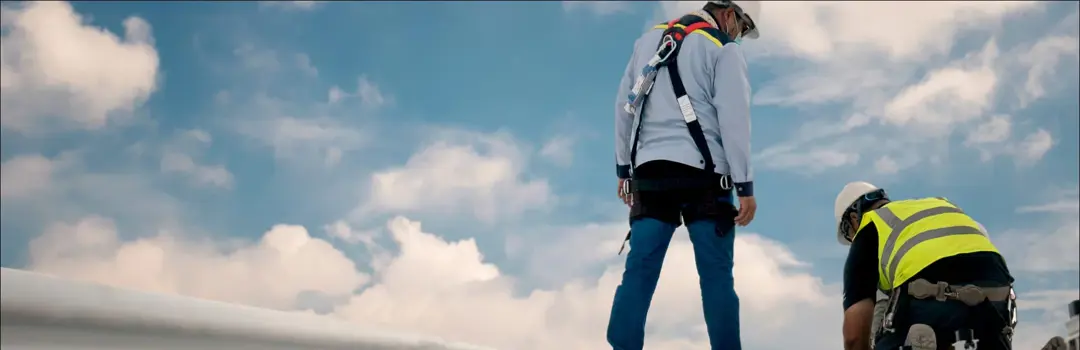
Before any worker sets foot on an industrial roof, a responsible employer would ensure the following:
- A pre-access structural assessment by a qualified person to verify the roof can support workers
- Identification and marking of fragile areas, including deteriorated panels, skylights, and weak spots
- Fall protection systems at every skylight and opening
- A safe work plan specific to the roof being accessed
- Training on roof-specific hazards
- Restricted access to authorized and properly equipped personnel only
OSHA's general industry standards nominally cover these obligations, but the specifics reveal gaps that are difficult to defend. Section 1910.22(b) requires that walking-working surfaces support the maximum intended load but prescribes no assessment method or frequency and no documentation. Section 1910.28(b)(3) requires fall protection at holes and skylights four feet or more above a lower level but doesn't address deteriorated panels that haven't yet become "holes."
There is no general industry equivalent to the construction standard at 1926.501(a)(2), which explicitly requires employers to determine whether a surface has the structural integrity to support workers before anyone is allowed on it. And the term "fragile roof" does not appear anywhere in OSHA's general industry standards.
In practice, most facilities don't come close to even the existing standards. According to roofing manufacturer GAF, more than 80% of commercial roofs are replaced prematurely, due in part to a failure to follow a regular maintenance schedule. Most building owners, including commercial property owners, wait until a leak appears before investigating their roofs. And in its own maintenance guides, GAF admits that roofs are often treated as an "out of sight, out of mind asset.” This is the environment workers walk into: a roof that hasn't been inspected in years, with no markings, no assessment, and no indication of where the surface might give way.
Why Do Industrial Roof Falls Keep Happening?
If the hazards are known and the solutions are straightforward, why do workers keep getting hurt and dying on industrial roofs? The answer has less to do with engineering and more to do with how facilities treat their roofs, as well as the people they send onto them.
Routine often normalizes risk. When an employer sends workers onto the same roof over and over without incident, roof access stops being treated as something that requires careful planning or special precautions. But roof degradation happens slowly, consistently, and, sometimes, invisibly. Corrosion, UV damage, and water intrusion don't stop just because the last shift went fine. The conditions that can cause a collapse next week or next month could be developing right now, and it's the employer's responsibility to recognize that, not the worker's.
Pressure to work quickly also plays a role. Accessing a roof for maintenance is often squeezed in between other priorities. Setting up fall protection or conducting a structural assessment takes time. When the HVAC unit is down and production is stalled, speed wins—and safety measures get treated as optional.
The economics of non-compliance reinforce the pattern. When one employer can be fined after a worker falls to his death but ultimately pay nothing after six years of processing, and another can accumulate seven citations over a decade with $50,000 in unpaid fines before OSHA proposes a serious penalty, the message to the industry is clear. Maximum penalties for willful OSHA violations are capped at $165,514 per violation, a figure nearly any large industrial operator can absorb as simply a cost of doing business. And the criminal penalty for willfully causing a worker's death through safety violations is just six months in jail.
Legal Responsibility Starts Long Before a Fall
Roof falls inside industrial buildings are not random accidents; they are the result of specific, identifiable decisions, like the decision to not inspect a roof before sending workers onto it, the decision to not assess a roof’s structural integrity, to not guard skylights and openings, to not provide fall protection, and to treat a major structural component of a building as something that can be ignored until it visibly fails.
Employers have a legal duty under federal law to ensure that every walking-working surface in their facility can support the people on it. When they skip inspections, defer maintenance, leave skylights unguarded, and send workers onto surfaces that haven't been evaluated in years, they’re not cutting corners on a minor technicality; they are making a choice that puts lives at risk, and the record shows that workers are the ones who pay.
If you were hurt or if someone you love was killed after falling off or through an industrial roof, it's important to understand that these incidents are almost always tied to decisions employers made or failed to make. Workers and their families have rights, including the right to seek justice, accountability, and the fair compensation needed to begin the long process of healing and moving forward with their lives.
At Arnold & Itkin, we are committed to protecting your rights after a serious workplace accident. We’ve handled complex cases against major industrial employers, and we’ve won the results our clients needed and were justly owed. When it comes to employer accountability, we don’t back down. Ever.