The Often Overlooked Dangers of Paint & Solvent Vapors
On the morning of December 16, 2024, workers at Seymour of Sycamore, a paint manufacturing facility about 60 miles west of Chicago, arrived for what should have been a normal shift. The company, credited as the inventor of aerosol spray paint, had been operating at the Sycamore, Illinois location for decades. Around 8:30 that morning, an explosion ripped through an enclosed section of the building. Three workers were injured, two severely enough to be hospitalized with burns. The fire chief told reporters a paint container appeared to have exploded, but the specific trigger remained unclear.
Within months, OSHA cited the company for a serious violation of the Hazard Communication Standard, the federal regulation that requires employers to properly label hazardous chemicals, maintain safety data sheets, and train workers on the dangers of the materials they handle every day.
The Seymour manufacturing paint explosion was a devastating event. Fortunately, no one died as a result of the explosion, but the severe injuries and extensive damage to the facility had lasting repercussions for the workers involved and their families. What’s more, this was not an isolated event. Rather, it was simply the latest incident in a long-standing pattern that has repeated across factories, spray booths, and manufacturing plants for decades. And it starts with something that can’t be seen: the invisible vapors that paints and solvents release into the air during normal work activities.
What Are Paint & Solvent Vapors?
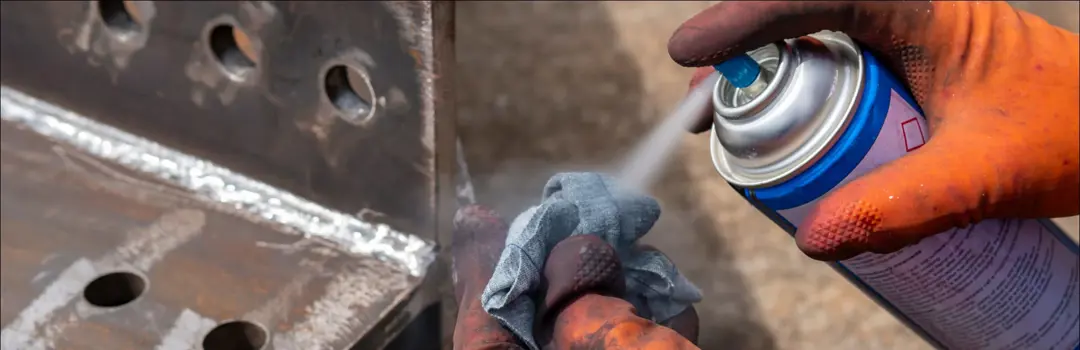
Every can of paint, every drum of coating, every container of thinner or cleaning solvent contains chemicals known as volatile organic compounds, or VOCs. These compounds evaporate at room temperature, releasing invisible vapors into the surrounding air. This happens constantly in industrial settings. Spraying paint onto parts, mixing coatings in tanks, transferring liquids between containers, cleaning spray guns, and even simply wiping down surfaces can all lead to vapors being released into the air.
Because paint and solvent vapors are a known, constant presence in these types of workplaces, the responsibility to manage them falls squarely on the employer. The question is not whether vapors will be present; it's whether the systems in place are adequate to keep them from reaching dangerous concentrations.
How Vapors Behave & Why That Matters
Most people think of fumes as something that rises and dissipates. Solvent vapors don't work that way. Nearly all common paint solvents—such as toluene, xylene, mineral spirits, MEK, and acetone—produce vapors that are heavier than air. So, instead of floating upward, they sink. They flow along the ground like an invisible liquid, pooling in low-lying areas, like floor pits, basements, trenches, stairwells, ventilation ducts, and the spaces beneath equipment.
They also travel. Solvent vapors don't stay where they originally form. Air currents, ventilation systems, open doorways, and even drafts created by foot traffic can carry a vapor cloud far from its original area. A worker spraying paint inside a booth on one side of a building can unknowingly send vapors drifting toward a heat source, an electrical panel, or a welding operation on the other side. OSHA has warned that standard safe-distance requirements "may be insufficient if the source of ignition is at a lower elevation than a heavier-than-air flammable compound and vapors can flow to the ignition source."
This is what makes vapors fundamentally different from other hazards, such as liquid spills. Spills generally stay in one place, where they can be easily seen, contained, and cleaned up. But vapors are invisible, and they move quickly and silently from one area to another. As a result, a worker could be working among vapors with the potential to ignite and have no way of knowing it.
The Role of Spray Booths & Their Flaws
For readers who haven't worked in manufacturing, a spray booth is essentially a large, enclosed chamber or room designed to contain the overspray and fumes generated during painting operations. They're equipped with fans and filters that pull contaminated air out of the workspace so that paint particles and vapors don't drift into the rest of the building, settle on other equipment, or fill shared work areas with fumes.
Spray booths are standard in factories that paint parts or equipment, auto body and vehicle repair shops, furniture and cabinet workshops, and industrial finishing and coating facilities. They range in size from small walk-in rooms to massive enclosed areas large enough to drive heavy equipment into.
While spray booths provide a critical measure of safety, they're a control system, not a guarantee. A spray booth only works if it's properly designed for the volume of paint and solvent being used, if the ventilation is adequate and running, if the filters are clean, and if electrical equipment in and around the booth is rated for use in environments where flammable vapors are present. When any of those conditions break down, the booth doesn't just stop protecting workers; it can become the most dangerous room in the building.
How Spray Booths & Ventilation Systems Fail
Federal safety standards are specific about what spray booth ventilation must do. OSHA's spray finishing standard (29 CFR 1910.107) requires a minimum average air velocity of 100 linear feet per minute across the open face of a spray booth. NFPA 33, the national consensus standard for spray application using flammable materials, sets detailed requirements for ventilation design, electrical equipment classification, and fire suppression in spray areas. And, under OSHA's ventilation standard for spray finishing (29 CFR 1910.94), the total air exhausted through a spray booth must dilute solvent vapor to at least 25% of the lower explosive limit, a threshold so low it's undetectable without specialized monitoring equipment.
In theory, these standards are designed to protect workers. In practice, they are often overlooked. Filters clog over time and reduce airflow. Production increases or formulation changes mean more solvents are being used than the ventilation system was designed to handle. Ventilation gets shut down between shifts to save on energy costs or reduce noise. Heaters, electrical panels, and other equipment that can produce sparks get installed too close to spray areas, and exhaust ducts deteriorate or get blocked.
These failures rarely happen all at once. Instead, they develop gradually—a filter goes unchanged an extra week, a ventilation system that was adequate five years ago hasn't been upgraded to match increased production, or a heater is placed just a little too close because someone needed to warm a staging area. Each decision on its own might seem minor, but together they can create the conditions for a catastrophe.
How Do Pain & Solvent Vapors Ignite?
Many common paint solvents have extremely low “flash points,” or the temperature at which they produce enough vapor to ignite. For example, toluene's flash point is just 40°F. Methyl ethyl ketone (MEK) ignites at 16°F; acetone at -4°F. These are chemicals that can produce flammable vapor concentrations in conditions far below normal room temperature.
What’s more, the amount of vapor needed to create an explosive atmosphere is startlingly small. Toluene's lower explosive limit (the minimum concentration in air that can ignite) is just 1.1% by volume. As previously mentioned, OSHA considers anything above 25% of the lower explosive limit (LEL) dangerous, which for toluene means alarms should trigger at a concentration of just 0.275%. That's an amount no human being can see, smell, or sense.
The ignition sources are equally ordinary. Electrical sparks from standard switches or motors, space heaters, even static electricity from moving materials or from a worker's clothing can be enough to ignite airborne vapors. Commonplace work activities, like welding, grinding, or restarting equipment can also ignite vapors and lead to a catastrophic explosion. In many factories, these aren’t unusual activities; they’re everyday tasks, and that's the problem. When vapors have accumulated to explosive levels, any one of these routine activities can turn an ordinary workday into a tragic, life-changing moment.
When Routine Work Turns Deadly
When vapor explosions happen, it’s rarely the result of an emergency. These tragedies typically occur while workers are performing mundane tasks, from painting parts on a normal production run and cleaning spray guns at the end of a shift to simply shutting down equipment. Worse still, workers also rarely have any warning that something is amiss.
Vapor buildup is invisible and silent. There's no rumble, no alarm, no visible change in the air. The gap between a safe workspace and an explosive one can be crossed without any detectable sign, and when ignition occurs, the explosion is instantaneous. There's no time to react, no chance to evacuate or get to safety.
This is why vapor explosions often injure multiple workers at once. Because vapors spread beyond a single workstation, filling shared corridors, adjacent rooms, and connected spaces, an ignition event in one area can trigger an explosion that reaches workers in entirely different parts of the building. The injuries are devastating, ranging from severe thermal and chemical burns to blast-force trauma, smoke and toxic fume inhalation, crushing injuries from structural collapse, and, in the worst cases, death.
Warning Signs, Safety Systems & What Employers Owe Their Workers
Investigations into vapor explosions almost always find that warning signs were present before the blast, but the employer either missed them or chose not to act.
Common warning signs can include:
- Strong chemical odors in work areas
- Workers reporting headaches, dizziness, or nausea
- Visible haze in the air near spraying or mixing operations
- Recurring ventilation complaints
- Prior near-misses or small fires that were never formally investigated
These are some of the most common signals that vapor hazards are not under control, and in case after case, they show up in the record after an explosion has already occurred.
The thing is, these warning signs should never be present. The reason they exist is almost always the same: the employer's safety systems aren't doing what they're supposed to do. Federal regulations and industry standards lay out clear requirements for managing vapor hazards. Under OSHA's spray finishing standard, employers must provide adequate ventilation systems for the work being performed. They must also use explosion-proof electrical equipment in areas where flammable vapors may be present and limit flammable liquid storage near spray operations to one day's supply. Regulations also require continuous vapor monitoring with automatic shutdown if concentrations exceed safe thresholds, and OSHA's process safety management standard requires all facilities that handle large quantities of flammable materials to conduct formal hazard analyses, maintain equipment integrity, and develop emergency response plans.
Employers are also required to train workers on the specific hazards of the chemicals they work with, provide appropriate personal protective equipment, including flame-resistant clothing in areas where flammable vapors are present, and give workers the authority and support to stop work when conditions are unsafe.
When these systems are functioning properly, warning signs like odors and haze shouldn't appear in the first place. When they do appear, it means the employer's controls have already failed, and the question becomes not if danger is present but how long workers will be exposed before someone acts.
Why These Systems Fail: What Workers & Families Should Know
The U.S. Chemical Safety and Hazard Investigation Board (CSB), OSHA, and fire investigators have investigated dozens of vapor explosions over the decades. Their findings are remarkably consistent: these incidents are not caused by worker carelessness, equipment flukes, or unforeseeable events. They are caused by employer decisions about maintenance, equipment, and overall priorities.
Sometimes, employers delay maintenance in favor of continuing production. They may reduce ventilation because electricity costs money. Equipment can be modified or relocated without anyone reassessing the vapor risks. Employers might install monitoring systems but fail to wire them to audible alarms; they might skip required process hazard analyses. Often, workers raise concerns—but nothing changes. All too often, this pattern repeats across roles, across industries, and across decades.
In April 2021, a vapor cloud explosion at the Yenkin-Majestic Paint Corporation in Columbus, Ohio, killed one worker and injured eight others. The CSB's investigation found that a reactor vessel's access cover had been improperly modified months earlier and returned to service without proper pressure testing, even after it had already failed once. Gas detectors in the facility sent email notifications but were never connected to audible alarms inside the plant. No one activated the fire alarm before the explosion. OSHA cited the company for 35 combined violations, proposing nearly $710,000 in penalties.
In November 2006, a massive explosion leveled a paint and ink manufacturing facility in Danversport, Massachusetts, damaging more than 90 nearby homes and injuring several residents. No workers were harmed, as the plant was unoccupied at the time. The CSB report determined that a mixing tank containing flammable solvents had been left heating overnight with the steam valve open. The building's ventilation system had been shut off for the night, a routine practice by the company, to save on heating costs and reduce noise. Vapor filled the unventilated building for hours before igniting. The company had no automated shutoffs, no temperature alarms, no vapor monitoring, and no process hazard analysis. The facility stored more than 20,000 gallons of flammable liquid, over three times the amount it was licensed to hold.
These are just two examples of explosive vapor events, but they speak to a much larger and more alarming pattern.
Every year, roughly 100 workers die as a result of fires and explosions across the United States. The NFPA reports more than 36,000 industrial and manufacturing fires annually, with fires from flammable liquids or gases responsible for roughly one-third of all recorded burn injuries in these settings. These numbers represent real people, workers who showed up to do their jobs in environments they assumed were safe and which their employers were responsible for making safe.
Employers Make the Tradeoffs. Workers Suffer the Consequences.
Vapor explosions are not unpredictable; they are not random. They are the foreseeable result of failing to address known hazards. And these failures are not carried out by workers but by companies that choose to prioritize profit over human lives.
The condition of ventilation systems, the existence of monitoring equipment, the creation of maintenance schedules, the thoroughness of safety training, the layout of the facility, and the decision to keep running production when conditions are deteriorating—all of these are employer decisions. When those decisions are poorly made, it is the workers who pay the price.
If you or someone you love has been injured in a paint or solvent vapor explosion, it's important to understand your rights. Arnold & Itkin is a nationally recognized personal injury law firm dedicated to holding companies accountable for the systems and decisions that put workers in harm's way. Our team has the resources and experience to investigate complex industrial incidents, identify the failures that caused them, and fight for the compensation injured workers and their families deserve. No matter what.
- Categories