Why Conveyor Belts Are One of the Most Devastating Workplace Hazards in America
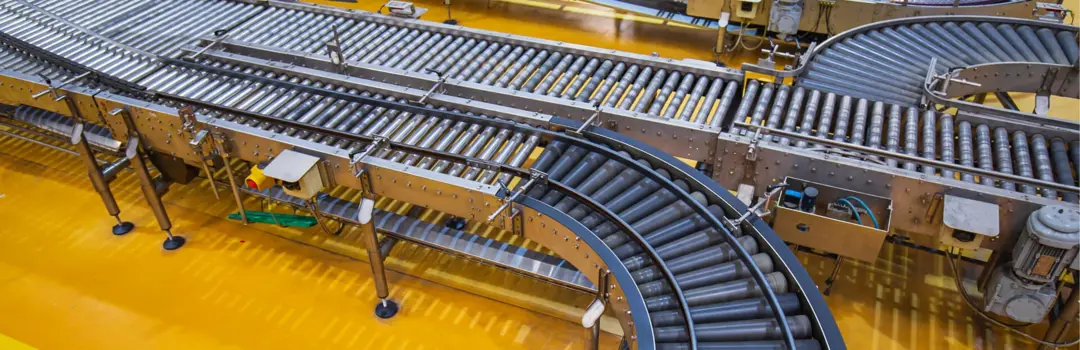
At a recycling facility in Clifton, New Jersey, a 73-year-old worker bent down to clear debris from underneath a conveyor belt. This was a task he had likely performed many times before, but this time was different.
The machine was not locked out. It was not de-energized. And at approximately 2:30 in the afternoon on November 12, 2024, it unexpectedly activated.
The conveyor belt crushed the worker, claiming his life.
A federal investigation by the Occupational Safety and Health Administration (OSHA) found that the employer had failed to follow lockout/tagout procedures, failed to guard dangerous moving parts, and failed to protect workers from exposed power transmission components. OSHA issued nine violations with penalties totaling nearly $30,000.
This was not an isolated incident, and it was not a freak accident. Every year, dozens of workers are killed and thousands are injured after being caught in running equipment or machinery, including conveyor belts. These are well-documented, well-understood hazards clearly covered by stringent OSHA standards and regulations.
Conveyor belts are among the most common pieces of industrial equipment in the U.S. and worldwide. They move raw materials in mines, packages in warehouses, food products in processing plants, and recyclables in sorting facilities. They operate continuously, often for entire shifts, which makes it all the more critical that employers maintain proper safeguards, training, and safety protocols to protect the workers who depend on them.
Conveyor systems are unforgiving machines. They do not slow down when something goes wrong. Most industrial conveyor belts have no automatic mechanism to detect or stop for a person caught in the system. They rely entirely on manual emergency stops like pull cords, buttons, or kill switches that someone nearby must physically activate. And when the safety systems designed to protect workers are missing, broken, or ignored, the consequences are devastating.
The workers harmed in conveyor belt accidents are rarely doing anything unusual. They are clearing jams, cleaning equipment, adjusting materials on the line, or performing basic maintenance—the same tasks they do every shift.
So why do these incidents continue to claim lives?
We’re taking a closer look at conveyor belts: where they’re used, what safety standards apply, and who’s responsible when people get hurt.
How Conveyor Belt Accidents Actually Happen
Conveyor belt accidents do not usually begin with a dramatic equipment failure. They begin with a small, ordinary moment: a worker reaching across a belt to reposition a piece of material, leaning in to clear a jam, or cleaning underneath a system that is still running.
Then something catches.
OSHA identifies several areas of conveyor systems that present the greatest hazard. Rollers, pulleys, gears, chains, and drive shafts create what the agency calls “in-running nip points,” locations where two moving parts rotate toward each other or toward a fixed surface. Anything that enters one of these zones, whether a glove, a sleeve, or a strand of hair, can be drawn into the machinery almost instantly.
Hands and arms are the body parts most frequently caught first. Workers often reach near or across a moving belt to remove debris, reposition materials, or retrieve something that has fallen. Loose clothing, especially sleeves and gloves, can become caught in rotating components and pull a worker in before they can react. In other cases, long hair becomes entangled in exposed shafts or pulleys.
OSHA's own publication on machinery associated with amputations specifically lists powered and non-powered conveyors among the equipment types most commonly involved in these industrial injuries.
But what makes these incidents especially troubling is that they rarely happen during unusual or emergency situations. Federal safety investigations by OSHA and the National Institute for Occupational Safety and Health (NIOSH) consistently show that many conveyor belt injuries occur during routine tasks, including:
- Clearing jams or removing debris from the belt
- Cleaning conveyor equipment while it is still running
- Performing adjustments or minor maintenance
- Retrieving dropped tools or materials
- Working near exposed moving parts without proper guards in place
In the Clifton, New Jersey case, the worker was performing a basic cleaning task (clearing debris from underneath a conveyor) when the machine unexpectedly started. He was not performing complex maintenance. He was not operating the equipment. He was simply doing a routine task that should not have cost him his life.
In many industrial facilities, conveyor systems run continuously throughout the workday. Shutting down the entire line for every small adjustment or cleaning task can slow production, so workers may attempt to address minor issues while the belt is still moving, or, as happened in Clifton, while the machine is not properly locked out.
This is where the danger is the greatest. Industrial conveyor belts can move at speeds of several hundred feet per minute. At those speeds, once clothing or a body part makes contact with a moving roller or belt, entanglement can happen in an instant. The force generated by the system is far greater than what any person can resist.
By the time a worker realizes what has happened, the machine may already be pulling them deeper into the system. And unless someone nearby can reach an emergency stop device quickly enough, the conveyor belt will not stop on its own.
Industries Where Conveyor Belt Accidents Are Most Common
Conveyor systems are found in nearly every sector of American industry, but not all workplaces carry the same level of risk. Certain industries see a disproportionate share of conveyor-related injuries and deaths, often due to the speed of operations, the nature of the materials being handled, and the degree to which employers invest in safety infrastructure.
Manufacturing
Manufacturing facilities rely heavily on conveyor systems to move products along assembly and packaging lines. These environments often feature multiple conveyor belts operating at high speeds in close proximity to workers. The Bureau of Labor Statistics consistently reports that manufacturing is among the industries with the highest rates of nonfatal workplace injuries, and machinery-related incidents, including conveyor entanglements and amputations, are a significant contributor.
Food Processing
Food processing plants, including poultry, meatpacking, and produce operations, use conveyor belts extensively to move products from one stage of production to the next. Workers in these facilities frequently operate in close contact with moving belts, and the wet, fast-paced conditions can increase the likelihood of slips and accidental contact with machinery.
Agriculture & Grain Handling
The agricultural sector presents unique conveyor hazards, particularly in grain elevators, feed mills, and storage facilities. OSHA's grain handling overview identifies mechanical equipment within grain storage structures, including augers and conveyors, as presenting serious entanglement and amputation hazards. Screw-type conveyors (augers), which use a rotating helical blade to move grain, are especially dangerous.
In October 2024, the U.S. Department of Labor expanded a regional safety emphasis program specifically targeting grain handling facilities in Kansas, Missouri, and Nebraska in response to ongoing deaths and injuries.
Mining & Aggregates
Conveyor belts are the primary method of transporting raw materials in mining operations, carrying rock, ore, coal, and other materials over long distances. The Mine Safety and Health Administration (MSHA) tracks mining fatalities separately from OSHA, and conveyor-related deaths appear regularly in their reports. In March 2025, a miner in North Carolina was killed after becoming entangled in a belt conveyor tail roller while clearing old belt material. The system unexpectedly started while he was performing the task.
Recycling & Waste Facilities
Recycling plants and material recovery facilities depend on conveyor systems to sort and process large volumes of waste. Workers in these environments often operate near exposed belts and rollers while manually sorting materials. The Clifton, New Jersey fatality that opened this article occurred at a recycling facility, and it was not the only conveyor-related death at a New Jersey recycling plant in recent months. In September 2024, a 35-year-old worker was found dead on a conveyor belt at a separate recycling facility in Farmingdale, New Jersey.
What ties these industries together is the constant presence of moving machinery and the physical proximity of workers to that machinery.
The Most Dangerous Types of Conveyor Systems
Any conveyor system with exposed moving parts can cause serious harm, but certain types of systems are more frequently associated with severe injuries and death.
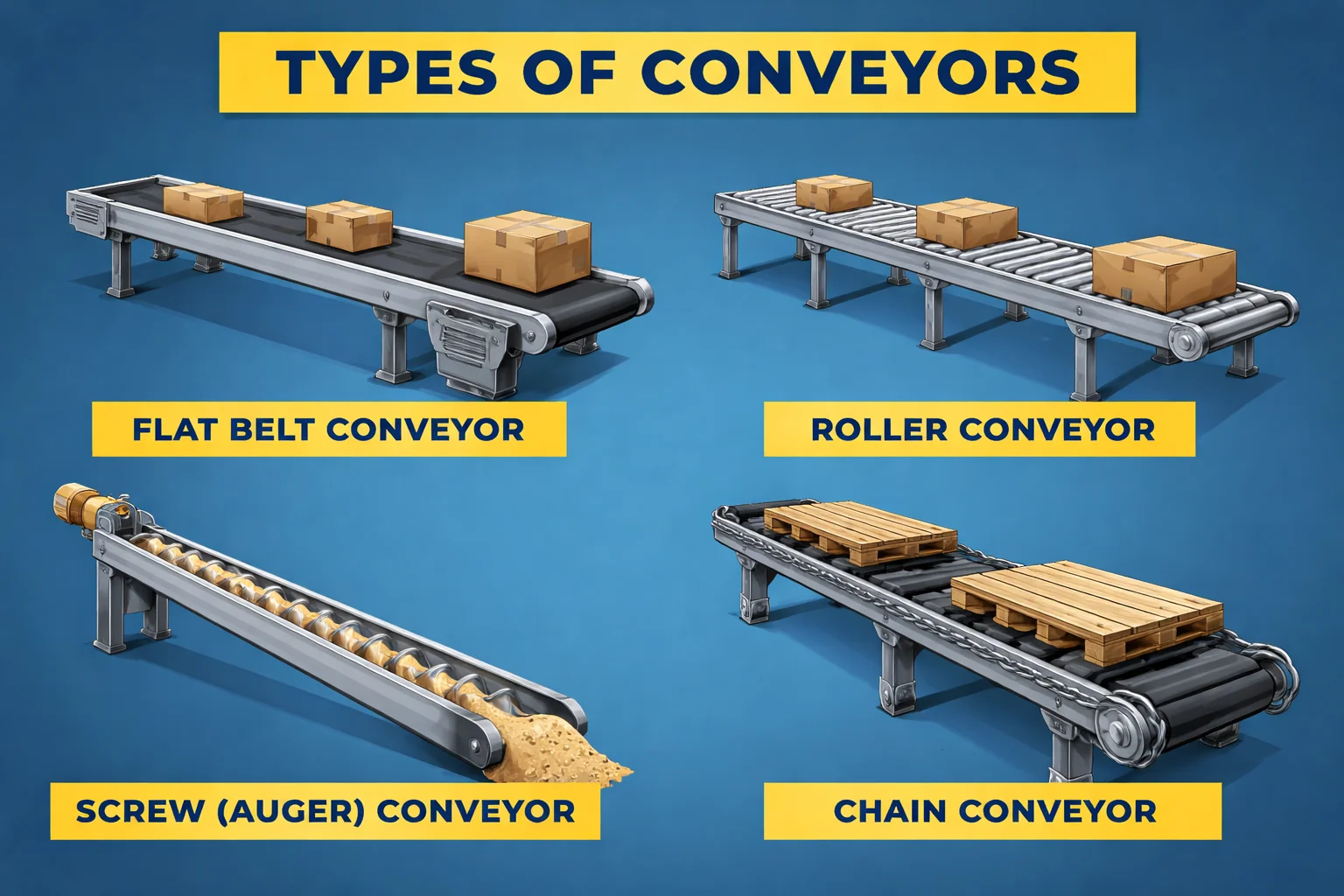
- Flat belt conveyors are the most common type, found in warehouses, packaging facilities, and manufacturing plants. The primary hazard zones are "nip points" where the belt meets the pulleys, and the underside of the belt where rollers are exposed.
- Roller conveyors use a series of cylindrical rollers to move items along a fixed path. Powered roller systems create pinch points between adjacent rollers and between rollers and the frame, where fingers and hands can become caught with little warning.
- Screw conveyors (augers) are widely considered among the most dangerous conveyor types. They use a rotating helical blade inside a tube or trough to move bulk materials like grain, cement, or feed. OSHA's construction safety standard (29 CFR 1926.555) specifically requires that screw conveyors be guarded to prevent contact with turning flights. The rotating blade can catch and pull in a hand or limb in a fraction of a second.
- Chain conveyors use interlocking chains to move heavy materials in mining, automotive, and heavy manufacturing operations. The chains, sprockets, and drive mechanisms create multiple shear and pinch points, and because these systems handle heavier loads, the forces involved in an entanglement are extremely high.
Exposed Parts Increase the Risk of Injury
The level of risk also depends on how much of the conveyor's moving parts are accessible to workers. Fully enclosed systems that shield belts, rollers, and drive components behind guards or covers significantly reduce the chance of accidental contact. Exposed systems, where workers can see and reach the moving belt, pulleys, and chains, are far more dangerous.
OSHA's machine guarding standard (29 CFR 1910.212) requires employers to guard all moving machine parts that could injure workers, but investigators routinely find that guards have been removed, damaged, or never installed.
OSHA Regulations & Safety Standards for Conveyor Belts
Conveyor belt hazards are not unknown to regulators. OSHA has established multiple standards that apply directly to conveyor systems, and employers are legally required to follow them. When they don't, the consequences fall on workers.
Machine Guarding (29 CFR 1910.212)
This is one of OSHA's most broadly applicable safety standards. It requires employers to provide guards on any machine with moving parts that could cause injury. For conveyor systems, that includes belts, pulleys, rollers, gears, chains, and rotating shafts. Guards must prevent workers from making contact with these components during normal operation.
Machine guarding ranks among OSHA's top 10 most frequently cited standards every year, with 1,541 violations recorded in 2024 alone.
Power Transmission Apparatus (29 CFR 1910.219)
This standard goes further than general machine guarding by addressing the specific components that transmit power within machinery: belts, pulleys, chains, sprockets, gears, and shafts. Employers must ensure these components are properly enclosed or guarded. In the Clifton recycling facility case, one of the serious OSHA violations cited was a failure to protect workers from exposed power transmission components.
Control of Hazardous Energy: Lockout/Tagout (29 CFR 1910.147)
This standard requires employers to establish procedures for shutting down, isolating, and de-energizing machinery before any maintenance, cleaning, or repair work is performed. Workers must be able to physically lock the equipment in an "off" state and attach a tag indicating the machine is not to be restarted. OSHA estimates that proper lockout/tagout compliance prevents approximately 120 fatalities and 50,000 injuries each year. Yet lockout/tagout violations remain one of the agency's most frequently cited standards, ranking fifth in 2024 with 2,655 violations. In the Clifton case, the conveyor was not locked out or de-energized when the worker went underneath it to clear debris.
Conveyor-Specific Standards (29 CFR 1926.555)
OSHA also maintains a standard specifically addressing conveyor safety in construction settings. It requires that conveyor systems be equipped with a means to stop the motor at the operator's station, an audible warning signal before startup, and emergency stop switches that prevent the conveyor from restarting until deliberately reset. Screw conveyors must be guarded to prevent contact with turning flights, and conveyors must be locked out and tagged out during repairs.
The Broader Picture
These standards exist because the risks are well understood. OSHA, NIOSH, and industry groups like the Conveyor Equipment Manufacturers Association (CEMA) have published extensive guidance on conveyor safety. The hazards have been studied, documented, and regulated for decades.
When a worker is killed or seriously injured by a conveyor belt, it is rarely because the danger was unknown.
It is because the safeguards that should have been in place were not.
Why Conveyor Belts Don't Stop in Time
If conveyor safety standards are well established and widely known, why do workers keep getting hurt?
In many cases, the answer comes down to what happens on the ground versus what's written in a safety manual. OSHA investigations consistently uncover the same problems: emergency stop devices that are out of reach, obstructed, or broken. Safety guards that have been removed for convenience and never replaced. Machines left running during tasks that require them to be shut down.
Production pressure plays a significant role. In facilities where conveyor systems run continuously, stopping the line for every minor adjustment or cleaning task can slow output. Workers may feel pressure, whether explicit or implied, to keep things moving. In some cases, OSHA investigators have found that employees were never trained on where emergency stops were located or how to use them. In others, the stops themselves were not positioned within reach of the areas where workers were most likely to need them.
Emergency stop systems, such as pull cords, stop buttons, and kill switches, are only effective if they are accessible, functional, and if workers feel empowered to use them without fear of repercussion. When any of those conditions is missing, the system fails.
What Happens When a Worker Gets Pulled In
The injuries caused by conveyor belt entanglement are among the most severe in any workplace setting. Once a worker's clothing, hair, or body part makes contact with a moving conveyor component, the force of the machinery takes over.
Common injuries include:
- Traumatic amputations of fingers, hands, and arms
- Crush injuries to limbs and torsos
- Deep lacerations and fractures
- Scalping injuries when hair becomes caught in rotating parts
In the worst cases, workers are fatally crushed or pulled entirely into the machinery before help can arrive.
According to OSHA's severe injury reporting data, upper extremities (arms, hands, and fingers) account for roughly 40% of all employer-reported severe workplace injuries. Conveyor systems are specifically listed among the machinery types most commonly associated with amputations.
With conveyor-related accidents, rescue is often delayed because the machine must be fully stopped and, in some cases, partially disassembled before a trapped worker can be freed. Coworkers who witness these incidents may not know how to respond or may not be able to locate an emergency stop quickly enough to prevent further harm.
What Accident Investigations Reveal
When OSHA or NIOSH investigates a conveyor belt fatality, the findings tend to follow a familiar pattern. The hazards were known. The safeguards were absent. And the failure to act fell on the employer.
Among the most common findings:
- Machine guards were missing, removed, or inadequate
- Lockout/tagout procedures were not followed or not established
- Workers were not properly trained on the equipment or its hazards
- Emergency stop devices were inaccessible, broken, or insufficient
- The hazard had been previously reported or was visible to supervisors
Safety Must Come First
Conveyor belts are essential to modern industry. They keep production lines moving, materials flowing, and operations running efficiently across thousands of workplaces in the United States.
But they are not passive pieces of equipment. They are powerful machines with exposed moving parts, high-speed components, and the potential to cause catastrophic harm in a matter of seconds.
The regulations exist. The hazards are well documented. The safety measures are proven and effective. And yet, workers continue to be injured and killed by conveyor belt systems because employers fail to implement the protections required of them.
Every conveyor belt incident described in this article was preventable. The worker in Clifton, New Jersey, who was crushed while clearing debris. The miner in North Carolina who was trapped by a tail roller. The recycling worker in Farmingdale found dead on a sorting line. Each of these workers was doing their job. Each of them deserved to come home.
The responsibility for making that possible does not fall on the workers. It falls on the employers, facility operators, and decision-makers who control the equipment, set the pace, and determine whether safety is treated as a priority or an afterthought.