Why Workers Keep Dying in Hoppers & Silos
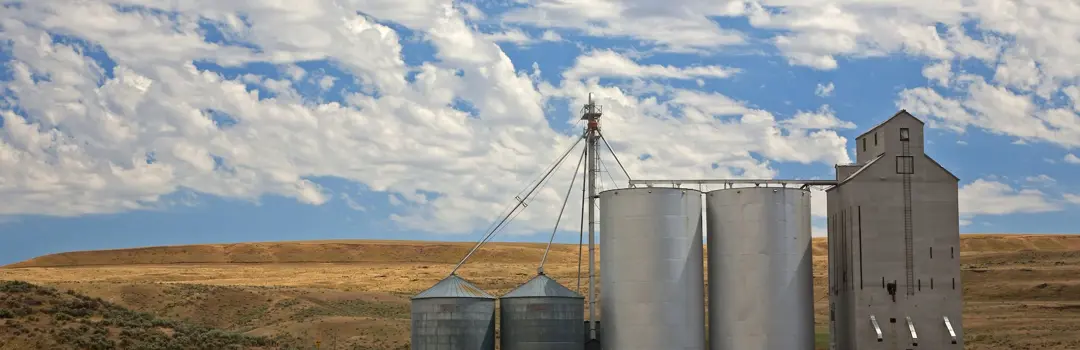
Every year, dozens of American workers die in hoppers and silos across industries ranging from grain storage to cement manufacturing. These deaths follow a similar pattern: a worker enters a confined space to clear a blockage or perform routine maintenance, the material shifts or flows unexpectedly, and within seconds the worker is trapped, suffocated, or crushed. What makes these tragedies particularly devastating is that they are entirely preventable—yet they keep happening because employers prioritize production over safety, facing minimal consequences when employees die.
The scale of the problem is documented in Purdue University’s Agricultural Confined Spaces Incident Database, which has tracked 2,429 agricultural confined space incidents between 1962 and 2024. The fatality rate stands at a staggering 58.9%. According to Purdue’s most recent data, these incidents are not meaningfully declining despite decades of safety education and available technology.
The Industries Where Workers Face These Dangers Daily
If you work in grain handling, cement manufacturing, mining, food processing, brewing, chemical production, power generation, or several other industries, you face potential exposure to hopper and silo hazards. These confined spaces exist anywhere bulk materials—grain, cement, coal, sugar, flour, plastic pellets, sawdust—are stored and processed.
The grain and agricultural sector represents the deadliest category by far. The United States has approximately 10,000 grain elevators and tens of thousands of on-farm storage facilities. In 2024 alone, researchers documented 51 total agricultural confined space incidents including 34 grain entrapments, resulting in 22 fatalities. That represents a 25.9% increase from the previous year.
Cement and concrete manufacturing employs roughly 15,000 to 20,000 workers who regularly enter silos to clear hardened material from walls—often while lowered on harnesses into structures up to ninety feet tall. Mining operations under federal jurisdiction employ approximately 250,000 workers who clear blockages in coal bunkers and ore bins. Food processing facilities—including flour mills and sugar refineries—require workers to clean silos between product batches and remove hardened buildup.
The pattern extends to breweries, where workers enter fermentation tanks through narrow hatches to scrub residue, facing lethal concentrations of carbon dioxide. In Mexico, a single incident at Grupo Modelo Brewery killed seven workers cleaning one tank. Similar hazards exist in chemical plants, power generation facilities, plastics manufacturing, and waste processing operations.
Across all these industries, the fundamental scenario remains identical: workers enter or work near enclosed structures containing flowable material, and when that material moves unexpectedly, workers die.
What Happens When Things Go Wrong
The physics of grain entrapment make these accidents uniquely deadly. When material begins flowing through a bottom discharge, it creates a downward funnel with enormous force. A 165-pound person becomes knee-deep in flowing grain in four to five seconds. Full engulfment follows in twenty to twenty-five seconds.
Once buried, rescue becomes nearly impossible without specialized equipment. A fully submerged person requires approximately 900 pounds of extraction force—the equivalent of pulling someone from under a compact car. Each foot of grain covering the body adds roughly 300 pounds of compressive weight. As one survivor described it, the pressure feels like “an 80,000-pound semi truck parked on my chest.”
Grain bridging creates an especially insidious trap. Moisture causes grain to crust at the surface, forming what appears to be a solid floor but is actually a thin shell over a hollow cavity. Workers walk onto these bridges to inspect or break up material, the bridge collapses, and they fall into the grain below. The record year for entrapments—2010, with 51 cases and 26 fatalities—followed an unusually wet harvest that left bins full of out-of-condition grain.
Toxic atmospheres represent the second major killer. In agricultural silos, fermenting material produces nitrogen dioxide that can kill within minutes. In Minnesota, lethal gas buildup led to the deaths of two men and one 11-year-old boy from the same family. Each successive victim was overcome while attempting to rescue the previous one. This “rescue cascade” pattern is devastatingly common: 60% of all confined space fatalities nationally involve would-be rescuers who enter without respiratory protection.
The 2008 Imperial Sugar refinery explosion in Port Wentworth, Georgia killed 14 workers and injured 36 when accumulated sugar dust beneath storage silos ignited. The 1998 DeBruce grain elevator explosion in Wichita, Kansas killed seven workers. These disasters demonstrate how accumulated material in and around hoppers and silos can create catastrophic hazards beyond engulfment.
Who Dies in These Accidents
The victims of these accidents challenge common assumptions. The average victim age documented in recent studies is 56 to 59 years old—these are experienced farmers and operators who have entered bins many times before. The oldest documented victim in 2024 was 94 years old. Approximately 75% of victims are farmers, farm workers, or farm family members.
Yet roughly 20% of victims are under age 21, with a childhood fatality rate of approximately 70%. Many are teenagers and children sent into bins to break up bridged grain—a task that seems routine until it becomes fatal.
The survival statistics are grim. For fully submerged engulfment victims, the fatality rate is 82%. For partial entrapment—where the victim is buried only to the waist or chest—the fatality rate drops to approximately 10%, highlighting how critical early intervention is. In 86% of survival cases, a co-worker was present at the time of the incident. Most victims who die do so before emergency services arrive.
The Pattern of Employer Negligence
Investigation reports from OSHA and MSHA reveal a remarkably consistent pattern of failures. The same violations appear in case after case, year after year, demonstrating that these deaths result not from unforeseeable accidents but from management decisions that prioritize production over worker safety.
The July 2010 Mount Carroll, Illinois tragedy exemplifies virtually every common violation simultaneously. Fourteen-year-old Wyatt Whitebread and 19-year-old Alex Pacas were killed, and 20-year-old Will Piper was trapped for six hours when they were sent into a grain bin to “walk down” 250,000 bushels of wet, crusted corn. No safety training was provided. Dusty, unused harnesses sat in a shed. No trained observer was stationed outside. The conveyor system was running. The workers were minors employed in violation of child labor laws.
OSHA issued $555,000 in fines with 25 violations including 12 willful—one of the agency’s toughest-ever responses. But the fine was subsequently reduced to $200,000, and the Department of Justice declined criminal prosecution. A civil jury later awarded $16.875 million to the victims' families.
The same negligence patterns recur across industries and decades. Employers fail to implement lockout/tagout procedures—the single most frequently cited violation. They send workers into confined spaces without entry permits, atmospheric testing, or safety harnesses. They fail to station trained attendants outside to monitor workers and initiate rescue if needed. They allow workers to operate alone.
In multiple MSHA cases, workers died clearing hopper blockages without proper lockout/tagout procedures, safe access platforms, or mechanical clearing devices—all of which are required by regulation and readily available. Mining regulations specifically require that bins, bunkers, and hoppers be equipped with mechanical devices so workers need not enter during normal operations. Yet employers repeatedly send workers into these spaces anyway.
Why Employers Keep Getting Away With It
The uncomfortable truth is that employers face minimal consequences when workers die in these preventable accidents. OSHA fines for fatal incidents typically range from $50,000 to $132,000—and are routinely reduced by 60% or more after companies protest and negotiate settlements.
An NPR investigation found that across 179 grain entrapment deaths since 1984, total OSHA fines assessed amounted to just $9 million, reduced to approximately $3.6 million after settlements. That works out to roughly $20,000 per worker killed—less than the cost of a new pickup truck.
Criminal prosecution remains extraordinarily rare. Of at least 19 fatal or nonfatal grain incidents since 2001 involving willful OSHA citations, only eight were referred to federal prosecutors, and only three resulted in charges. When workers die because their employers knowingly violated safety regulations, those employers face civil fines but almost never criminal charges.
The regulatory picture presents a paradox: proven regulations exist but cannot be enforced where they are needed most. OSHA’s Grain Handling Facilities Standard, effective since 1988, has reduced explosion-related deaths by 70% and grain suffocation deaths by 44% at commercial facilities. The agency concluded that when the standard is adhered to, grain suffocations do not occur.
The critical limitation is coverage. Since 1976, a Congressional appropriations rider has prohibited OSHA from spending funds to enforce regulations on farms with 10 or fewer non-family employees. This means over two-thirds of U.S. grain storage capacity—and over 70% of documented entrapments—falls outside OSHA’s enforcement jurisdiction.
When OSHA attempted to claim jurisdiction over postharvest grain handling on small farms in 2011, 43 senators sent a bipartisan letter demanding withdrawal. OSHA retreated in a July 2014 clarification acknowledging that on-farm grain storage is part of the “farming operation” and thus exempt. The result is a regulatory blind spot where familiar routines become death traps.
Technology Exists But Is Not Being Used
The frustrating reality is that technology exists to prevent virtually all of these deaths. Modern grain condition monitoring systems can detect spoilage before it creates the bridging and crusting conditions that prompt workers to enter bins. Engineering controls such as mass-flow hopper designs, vibration systems that prevent bridging, and improved aeration systems all reduce the need for human entry.
Grain bin rescue tubes—curved aluminum panels inserted around an entrapped victim to block grain flow—have improved survival rates from approximately 25% before widespread deployment to roughly 50% today. Trained first responders equipped with these tubes have saved lives that would have been lost a decade ago.
Yet Purdue’s annual report delivered a sobering assessment: the frequency of grain entrapment incidents shows minimal significant improvement from current prevention efforts. Rescue tubes save more people who get trapped, but they do not prevent entrapment in the first place. Monitoring technology exists but remains expensive and is rarely installed at the businesses where most incidents occur.
The technology to save lives exists. Employers simply choose not to invest in it.