Jet Ski Smart: How Families Can Enjoy the Water Safely
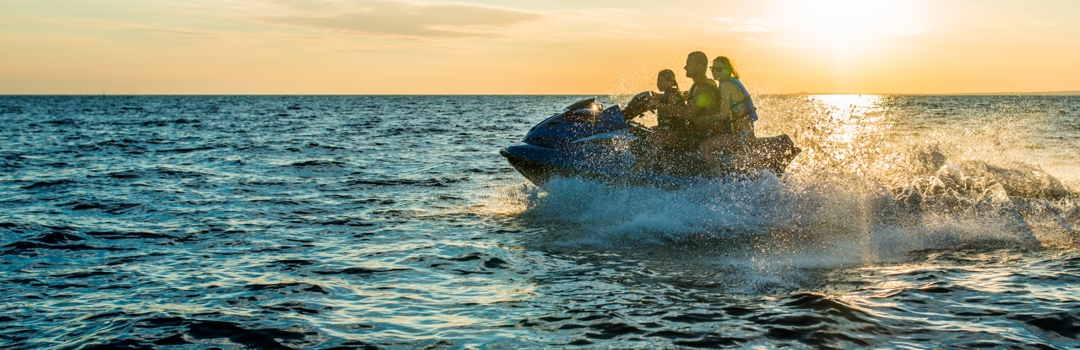
Across the country and throughout the year, it’s a common sound: waves lapping against the hull, the buzz of high-powered engines as a teen steadies the handlebars of a sleek personal watercraft, excited to take it out on the water. Or a parent grips the throttle as a child, eyes wide with anticipation, sits behind them, ready for their first ride. It’s a picture of vacation fun: speed, freedom, and quality family time on the open water.
For many families each year, this scene unfolds without incident, creating memories that last a lifetime. For others, the happy scene can turn to tragedy in just seconds. If you've never given much thought to the specific risks of personal watercraft, that doesn't make you a careless parent. It makes you like most families who reasonably expect that rental operators, manufacturers, and marinas are putting safety first. When accidents happen, they're far more often the result of inadequate safety equipment, poor operator training by rental companies, or design shortcomings than anything a parent did or didn't know. The tips in this article are meant to give your family an extra edge on the water, not because staying safe was ever supposed to be entirely on you, but because a little awareness can go a long way toward keeping a fun day safe.
The Injuries Most Parents Don't Expect
Jet skis, known officially as personal watercraft, or PWCs, have become a cornerstone of American recreational boating. Their accessibility, relative affordability, and thrilling speed have made them enormously popular with families seeking adventure on the water. Yet this popularity comes with an important reality check: personal watercraft account for nearly one in five recreational boating accidents in the United States, according to data compiled by the U.S. Coast Guard.
When you're planning a day on the water, it's essential to understand the full picture of what can go wrong so you can adequately prepare. While drowning is the danger most parents think about first, many other jet ski injuries stem from other causes that families don't always anticipate.
The non-drowning dangers of being on a jet ski include:
- High-speed collisions
- Severe blunt force trauma from impact with water
- Internal injuries from powerful water jets (after falling off the back of the jet ski)
Head and neck injuries are alarmingly common, often occurring when riders strike the water surface at high speed, collide with other watercraft, or strike fixed objects like docks, retaining walls, or buoys. Even if it’s a collision with the water, a body that travels 30 miles per hour or faster and suddenly meets resistance can hit the water with an impact that is comparable to the force of a car crash. Such impact can lead to serious internal injuries as well.
Even when still mounted on the jet ski, spinal compression fractures are possible when jet skis gain a bit of air and then hit the water, the spine absorbing the tremendous impact from such maneuvers as wave-jumping.
Far more rare, though still worth mentioning, are the internal injuries that can be caused by forceful jet streams. When passengers fall off the back of a jet ski, they can be exposed to the extremely high-pressure water that propels this watercraft. These jet streams can cause severe orifice injuries, internal bleeding, and even organ damage. The risk is particularly acute for people who are wearing loose-fitting swimwear instead of the protective clothing needed for watersports.
Awareness Beyond the Statistics: Real Stories Behind the Data
Jet ski accidents rarely make national headlines, typically receiving coverage only in regional news outlets before they fade from public consciousness, if they’re reported on at all. This media silence contributes to a dangerous gap in awareness. The truth is that PWC accidents happen throughout the country, not just during peak summer months, but year-round wherever the climate permits boating.
For instance, two 18-year-olds were enjoying Lake Norman, North Carolina, when one crashed their jet ski into another personal watercraft. The passenger on the other jet ski had to be transported by helicopter transport as a precaution against internal injuries and to treat his broken leg.
In another incident, two teenage friends were riding a jet ski out on Lake Wylie in North Carolina. Their jet ski struck a retaining wall, and both were violently thrown into the water. One teen was able to keep her friend’s head above the water and pull her to shore, but her friend’s spinal cord injury left her paralyzed from the waist down.
On the Intracoastal Water Way in Fort Lauderdale, Florida, two sisters were out on a jet ski when the machine collided with a concrete dock, launching both teenagers into the air before they hit the water. While the life jackets kept them afloat even though they were knocked unconscious, the blunt force trauma was enough for one sister to suffer fatal injuries. The other was hospitalized.
That same month, this time in Beaufort County, North Carolina, two teenagers were out on a jet ski when a boat operator on the same waterway crashed into them. The collision killed the 13-year-old passenger and hospitalized the 14-year-old jet ski operator.
In Long Lake, Washington, a 16-year-old girl was killed when her jet ski was rear-ended, and her five-year-old sister, who was a passenger on her jet ski, was air-lifted to a hospital for serious injuries.
Those were all recent summer incidents. However, the dangers posed by being out on a jet ski don’t diminish when summer ends.
For instance, in October of 2025, two minors were hospitalized with life-threatening injuries after a jet ski crash at Madeira Beach, Florida. In that same month, at Missouri’s Lake of the Ozarks, two teenagers were operating separate jet skis when one sideswiped the other. Both girls were flung from their machines and wearing properly fitted life jackets, but the blunt force of hitting the water at speed left them with significant injuries. One had serious injuries, the other moderate, but both had to be hospitalized.
These types of stories happen more often than they should, but they aren’t the norm, and they aren’t meant to scare anyone away from jet skiing. They are meant to equip people with an awareness of the range of some of the risks involved with personal watercraft. The rest of this guide can tell you how to prepare against such risks.
Some of the Causes of Jet Ski Incidents
When causes can be determined for recreational boating statistics, the U.S. Coast Guard data for 2023 and 2024 reveals a consistent pattern.
The top contributing factors for recreational boating accidents are:
- Operator inexperience
- Improper lookout
- Operator inattention
- Machinery failure
These big-picture statistics include other vessels as well, such as houseboats and pontoons, and machinery failure in many cases points to manufacturers who designed and made faulty vessels. But this big-picture data does include jet skis as well, including malfunctioning jet skis as well as collisions caused by houseboat operators and other types of vessels.
While there are many different causes behind jet ski accidents, some of which are outside of your control, there are still many safety matters that you can take into your own hands, and an awareness of wider dangers can also help protect your loved ones.
How to Keep Your Family Safe Even Before You’re on the Water
The foundation of any safe family adventure is laid long before the first engine roars to life. Parents who take time to prepare adequately can help reduce the likelihood of accidents while maximizing the joy of this exciting activity. Here's your step-by-step guide.
Get Trained
From those same U.S. Coast Guard statistics, we know that approximately 70 to 75% of fatal recreational boating accidents involved an operator who “did not receive boating safety instruction.” While that includes statistics for vessels other than jet skis, those untrained operators of other vessels do pose threats to people on jet skis as well, in which case, knowing how to keep the right distance can be a key safety measure.
The first step in safety is completing a certified boating safety course. These courses may sometimes have a fee and require four to eight hours of your time, for online versions, while in-person classes may last a full day. But it’s time and money well-spent. In the grand scheme of things, boat safety instruction is usually accessible, free or low-cost education that you can complete online in just a few hours.
Organizations like the National Association of State Boating Law Administrators (NASBLA) and the U.S. Coast Guard Auxiliary offer comprehensive courses that cover navigation rules, weather assessment, equipment requirements, emergency procedures, and the specific handling characteristics of personal watercraft. By knowing the rules of boating safety as well as navigation rules, you’ll already be avoiding some of the major contributing factors in watercraft accidents, per U.S. Coast Guard data.
Know the Regulations & Consider Making Your Own Rule
The regulatory landscape for PWCs varies dramatically from state to state. Unlike driving a car—which requires graduated licensing, supervised practice, and demonstrated skill—many states permit minors as young as 12 years old to operate a personal watercraft after completing only minimal instruction. Some jurisdictions require nothing more than watching one brief video online. A handful of states have no age restrictions at all, leaving the decision entirely to parents.
Regardless of what your state requires, you can set the standard for your family. You can decide that everyone who operates a PWC in your family will complete a comprehensive safety course and be old enough to drive an automobile. After all, jet skis can reach 40 to 70 miles per hour, with some models reaching even faster speeds. Choose what works for your family.
Inspect Everything, Every Single Time
Equipment inspection should become a ritual that you never skip, no matter how many times you've ridden before. Personal watercraft are complex machines, and any malfunction on the water can quickly become dangerous.
Before each outing, systematically check:
- The throttle mechanism to ensure it responds smoothly and returns to idle when released
- The steering system for full range of motion without binding or unusual resistance
- The engine cut-off lanyard to confirm it's in good condition and will properly attach to the operator
- Fuel levels and overall engine condition
- Hull integrity for any cracks or damage
Involve your kids in this process. Teach them what you're looking for and why each check matters. This builds their mechanical understanding and reinforces that safety isn't paranoia; it's competence.
Gear Up Properly. No Compromises.
Proper safety gear goes far beyond the standard life jacket, though that remains your most critical piece of equipment.
Here's what everyone on your jet ski needs:
- Life Jackets for Everyone: Every person must wear a U.S. Coast Guard-approved life jacket that fits snugly without riding up when in the water. That means children will need properly sized youth or child jackets. No exceptions, ever. Make life jackets as automatic as seat belts in the car.
- Protective Clothing: Wetsuit bottoms or specialized PWC shorts provide crucial protection against those jet thrust injuries discussed earlier. These garments should fit snugly and be constructed from thick neoprene or similar materials that can withstand high-pressure water contact. They also regulate body temperature, protecting against hypothermia.
- Eye Protection, Gloves, and Footwear: Snug-fitting sunglasses with a retention strap or swimming goggles protect against wind, spray, and potential impacts. They also help with visibility as you operate. Gloves improve grip on wet handlebars and protect against blisters, and sturdy water shoes with non-slip soles provide better control and protect feet from sharp objects.
- Helmets: Even though helmets are never pictured in the ads for this watercraft, they can be just as crucial to wear as they would be for riding on a bike or motorcycle.
Planning Ahead: Weather, Routes & Communication
Before departing, you can check detailed weather forecasts, paying particular attention to wind speed and the potential for afternoon thunderstorms. High winds create dangerous wave conditions that can overwhelm inexperienced operators, while lightning poses an obvious and deadly threat to anyone on the water.
It can help to create a detailed description of your intended route, expected return time, and the number of people in your party, and leave that plan with a responsible person on shore who will know to alert authorities if you fail to return as scheduled. Include a description of your watercraft and registration numbers.
Research your intended waterway in advance. Where are the shallow areas? What hazards exist? What's the typical boat traffic like? Are there areas you should avoid? Knowledge of your environment can only be beneficial.
While You Ride: Active Jet Ski Safety in Practice
Once you're on the water, safety requires constant vigilance and disciplined adherence to smart operating practices. Here's how to put your preparation into action:
Use the Engine Cutoff Switch—Always
Whenever a vessel has an engine cut-off switch (ECOS), it’s mandatory to have an engine cutoff switch lanyard that is attached to the operator's wrist or life jacket before starting the engine, and it must remain attached throughout the ride. This simple device automatically cuts power if the operator is separated from the watercraft. It can prevent runaway jet skis from circling dangerously or striking swimmers and other boaters. It's such a simple thing, but it saves lives. That’s why it’s become a federal law.
Maintain Safe Speeds & Distance
Personal watercraft are highly maneuverable, but they require time and distance to stop or avoid obstacles. Maintain at least 100 feet of separation from other boats, swimmers, docks, and shore. In crowded areas, slow down significantly and increase following distance.
Even where no speed limit is posted, it’s important to adjust your speed based on visibility, traffic density, water conditions, and your own skill level. Going fast feels exhilarating, but it dramatically reduces reaction time and increases the severity of any accident that occurs.
Discuss Stunts with Your Kids
Wave-jumping and other stunts should be attempted only by experienced riders in appropriate conditions, if at all. They should never be tried by novices, in crowded areas, or in unfamiliar waters where underwater obstacles might lurk. Those spinal injuries discussed earlier? Many happen during stunts. Set clear rules with your teenagers about what's acceptable and what crosses the line.
When Things Go Wrong: Your Emergency Response Plan
Even the most careful and well-prepared families can encounter emergencies on the water. Equipment can fail, other boaters can make mistakes that affect you, or sudden weather changes can create dangerous conditions. Knowing how to respond effectively in the critical moments after an accident can mean the difference between a manageable incident and a tragedy.
Immediate Steps to Take
Cut the engine immediately. A running jet ski can cause additional injuries to people in the water, and the noise impairs communication and decision-making. Once the engine is off, quickly account for all riders. If anyone is missing, begin searching immediately while simultaneously calling for help.
Caring for Injured Riders
For injured riders, your priorities are preventing additional injury and ensuring they remain above water. If someone is unconscious or reports neck or back pain, assume they have a spinal injury. Keep them as still as possible while maintaining their airway. A properly fitted life jacket should keep even an unconscious person floating face-up, but someone must stay with them constantly to monitor their condition.
Communication Is Critical
Every jet ski operator should carry a means of contacting emergency services. Many waterways have VHF marine radio coverage, and a handheld VHF radio in a waterproof case provides reliable communication even when cell service is unavailable. If you rely on a cell phone, protect it in a high-quality waterproof case that is designed for immersion, and verify before departing that you have coverage in your intended operating area.
When calling for help, provide your exact location if possible (GPS coordinates or landmark descriptions), the number of people involved, the nature and severity of injuries, and any immediate dangers.
You Deserve to Enjoy Carefree Days out on the Water
Every year, millions of Americans enjoy personal watercraft without incident, creating memories of laughter, adventure, and family bonding. By understanding hazards, taking reasonable precautions, and making thoughtful decisions about when, where, and how to ride, you can help your family enjoy the water safely.
Now, a safe time on the water also depends on manufacturers and others on the waterway doing their duties as well. When other operators are reckless or even intoxicated, or when manufacturers knowingly leave dangerous jet ski models out on the market or cut corners in the designs they use, then your next step may need to be holding those irresponsible parties accountable.
When companies and other vessel operators take their responsibilities seriously, then everyone can enjoy the water safely, confidently, and together.
- Categories