Tesla’s Electric Doors Linked with at Least 15 Deaths
On November 27, 2024, three college students were killed in Piedmont, California, when the Tesla Cybertruck they were riding in crashed into a tree and retaining wall before quickly becoming engulfed in flames. An investigation later found that the occupants survived the initial crash but were unable to open the vehicle’s doors. A witness was able to smash a window and help one passenger to safety, but the three others died due to asphyxiation caused by smoke inhalation.
That same month, five people died in a fiery Tesla crash in Wisconsin, with evidence suggesting the passengers were unable to escape after the initial impact. Several months later, Alijah Arenas, a basketball recruit for the University of Southern California and son of former NBA player Gilbert Arenas, became trapped in a Cybertruck after it crashed into a tree. Arenas was eventually able to kick out the driver’s side window and escape with his life.
Sadly, these harrowing and often tragic incidents are not isolated events. Similar crashes in which Teslas are involved in accidents that lead to vehicle fires and malfunctioning doors, trapping occupants inside, have been documented. Some, including a case in Virginia where a police officer rescued a man from a burning Tesla, have even been caught on dash cams. And now, people are beginning to not only ask why these tragedies have occurred, but also whether anything could have been done to prevent them.
When a High-Tech Feature Becomes a Life-or-Death Barrier
For more than a decade, Tesla has marketed itself as a leader in automotive safety. Its vehicles consistently earn top crash-test ratings, and the company often points to those scores as proof that its technology saves lives. But a growing body of evidence suggests that what happens after a crash may tell a very different story.
Following an extensive investigation of electrical vehicle accidents in the United States, Bloomberg News identified at least 15 deaths in which people were unable to escape burning Teslas because the doors would not open. In these instances, the initial collision was not necessarily fatal. Instead, occupants survived the impact only to become trapped inside vehicles that lost power, caught fire, and/or could not be accessed by rescuers or first responders in time.
While these tragic cases represent a small fraction of all fatal electric vehicle accidents, it’s important to note that many of them are very recent. More than half of the deaths Bloomberg identified occurred since late 2024, raising urgent questions about whether Tesla’s electric door design—once seen as futuristic—has become a dangerous point of failure.
A Hidden Pattern, Pieced Together One Case at a Time
Currently, there is no official government database tracking deaths linked to inoperable vehicle doors. Federal crash data records accident-related fatalities and fires, but it does not specify whether victims were trapped or whether doors failed during rescue attempts.
To understand the scope of the problem, Bloomberg undertook its own investigation. Investigators reviewed every fatal electric vehicle crash in the U.S. involving fire over more than a decade. After reviewing the data, reporters were able to identify cases with evidence that occupants survived the initial impact but door malfunction may have prevented escape.
The analysis relied on thousands of pages of police reports, fire department records, medical examiner findings, court filings, and public records requests. In some cases, reporters obtained photographs, 911 call recordings, and police body-camera footage. Bloomberg also consulted forensic pathologists and auto safety experts to determine whether victims were likely alive after the crash.
Indicators included soot in the airways, elevated carbon monoxide levels in the blood, emergency calls placed from inside vehicles, and witness reports of sounds or movement after impact.
The results were sobering. Fifteen people in the U.S. died in a dozen separate crashes where Tesla doors could not be opened in time. But the true number may be higher. In many fatal vehicle fires, the chaotic moments between impact and ignition make it impossible to know exactly what happened—or whether a functioning door could have changed the outcome.
What is clear is that this problem is not new. In fact, it has been documented across multiple Tesla models throughout the years, and it’s drawing increased scrutiny from regulators in the United States and abroad.
How Tesla Doors Can Trap Occupants Inside
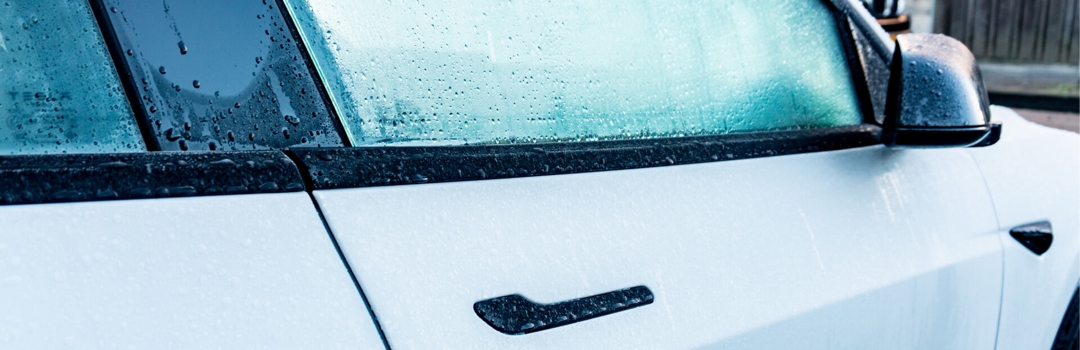
Tesla vehicles use electrically powered door latching systems. In normal conditions, doors open using buttons or touch-sensitive handles rather than traditional mechanical levers. The system relies on a low-voltage battery to operate locks, windows, and interior controls. When that battery loses power—whether due to crash damage, fire, or electrical failure—the doors may stop functioning altogether.
Tesla vehicles are equipped with manual door releases intended to serve as a backup. But those releases are often hidden, difficult to locate, and inconsistent across models. In some vehicles, rear-seat passengers must peel back carpet, reach beneath seats, or pull cables concealed behind panels. Earlier versions of some Tesla models lacked rear-seat manual releases entirely.
In an emergency—when a vehicle is dark, filling with smoke, or engulfed in flames—finding and operating these backups can be nearly impossible. This is especially true for drivers and passengers who may not be familiar with these types of vehicles, such as a new Tesla owner, people riding in a friend’s car, or someone using a rental car or rideshare.
First responders face similar obstacles when it comes to freeing people trapped inside. Exterior handles may be flush with the door and inoperable without power. Windows may be reinforced and difficult to break. What’s more, fires fueled by lithium-ion batteries can burn hotter and faster than gasoline, leaving little margin for error.
The result is a dangerous paradox: vehicles engineered to protect occupants during a crash may prevent them from getting out after an accident happens.
Manual Releases: The Backup Many People Don’t Know About
Tesla has long pointed to its manual door releases as proof that occupants can still escape if electrical systems fail. The releases are described in owner’s manuals and, in some models, are marked with small icons near interior controls.
In practice, these backups often fail the people who need them most.
The location and design of Tesla’s manual releases vary widely by model and year. In some vehicles, the front doors have a clearly visible mechanical lever near the window switches. But for rear-seat passengers, the situation is far less intuitive. Manual releases may be hidden beneath carpeting, tucked behind speaker grilles, or buried under seat cushions. Accessing them can require pulling up mats, removing panels, or knowing precisely where to reach.
Some Tesla vehicles sold as recently as the early 2020s lacked rear-door manual releases altogether. During those years, the Model 3 and certain Model Y configurations were among the best-selling vehicles in the world.
Safety experts say that expecting passengers to locate concealed mechanical releases during a crisis ignores how humans actually behave in emergencies. And the challenge is even greater for children, elderly passengers, people with disabilities, or anyone unfamiliar with Tesla’s design, such as rideshare passengers, rental car users, or first-time occupants. Many Tesla owners themselves report they did not know where the manual releases were until after a frightening incident.
So, while these backups may exist on paper, in real-world emergencies, they are often inaccessible when seconds matter most.
No Way Out—and No Way In
When Tesla’s doors lose power, it’s not just that occupants may be unable to get out. Rescuers often can’t get in. First responders may face multiple obstacles at once: inoperable handles, reinforced glass, high-voltage risks, and rapidly intensifying fires. Unlike gasoline fires, lithium-ion battery fires can reignite repeatedly and release toxic gases, forcing responders to keep their distance until specialized equipment arrives and making rescue operations far more challenging.
In interviews and training materials reviewed by Bloomberg, firefighters described Teslas as uniquely difficult to access compared to other vehicles. Some departments now train specifically on Tesla extrication techniques, including where to cut, where not to cut, and how to disable high-voltage systems. Even with that training, rescue can be delayed by minutes—time occupants often do not have.
These challenges are not secrets. Tesla publishes emergency response guides for firefighters, has hosted first responder trainings, and is aware that power loss disables door systems. Yet the underlying design remains largely unchanged.
A Design Choice with Consequences
Tesla did not invent electronic door latches, but it embraced them more aggressively than most automakers. Flush handles, button-based openings, and minimalist interiors became part of the brand’s identity as symbols of innovation and futuristic design.
But innovation comes with responsibility.
Traditional mechanical door handles work even when everything else fails. They require no power, no software, and no explanation. In emergency scenarios, they are intuitive by design. By contrast, Tesla’s approach assumes that systems will remain functional, or that occupants will remember obscure instructions under extreme stress. In reality, that assumption often breaks down in moments of crisis.
Experts say this is not merely a matter of educating users. No amount of reading an owner’s manual can compensate for poor design during an emergency. Critical safety systems must work practically, not theoretically.
The deaths identified in Bloomberg’s investigation suggest that Tesla’s door systems did not fail in isolation. They failed predictably, in ways that align with known engineering risks—and with devastating results. At that point, the question is no longer whether the design is innovative. It is whether it is acceptable.
Product Liability Begins Where Foreseeable Risk Is Ignored
Car crashes are not rare or unexpected events. Fires, power loss, and system failure are all foreseeable consequences of collisions. When a vehicle’s ability to open its doors depends primarily on electrical systems that are known to fail during crashes, the risk is not hypothetical. It is inherent.
In product liability law, a design can be defective even if it functions as intended when that design creates unreasonable danger compared to safer alternatives. Mechanical door handles are not speculative technology. They are proven, reliable, and still used widely throughout the auto industry.
Tesla’s decision to prioritize electronic latching systems was not forced by regulation, necessity, or physics. It was a design choice. And when design choices increase the risk of entrapment during fires, manufacturers may be held accountable for the consequences. Courts have repeatedly recognized that safety features must work in worst-case scenarios, not ideal ones. A door that opens only when power remains intact may work perfectly during normal use—yet still be dangerously defective when it matters most.
Warnings Are Not a Substitute for Safe Design
Tesla has emphasized that its vehicles include manual door releases and that instructions are available to owners. But warnings and instructions do not absolve manufacturers of responsibility when a safer design is feasible.
Product safety law draws a sharp distinction between warning defects and design defects. A company cannot rely on warnings to excuse a design that poses unreasonable risks, particularly when users may be injured or killed before they have time to read, remember, or act on those warnings.
In real-world crashes, occupants may be disoriented, injured, or unconscious. Smoke reduces visibility. Panic sets in within seconds. Expecting drivers or passengers to recall hidden release mechanisms in those moments is not realistic, and regulators and courts have long recognized that human behavior under stress must be accounted for in design.
The same is true for rescuers. First responders should not need specialized training or manufacturer-specific knowledge to open a car door and save a life. When lives depend on split-second access, intuitive mechanical systems are not optional; they are essential.
Corporate Knowledge Changes the Legal Equation
Consumer complaints about Tesla doors date back years. Drivers have reported being trapped. First responders have documented access difficulties. Social media posts, regulatory filings, and lawsuits have all raised the same alarm: Tesla doors may fail when power is lost.
As evidence accumulates, the legal standard shifts. What may begin as an unforeseen defect can evolve into something more serious when a company is repeatedly put on notice and fails to act. By Bloomberg’s count, more than half of the deaths linked to inoperable Tesla doors occurred since late 2024 after years of public complaints and internal awareness. That raises difficult questions about whether safety improvements have come too slowly, or not at all.
Tesla has indicated that it is working on redesigns and software-based solutions, including automatic unlocking during serious collisions. But post-incident updates do not undo past harm.
A Preventable Problem Demands Accountability
The deaths uncovered in Bloomberg’s investigation did not occur in a vacuum. They followed years of warnings, complaints, and documented risks tied to a design choice that prioritizes electronics over mechanical reliability in emergencies.
Car crashes are inevitable. Fires are foreseeable. Power loss is expected. But being trapped is not.
When a vehicle’s doors fail in precisely the moments they are needed most, the issue is no longer about innovation; it’s about responsibility. Manufacturers have a legal and moral duty to anticipate how their products behave in all situations, including the worst ones.
- Categories