Butane: The Explosive Fuel You Can’t See or Smell
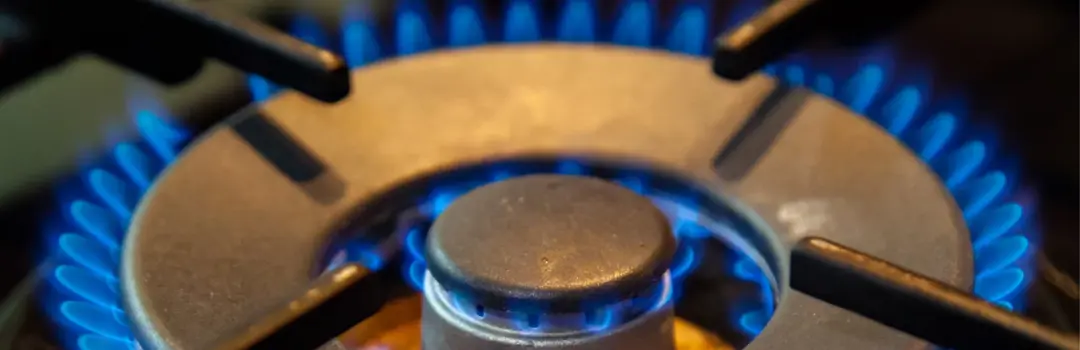
Most people have held butane in their hand without thinking about it. It's the fuel in the lighter in your kitchen drawer, the portable stove you bring camping, and the torch lighter you use to start the grill. It's the propellant in the hairspray under your bathroom sink and the compressed air canister on your desk. Butane is one of the most common fuels in everyday life, and most people don’t give it a second thought.
In industrial settings, the scale may change but the everyday familiarity does not. In the workplace, butane is frequently used as a fuel source, chemical feedstock, refrigerant, solvent, and propellant. It's generally stored in pressurized tanks, piped through processing systems, and handled by workers during routine shifts at oil refineries, manufacturing plants, warehouses, cannabis extraction labs, and distribution terminals across the country. It's so routine that many workers interact with it the same way most of us use a lighter: without thinking about what's actually inside.
In reality, though, it is an exceptionally dangerous substance.
Butane carries the highest possible flammability rating from the National Fire Protection Association (NFPA), and its physical properties make it uniquely hazardous in enclosed or poorly ventilated spaces, whether that's a basement, a garage, or an industrial facility. When butane leaks, it doesn't rise and disappear like natural gas. Instead, it sinks, spreads along the floor, and collects unseen and undetected. At certain concentrations, butane is so flammable it can ignite with something as small as a static spark.
What Is Butane & How Does It Behave?
Butane is a flammable gas produced during petroleum refining and natural gas processing. With consumer products, such as lighters, portable stoves, and aerosol cans, it's stored in small, pressurized containers. In industrial facilities, it's stored the same way, just on a much larger scale. Pressurized industrial storage tanks, cylinders, and piping systems are designed to hold thousands of gallons of liquid butane.
Regardless of the setting, butane only remains a liquid when it’s kept under pressure. Its boiling point is well below room temperature at just 31°F. The moment containment is breached—even if just through a hairline crack, a loose fitting, or a worn seal—liquid butane flashes into gas almost instantly.
One gallon of liquid butane produces roughly 233 gallons of flammable vapor. So, a leak that looks minor can fill a room with butane, creating an explosive atmosphere in minutes. At home, that might mean a cracked canister venting in a closed garage. At a refinery, it could mean thousands of cubic feet of invisible, flammable gas flooding a work area before anyone realizes something is wrong.
What Makes Butane So Difficult to Detect?
Once released, butane vapor behaves in ways that make it especially hard to detect and control. According to the World Health Organization, butane is roughly twice as heavy as air. This means that, instead of rising and dissipating, it sinks to the ground and spreads outward like water, flowing into pits, trenches, and basements. It can collect under equipment and along floors or travel under doors, through gaps in walls, and into adjacent rooms. Once they have traveled, vapors can cause fires or explosions far from the initial leak point, meaning a butane leak in one area of an industrial facility could put workers in other areas—those who would be least likely to realize a leak had occurred—at serious risk.
To the average person, butane is virtually undetectable at explosive levels. In its natural form, it’s invisible and odorless. While some consumer products contain added odorants, like mercaptan, which produces a distinctive “rotten egg” smell, pure butane does not announce itself in any meaningful way.
A Low Threshold for Ignition Means the Danger Is High
What makes all of this not just dangerous but potentially catastrophic is how little energy is required to ignite butane. Its minimum ignition energy is 0.25 millijoules, an almost impossibly small amount. To imagine just how little this is, consider the fact that a static spark from a person's fingertip carries anywhere from 0.5 to 60 millijoules, roughly 2 to 240 times the minimum amount needed to ignite butane vapors.
In other words, butane doesn't need an open flame to ignite. Far more often, it’s something as small as a light switch being flipped, an electric motor cycling on, or a space heater kicking in. In many documented cases, the ignition source had nothing to do with the butane-related work at all.
Routine Tasks Carry Some of the Highest Butane Risks
In the workplace, butane isn't usually confined to specialized, high-risk operations. Instead, it's part of daily work across a wide range of industries, from oil refineries and petrochemical plants to propane and LPG distribution terminals, cannabis extraction facilities, aerosol manufacturing lines, and warehouses where products containing butane are stored. Even smaller-scale operations, like restaurants that require the use of commercial butane torches or contractors who have portable fuel equipment, may handle it regularly, often without specialized safety training.
In many cases, workers interact with butane during some of the most routine parts of a shift, whether that’s maintaining pumps, valves, and piping on butane-containing systems or transferring fuel between storage containers, cleaning equipment that held butane, opening lines for inspection or repair, or running startup and shutdown procedures.
According to research compiled by the U.S. Chemical Safety and Hazard Investigation Board (CSB), “process safety incidents,” or the sudden loss of containment of hazardous energy or materials, are five times more likely to occur during startup than during normal, everyday operations. In fact, data reveal that roughly half of all process safety incidents happen during startups, shutdowns, and other transitional work. These processes don’t begin as emergencies but, rather, the moments when systems are opened, pressures shift, seals are tested, and conditions change. Because the work feels controlled and familiar, it can be difficult to recognize how quickly conditions can become exceedingly dangerous.
That pattern shows up again and again in real life. At BP America (Texas City), a hydrocarbon vapor cloud ignited during a unit startup in 2005, killing 15 people and injuring 180 others. In 2013, two workers were killed and 167 reported injuries after a routine reboiler switch led to a catastrophic explosion at the Williams Olefins Plant in Geismar, Louisiana. And, at Watson Grinding in Houston in 2020, a flammable gas accumulated overnight in an enclosed building and detonated when a worker arrived and turned on the lights. Three people died, including two workers and one nearby resident.
Outside of industrial settings, the same dynamic can play out on a smaller scale. People refill butane lighters at the kitchen table, use portable stoves in poorly ventilated spaces, or store cases of aerosol cans in hot garages without a second thought. The 2024 explosion at a vape supply warehouse in Clinton Township, Michigan, where illegally stored butane canisters launched metal projectiles up to a mile in every direction and killed a 19-year-old bystander a quarter-mile away, is a frightening reminder of what even consumer-scale butane quantities can do when containment fails.
From Leak to Explosion: A Rapid Chain of Events
Butane explosions follow a fairly predictable sequence of events. This is important because every step in that sequence represents a point where the right safety measures could have prevented disaster.
Step One: Leak
Butane explosions begin with a leak, and the causes are generally consistent. Investigations have revealed butane leaks often result from:
- Aging or corroded fittings
- Failed pump seals
- Degraded hoses made of the wrong material
- Valve failures
- Improper connections during fuel transfers
The common thread is equipment that hadn't been inspected, maintained, or replaced when it should have been.
Step Two: Spread
Once liquid butane escapes, it flashes to vapor and begins to spread. Because the gas is about twice as heavy as air, it flows along the ground, filling low points first, such as trenches, pits, stairwells, and basements. It can move through ductwork, under doors, and into adjacent rooms and work areas.
Step Three: Ignition
Before butane vapor explodes, it must meet an ignition source. Because butane is so flammable, the spark does not have to be big, and it does not have to be near the leak either. Sometimes, it’s a light switch, an electric motor, or a pilot light. It could even be a static discharge or a spark from routine metalwork. Butane's ignition energy is so low, almost anything electrical or friction-based can trigger it.
Step Four: Explosion
After the vapors connect with an ignition source, what happens next happens almost instantaneously. When the vapor cloud ignites, the flame doesn't burn slowly like a candle or a campfire. Instead, it tears through the entire cloud at once, moving instantly through every pocket of gas that has accumulated along floors, in pits, under equipment, and in adjacent rooms.
The force of the blast is often strong enough to level walls, shatter windows, and launch heavy equipment across a facility. Workers within or near the vapor cloud have no time to react and no way to outrun it. In many cases, it's not the fire itself that causes the worst injuries; it's the building coming apart around them.
Why Do Butane Explosions Keep Happening?
Historically, investigations into butane explosions have exposed the same key issues again and again, in facility after facility, year after year.
Equipment that should have been maintained or replaced years ago:
In 2019, a pump mechanical seal failed on a tank holding butane-enriched naphtha at ITC Deer Park in Texas, releasing flammable vapors for roughly 30 minutes before a fire started. The Chemical Safety Board (CSB) found that ITC had no formal mechanical integrity program for its pumps, meaning there was no system in place to catch the kind of wear that led directly to the failure.
Three years earlier at an ExxonMobil refinery in Baton Rouge, workers inadvertently breached the pressure boundary on a 30-plus-year-old valve design that was known to be dangerous. 97 percent of the unit's valves had already been updated to a safer model, but this one had not. One ExxonMobil employee and three contractors were injured.
Safety systems that were disabled, disconnected, or left to fall apart:
Gas detection systems, ventilation equipment, and emergency shutoffs are designed to catch leaks before they become catastrophes. But investigations into flammable gas explosions reveal a troubling pattern: these systems are frequently missing altogether, installed but never maintained, or quietly taken offline and never restored. In some cases, facilities had been warned through internal reviews, insurance audits, or prior incidents that their safety systems were inadequate, yet they still failed to act.
When a gas detection alarm doesn't work or a ventilation system meant to clear vapors from a floor-level workspace has been shut down, workers have no way of knowing that conditions around them have become dangerous. The safety infrastructure that's supposed to serve as a last line of defense simply isn't there.
Management relying on habits and assumptions instead of engineering controls:
Instead of installing automatic shutoffs, continuous gas monitoring, or interlocked ventilation systems, many facilities rely on supervisors to follow informal routines, such as closing a valve at the end of a shift, checking a gauge before leaving for the night, or eyeballing a connection instead of pressure-testing it. These habits can work for a while, but they erode over time. People forget. Shifts get rushed. Turnover brings in workers who were never told the routine existed. Without engineered safeguards backing them up, a single missed step can put an entire facility at risk.
This is something employers are responsible for ensuring, not employees. Workers may be encouraged to complete informal safety checks or tasks that don’t follow accepted safety standards, but it is always the role of the employer to ensure adequate processes are in place.
Workers who were never trained on the specific dangers they faced:
Workers who handle butane are often expected to do so without being told exactly what makes it dangerous, things like how the vapor moves, how little energy it takes to ignite, why they can't rely on smell to detect a leak, or what to do if they suspect one. In some cases, workers who noticed warning signs reported them to supervisors and were told to keep working. When employee training covers general workplace safety but skips the specific behavior of the chemicals on-site, it leaves workers without the information they need to protect themselves.
Standards Exist, but They Aren't Always Followed
None of these hazards are secrets. In fact, they are extremely well known. Federal regulations and national safety codes clearly lay out what employers are supposed to do when it comes to the safe handling of butane.
OSHA's Process Safety Management standard (29 CFR 1910.119) applies to any facility that stores 10,000 or more pounds of flammable liquid with a flashpoint that is less than 100°F, including butane.
This standard requires:
- Process hazard analysis
- Written operating procedures
- Mechanical integrity programs
- Worker training with refreshers every three years
- Management of change protocols
- Incident investigation
- Emergency planning
OSHA explicitly confirmed in a 2019 letter of interpretation that butane, isobutane, and propane all trigger Process Safety Management (PSM).
Even below the PSM threshold, OSHA’s General Duty Clause requires employers to keep their workplaces free from recognized hazards that cause or are likely to cause death or serious physical harm. OSHA can point to consensus standards like NFPA 58 to establish both that the hazard was recognized and that feasible solutions existed.
NFPA 30, the Flammable and Combustible Liquids Code, requires ventilation that is sufficient to keep vapor concentrations at or below 25% of the lower explosive limit. For butane, that means below roughly 0.4%. OSHA's flammable liquids standard (29 CFR 1910.106) requires ventilation in flammable liquid storage and processing areas, and a 1991 OSHA interpretation confirms that compliance with 1910.106 is considered an acceptable alternative to the NFPA 30 threshold. Further requirements include indoor storage areas having at least six complete air changes per hour, with exhaust intakes positioned no more than 12 inches above the floor. That last detail is critical for a vapor that sinks.
NFPA 58, the Liquefied Petroleum Gas Code, is adopted in all 50 states and requires mandatory odorization so the gas is detectable at one-fifth of the lower explosive limit, container construction standards, pressure relief devices, minimum separation distances, and a written fire safety analysis for larger facilities.
Gas detection, while not universally mandated by a single OSHA standard, is required under PSM documentation and can be compelled under the General Duty Clause. Industry best practice sets warning alarms at 10–15% of the LEL and evacuation alarms at 20%.
The standards exist. The knowledge exists. What CSB and OSHA investigations keep finding is a gap between what the rules require and what employers actually do.
The Lasting Effects of Butane Explosions
Like any explosion, butane explosions tend to cause injuries that are severe and significantly life changing. Medical professionals classify blast injuries into four categories, and butane explosions can produce all of them at once.
- Primary Injuries: Primary blast injuries come from the pressure wave itself. Examples include blast lung, which is the most common fatal injury among initial survivors, along with ruptured eardrums, internal organ damage, and traumatic brain injury.
- Secondary Injuries: Secondary injuries result from flying debris, such as structural fragments, equipment parts, and shattered glass, which can all become high-velocity projectiles.
- Tertiary Injuries: Tertiary blast injuries happen when workers are thrown by the force of the explosion into walls, floors, or equipment, causing fractures, blunt force trauma, and, in severe cases, traumatic amputations.
- Quaternary Injuries: Quaternary blast injuries include thermal burns, airway damage from inhaling superheated gases, and crush injuries from structural collapses.
Workers caught between a blast and a solid surface, like a wall, generally experience two to three times the injury severity compared to those in open space, as the blast wave reflects and amplifies off hard surfaces. Survivors of industrial gas explosions often face months or years of burn treatment and skin grafting, permanent scarring, chronic pain, reduced mobility, lasting psychological trauma, and the loss of income and career stability that results from being forced to take time off work to heal.
What Workers & Families Need to Understand About Butane Hazards
Butane hazards are not mysteries, and they are not inevitable. The risks are thoroughly documented. The safety systems that prevent them—things like proper ventilation, gas detection, mechanical integrity programs, worker training, and routine equipment maintenance—are well-established, widely available, and already required by law. When those systems fail or are never put in place, the responsibility lies with the employers and facility operators who made those decisions, not with the workers who showed up for a normal shift.
Federal investigations into these explosions consistently trace the cause back to the same set of preventable failures: aging equipment left in service long past its safe life, maintenance deferred to save money, safety systems installed but later disconnected or allowed to deteriorate, workers untrained on the specific hazards they face, and management relying on assumptions and habits instead of engineering controls.
Butane's presence in homes and consumer products means the risks extend beyond industrial settings. When butane-containing consumer products are poorly designed, inadequately labeled, or sold without proper safety warnings, the manufacturers and distributors behind those products bear responsibility for the harm that follows. And in the workplace, where employers control the systems, the equipment, and the safety decisions, the lines of responsibility are even clearer.
These are not accidents that come out of nowhere. They are the predictable result of choices. Choices about product design, equipment maintenance, safety training, and emergency protocols. When the parties responsible for making these choices fail to put consumer and workplace safety first, they can—and must—be held responsible.
- Categories