Eighteen Inches from Death: How Trucks Pin Workers—and Who’s to Blame
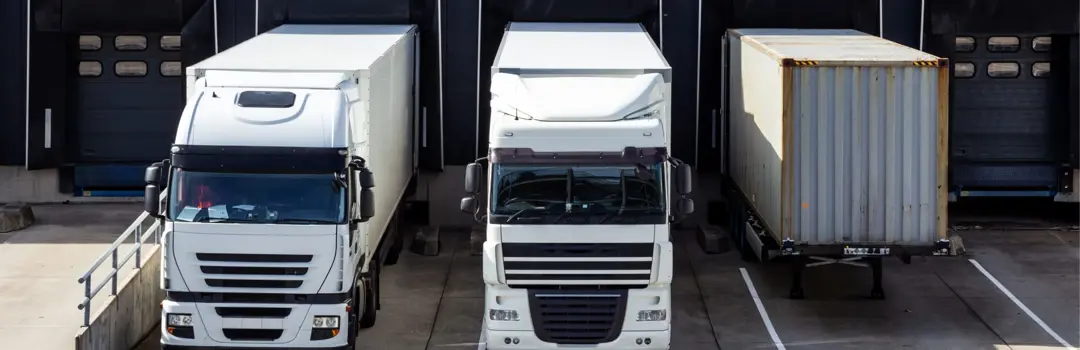
The space between the back of a tractor-trailer and the face of a loading dock is about 18 inches wide. It's a gap most people wouldn't think twice about, nothing more than a narrow corridor that exists for a few minutes while a truck is positioned, a trailer is checked, or a dock leveler is adjusted. Workers lean through it to inspect freight, bend into it to pick up something off the ground, stand inside it to signal a driver. Then the truck moves—not fast, not far, maybe a foot or two—and the gap closes.
That is how workers die in crushing incidents. Not in high-speed collisions or dramatic wrecks, but in the quiet, blink-and-you-miss-it elimination of a space barely wider than a human torso. A vehicle weighing tens of thousands of pounds moves toward a wall, a dock, or another fixed space, and the person standing in between has no time to react and nowhere to go.
According to the Bureau of Labor Statistics' most recent Census of Fatal Occupational Injuries, 756 workers were killed in contact incidents in 2024, including 213 who were struck, caught, or compressed by powered equipment. Pedestrian incidents involving motorized land vehicles rose 19 percent from the previous year. In warehouses and distribution centers, loading docks account for roughly a quarter of all workplace accidents, and the deadliest involve workers caught between trucks and the structures around them. OSHA's fatality investigation database is full of these cases, stretching back decades. While the names and locations change, the fundamental problem does not.
These incidents aren’t intentional, but they aren’t true accidents either. Employers know that workers are at risk of being crushed between trucks and fixed objects, and they are responsible for putting the proper safeguards in place to make sure this doesn’t happen. Time after time, investigations trace crush accidents back to employer decisions, not worker mistakes.
So, what exactly is happening, and, more importantly, why does it keep happening?
Beyond “Wrong Place, Wrong Time”
When a worker finds themselves trapped between a truck and a wall, it’s not just a matter of being in the wrong place at the wrong time. Workers don't end up in crush zones because they're being reckless or ignoring rules; they end up there because the job puts them there.
At 6:00 a.m. on February 20, 2024, a 37-year-old employee at a trucking company was on the ground outside a loading dock door at an R&L Carriers facility, picking up D-cell batteries that had fallen out of a box. At the same time, a coworker was pulling a tractor-trailer into the loading dock. The coworker didn't see him. The trailer pinned the first employee between its rear end and the dock. He suffered crushing injuries to his torso and was killed.
Two years earlier, at 4:30 a.m. on March 4, 2022, a dock manager at a FedEx Ground facility was standing on the ground in front of his workstation, loading dock number 86. A trailer had pulled in a few feet away from the edge of the dock, and a roller conveyor was still partially inside the truck. The driver backed the trailer up against the dock to make it easier to retract the conveyor. The dock manager was standing in the gap. He was pinned between the back of the trailer and the dock edge. His vital internal organs were crushed, and he was killed.
In these situations, neither worker was doing anything out of the ordinary. One was picking up items that had dropped on the ground; the other was standing where he stood every shift. The hazard wasn't the task itself but the fact that the task put a human body between a moving vehicle and an immovable surface with nothing in place to keep the two apart.
How a Large Truck Moving Just Two Feet Can Kill
There's a natural tendency to associate vehicle-related danger with speed. And, while it’s true that highway collisions, rollovers, and high-velocity impacts can have devastating consequences, the same is equally true of pinning-related vehicle accidents. In these accidents, speed is rarely (if ever) a factor. Instead, it’s often something as small as a parking brake being released, a driver inching backward to close a gap, or a trailer that rolls a few feet on a slight grade. These are small, slow movements: one foot, two feet, sometimes just inches. But they can still be enough to kill.
A loaded tractor-trailer can weigh up to 80,000 pounds. At walking speed, even a fraction of that mass generates far more force than the human body can absorb. Research on thoracic trauma suggests the ribcage begins to fracture at roughly 520 pounds of compressive force. A truck rolling at less than two miles per hour carries significantly more continuous, compressive force than that.
It’s this sustained compression that makes pinning injuries so different from struck-by (or impact force) injuries. When a person is hit by a moving object in open space, the body absorbs the blow and is pushed away. Of course, this is painful and potentially fatal, but the contact is momentary. In a pinning scenario, the vehicle doesn't bounce off. It keeps pushing until it reaches the wall, the dock, the other truck, etc. Everything between those two surfaces is compressed until it gives way.
What’s more, there is essentially zero time to react. A worker standing in an 18-inch gap has no time to step aside, duck, or retreat when a 40-ton vehicle shifts toward them. The space is too narrow to turn, too confined to escape. By the time the worker feels pressure against their body, they are already trapped.
Where Pinning Accidents Are Most Likely to Happen
Pinning-related deaths mostly happen in specific environments, and the environments themselves are part of the problem.
Loading Docks
When it comes to being at risk of being trapped between a truck and a fixed object, loading docks are by far the most dangerous. Workers routinely position themselves between trailer backs and dock faces to guide trucks in, check alignment, adjust dock levelers, connect equipment, or communicate with drivers. During such tasks, the gap between the trailer and the dock might be anywhere from 12 to 36 inches.
Docks are loud, congested, and poorly lit. Sightlines are often obstructed by the trailers themselves. According to industry safety analyses, for every loading dock injury that occurs, there are an estimated 600 near-misses. This ratio should alarm anyone who understands what it implies about how often workers are narrowly avoiding being crushed.
Receiving Areas
Retail and grocery receiving areas carry a particular kind of risk because the workers who use them, typically stock clerks, freight handlers, overnight receiving crews, are often the least trained on truck hazards. These aren't warehouse logistics specialists; they're simply store employees who happen to work at the dock.
On Christmas Eve 2020, a 46-year-old freight clerk at a national supermarket chain was working the overnight shift when a semitruck backed up to the store's loading dock. The clerk checked the freight and determined the truck was at the wrong dock. While waiting for the situation to be sorted out, he leaned his head and shoulders through the gap between the exterior dock wall and the rear of the trailer. Investigators later found that this was something the store workers did routinely to communicate with drivers. When the truck's parking brake was released, the trailer lurched backward on a slight downgrade and crushed him against the wall. He died at the scene.
The Washington State Fatality Assessment and Control Evaluation (FACE) investigation into the incident found that the employer had no loading dock safety policies, no written procedures for truck-to-dock operations, and no training for workers on the hazards of standing in the gap between a trailer and a fixed structure. The trailer was parked away from dock bumpers and positioned on a slight downgrade toward the loading bay, conditions that made a rollback not just possible but predictable.
Construction Sites, Bays, Warehouses & More
These are some of the most dangerous environments when it comes to pinning accidents, but they are by no means the only ones. The same pattern shows up in construction, where trucks back toward walls, trenches, and structures with workers positioned nearby. It shows up in manufacturing, where delivery trucks pull into tight bays alongside stationary equipment. It shows up in warehouses, where large vehicles and forklifts pin workers against racks and walls. The settings differ, but the underlying condition is almost always the same: vehicles and pedestrians operating in the same tight space with no physical separation between them.
The No-Zone: A Gap Drivers Can’t See
Read enough OSHA fatality investigations into pinning deaths, and the same finding surfaces again and again: the driver did not know the worker was in the gap between the vehicle and the wall.
At FedEx Ground in 2022, the driver backed the trailer without knowing the dock manager was on the ground outside. At R&L Carriers in 2024, the coworker pulling the trailer in didn't see the employee crouching to pick up batteries. And these aren’t the only examples.
At a Bonita Packing warehouse in 2005, a driver was told by dispatch that his trailer was too far from the dock and backed up. What he didn’t know was that a worker was standing behind the trailer, completely out of sight. The worker was crushed between the trailer and the dock and killed. At a Salvation Army facility in 2009, a driver helper was guiding a truck toward a dock door, walking between the backing truck and a parked truck on the opposite side. He stepped deeper into the gap. The driver, who had no view of the space the helper had entered, kept backing. The helper was crushed between the two trucks. His cause of death was listed as asphyxia, as the compression prevented his lungs from expanding.
It would be easy to frame these tragedies as the result of communication breakdowns between individual workers and drivers. But that would entirely miss the point. The problem is not that drivers aren't paying attention; it’s that no system exists to confirm the area is clear before a vehicle moves. Instead, workers and drivers are left to rely on shouted instructions, hand gestures, and eye contact in environments that are dark, loud, and obstructed by the very trucks that make these environments dangerous. When a spotter is present, they're often positioned where the driver can't see them. In the more common scenario where no spotter is present, workers in the no-zone are on their own.
Employees are not the ones responsible for making sure established communication systems exist. It’s the employer who decides whether spotters are assigned, whether radios are issued, and whether a lockout protocol prevents the truck from moving while anyone is near the dock. When no such system is in place, and a driver moves a truck into a space that’s already occupied by a person they can't see, the failure isn't the driver's. It's the employer's.
The Protections That Weren't There
Every one of these deaths was preventable. Not in theory, not with experimental technology, but with commercially available equipment and well-established procedures that many facilities already use.
None of this is new. None of it is experimental. The question after every one of these deaths is not whether the tools to prevent it existed; it's whether the employer chose to use them.
How Routine Becomes Risk
If the hazards are documented and the solutions are available, why do workers keep getting killed in the same way, at the same types of facilities, under the same circumstances? The answer lies in what happens when a dangerous task goes right often enough that people stop recognizing its risks.
The investigation revealed that the supermarket clerk in Washington had been leaning through the gap between the dock wall and the trailer for years. His coworkers did the same thing. It was how they communicated with drivers. No one treated it as a hazard because nothing had ever gone wrong, until a parking brake released on a slight grade and the gap closed around his body.
The dock manager at FedEx Ground stood in front of that loading dock every shift. The R&L Carriers employee picked things up off the ground near trucks as a matter of course. The Salvation Army worker guided trucks in by standing between them. Every one of these tasks had been completed safely dozens or hundreds of times before, and every one of them was dangerous every single time it was performed. But because nothing had happened, the risk had become routine.
Safety professionals call this the “normalization of risk.” When a hazardous practice doesn’t lead to obvious consequences, it gradually loses its identity as hazardous. It becomes routine. It becomes "the way we do things." And when someone finally gets hurt, the instinct is to call it a freak accident, an aberration rather than the inevitable outcome of a practice that was never safe to begin with.
The Distance Between Life & Death Is the Width of a Human Body
Pinning deaths happen in extremely small spaces: the 18-inch gap between a trailer and a dock, the two-foot corridor between a truck and a building wall, the narrow opening between two parked vehicles. That space is controlled entirely by the employer: by how the dock is designed, whether restraints are installed, whether a communication system is in place, and whether anyone confirms the gap is clear before a vehicle moves.
Workers don't just choose to stand in crush zones. They are positioned there by the nature of the work, the layout of the facility, and the absence of protections that should have been in place long before the first truck backed in. When that space closes, the responsibility doesn't belong to the worker who was standing where they were required to be, or to the driver who couldn't see what no one told them to look for. It belongs to the employer who understood the risk and failed to act.
When employers design workspaces that put workers inches from death, and then also fail to install the protections that would keep them safe, they must be held accountable. Every time.
- Categories