Electrocuted During Repairs: When Routine Maintenance Turns Deadly
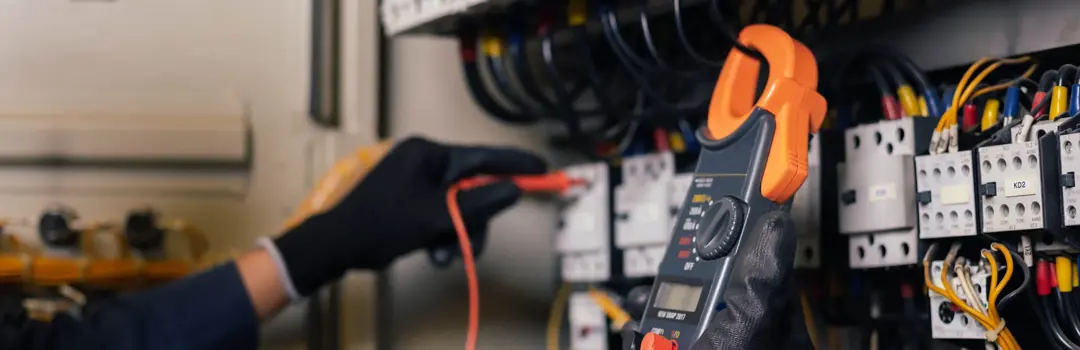
A worker reaches into an electrical panel to replace a circuit breaker; an experienced technician troubleshoots a malfunctioning motor; a maintenance crew inspects equipment during a scheduled shutdown—these are routine tasks, performed thousands of times every day in workplaces across the country. But sometimes, without warning, they can become deadly.
Electrocution kills in seconds. There's no time to call for help, no chance to reverse the contact, no margin for error. A worker touches what appears to be de-energized equipment and is struck by hundreds or thousands of volts, almost always leading to immediate cardiac arrest. Often, by the time coworkers realize what's happened, it's already too late.
These incidents are indisputably disturbing, and it’s not just about the severity of electrocution accidents. It’s also the fact that they are nearly always preventable. Workers aren't dying because electrical work is impossible to perform safely. They're dying because safety procedures are skipped, equipment isn't properly de-energized, testing isn't performed, or assumptions are made that turn out to be fatally wrong.
Workers are electrocuted while doing jobs they believed were safe to perform, often tasks they'd completed successfully dozens or even hundreds of times before.
Electricity is unforgiving. It doesn't warn before it kills. And when the systems designed to protect workers fail—or, worse, when those systems are bypassed—the results are almost invariably catastrophic.
Workplace Electrocution: Understanding the Scale of the Problem
Electrocution is one of the leading causes of workplace fatalities in the United States. The Occupational Safety and Health Administration identifies it as one of the "Fatal Four" causes of death in construction, alongside falls, being struck by objects, and caught-in/between hazards. But electrical deaths aren't confined to construction sites. They occur across industries: manufacturing plants, utility companies, oil and gas facilities, warehouses, food processing centers, and anywhere else workers interact with powered equipment.
According to data compiled by the Electrical Safety Foundation International from the Bureau of Labor Statistics, approximately 150 workers die from electrical fatalities each year. Maintenance and repair work, which often leads to unexpected contact with electricity, accounts for a significant share of these deaths. Workers who perform routine service, troubleshoot equipment malfunctions, replace components, conduct inspections, or clean equipment near electrical systems can be exposed to energized parts. And, in many cases, the danger isn’t obvious until contact has already been made.
What "Electrocution During Maintenance" Actually Means
When we talk about electrocution during maintenance (or repairs), we're describing a specific and deadly scenario: a worker makes contact with a live electrical current while servicing equipment they believed was safely de-energized.
This isn't about workers knowingly working on live equipment. The incidents we're discussing involve workers who thought the power was off. They followed what they believed were the correct procedures, or they relied on assurances from supervisors or coworkers, or they assumed that because equipment appeared to be shut down, it was safe to touch.
These scenarios take several forms:
- Equipment thought to be shut down but still energized through an alternate source or incomplete isolation
- Unexpected re-energization during work when another employee restarts equipment without knowing maintenance is underway
- Exposure to hidden or secondary power sources, like capacitors storing lethal charges or backfeed from generators
- Contact with damaged components where degraded insulation or faulty grounding creates hazards that aren't immediately visible
The term "routine maintenance" can be deceptive. There's nothing routine about the risk. The familiarity that comes with repetition can actually increase danger as supervisors become complacent or workers fail to double and triple-check safety measures.
The Lasting Effects of Electrical Injuries
Unfortunately, the human body is an excellent conductor of electricity. When a worker comes into contact with an energized component, the electrical current follows the path of least resistance, often through the heart, lungs, and nervous system. The effects are immediate and catastrophic.
Cardiac arrest can occur within a fraction of a second. The electrical current disrupts the heart's natural electrical signals, causing it to stop beating or to fibrillate. Respiratory failure follows quickly as the electrical current paralyzes the muscles that control breathing. Even relatively low voltages can be fatal; standard 120-volt household electrical currents have killed workers.
Internal damage isn't always immediately visible. While entry and exit burns may mark where the current entered and left the body, the path between those points can include severe damage to internal organs, blood vessels, muscles, and nerves. Workers who survive the initial shock may suffer kidney failure, neurological damage, cardiac complications, and tissue death that becomes apparent only hours or days later.
The speed at which electrocution causes injury is one reason these incidents are so often fatal. By the time a coworker or supervisor realizes something is wrong, cardiac arrest has already occurred. Survivors of serious electrical injuries often face permanent disabilities, from nerve injuries and chronic pain to neurological damage, heart problems, severe scarring, and psychological trauma.
How These Accidents Happen: The Critical Failure Points
When workplace electrocutions happen during maintenance and repairs, they usually follow predictable patterns, driven by specific failures in procedures, equipment, training, and workplace culture.
Lockout/Tagout Failures
Lockout/tagout procedures exist for one reason: to ensure that equipment cannot be energized while people are working on it. When properly implemented and followed, lockout/tagout prevents electrocution and other accidents. Yet lockout/tagout failures remain one of the most common contributing factors in fatal electrocutions.
How does this happen? In some cases:
- Procedures are skipped entirely because the job seems quick and simple.
- Production pressure discourages downtime.
- Workers have completed the same task many times without incident.
- Locks are applied incorrectly or incompletely, with workers locking out the primary power source while failing to identify and control secondary sources.
- Equipment is restarted by another worker who didn't know maintenance was underway. This is particularly common in facilities where multiple shifts, contractors, and departments share equipment.
- Training is inadequate or enforcement is weak, creating a culture where lockout/tagout is seen as “optional.”
The False Assumption Problem
Many electrocutions occur because workers operate under false assumptions about whether equipment is de-energized, assumptions that often stem from inadequate procedures, poor training, or systemic workplace failures rather than individual carelessness. Workers may assume that because they shut off power themselves, the equipment is safe—but throwing a switch doesn't guarantee complete de-energization. The only way to know whether equipment is truly de-energized is to test it with appropriate instruments before making contact.
Failure to Test Before Touching
Workers may be instructed to rely on indicator lights, switch positions, or the absence of equipment noise to determine if power is off. But when employers fail to provide proper testing equipment or establish clear verification procedures, these unreliable visual and auditory cues become the only guidance workers have. Verbal confirmations, such as a supervisor saying the power is off or an operator confirming that they threw the disconnect, may replace actual testing when companies don't require or enforce proper verification protocols.
Some facilities lack written procedures specifying exactly how workers should confirm de-energization. Others have procedures on paper but provide no testing equipment, inadequate training on its use, or insufficient time built into work schedules to properly perform testing. When workers are expected to verify de-energization but aren't given the tools, training, or procedures to do so correctly, false assumptions are bound to happen.
Even experienced workers who correctly shut off power themselves may not realize that throwing a switch doesn't guarantee complete de-energization if they've never been trained about alternate power sources, stored energy, or backfeed scenarios. Their confidence isn't carelessness; it's the result of incomplete training that failed to prepare them for the full range of electrical hazards they might encounter.
The only way to know whether equipment is truly de-energized is to test it with appropriate instruments before making contact. But this critical safety step only happens consistently when employers provide the necessary equipment, implement clear testing procedures, train workers thoroughly, and build adequate time into schedules for proper verification.
Unexpected Re-Energization
Even when equipment is properly locked out, de-energized, and verified, unexpected re-energization can occur.
This may happen if:
- Another employee restores power despite lockout procedures.
- Automatic restart systems re-energize equipment without human intervention.
- Backfeed from secondary power sources, such as solar panels, backup generators, or co-generation systems, feeds power back into equipment.
- Induced voltage from nearby circuits creates hazardous conditions.
- Stored energy in capacitors delivers fatal shocks to workers who make contact.
Equipment & System Issues
The physical condition of electrical systems and equipment plays a significant role in the risk of electrocution. Over time, wiring insulation can break down due to heat, chemicals, physical wear, or age, exposing conductors that should be protected. Workers performing maintenance may contact exposed wiring they didn't expect to encounter.
Faulty grounding is another issue that creates particularly dangerous conditions. When grounding systems are inadequate or have deteriorated, equipment enclosures can become energized without tripping protective devices. A worker touching what should be a grounded metal surface can complete a circuit to ground through their body.
Older electrical systems often lack modern safety features, like ground fault protection and arc fault detection. These systems may meet the standards that were in effect when they were built but fall short of current safety requirements. Conversely, complex newer systems can introduce multiple power sources and interconnected controls that traditional lockout procedures don't adequately address. Without updated procedures, even properly trained workers may not recognize all the hazards present.
Perhaps most troubling is when equipment with known defects remains in service. When electrical faults are discovered but not immediately repaired, equipment should be tagged to prevent use. This doesn't always happen, creating hazards for workers who have no way of knowing about existing problems.
Production Pressure
Perhaps no factor contributes to more electrocution deaths than the pressure to maintain production at the expense of safety. All too often, workers are pressured to rush maintenance in order to minimize downtime and restore operations quickly. Full system shutdowns are sometimes discouraged because of their impact on an employer’s bottom line. As a result, a certain "just check it quick" mentality takes hold, with workers sent to diagnose problems without properly de-energizing equipment.
Companies that prioritize production over safety send a clear message. When workers who follow proper procedures are criticized for being too slow, when those who skip safety steps are rewarded for efficiency, workers understand what the company actually values. But this should simply never be the case. Nothing matters as much as worker safety.
Why These Accidents Keep Happening
When risks are normalized, dangerous practices become routine. For example, when lockout/tagout procedures are skipped without consequence, the perceived importance of these procedures gradually diminishes. When employers pressure workers to skip critical safety measures by rewarding output and efficiency, workers may feel like they have to take those risks. And, in many cases, workplace culture makes employees reluctant to insist on proper procedures, as those who raise safety concerns may be labeled as “difficult” or face retaliation, such as being taken off a job.
These factors tend to reinforce each other, creating workplaces where everyone involved may genuinely believe they're operating safely while implementing practices that make fatal electrocutions not just a risk but, in many cases, a likely occurrence. It’s up to employers to make sure these situations don’t happen.
What Employers Must Do to Prevent Electrical Deaths
The measures that prevent workplace electrocutions are well-established and proven to be effective. Strict lockout/tagout enforcement is the foundation. Testing equipment before any contact is non-negotiable. Proper personal protective equipment provides essential protection during electrical work, though it's never a substitute for proper lockout/tagout procedures.
Employee training and communication are also key. Comprehensive, ongoing training ensures workers understand hazards and know how to implement protective measures, while clear communication protocols prevent scenarios where one worker re-energizes equipment while another is still performing maintenance.
Employers must also ensure that equipment is regularly inspected and properly maintained. This keeps electrical systems in safe condition and reduces potentially fatal risks. Creating a workplace culture focused on safety, one that empowers employees to speak up and stop work when necessary, may be the most important element of all. By fostering an environment that prioritizes safety above all else, employers can prevent not just electrical incidents but all types of workplace accidents.
One thing is clear: these measures work when they’re properly implemented. The difference between safe workplaces and dangerous ones isn't access to information about what should be done; it's commitment to actually doing it. The gap between theory and practice, between policy and culture, between what companies say and what they actually do, that's where workers are put at risk.
Who Is Responsible for Electrocutions During Maintenance?
No worker should be forced to choose between their job and their life. Electrocutions that occur during maintenance or repairs are far from “freak accidents.” They are known risks, and they are preventable.
Under the Occupational Safety and Health Act of 1970, the Act that created OSHA, employers carry the primary legal responsibility for providing workplaces that are free from recognized hazards. When they fail in this duty, employers bear the legal responsibility for resulting injuries and deaths.
What does this failure look like? In the context of electrocutions, it might include:
- Failing to address, repair, remove, or otherwise correct known hazards
- Failing to enforce proper lockout/tagout procedures
- Failing to train employees in safety standards or emergency procedures
- Pressuring workers to skip safety protocols or ignore certain steps
- Failing to replace or repair old, outdated, or defective equipment
Sometimes, contractors and subcontractors may share liability depending on the work arrangement. Equipment owners and facility managers have responsibilities even when maintenance is performed by others. Equipment manufacturers can be held liable in cases involving design defects or inadequate warnings.
An employer’s knowledge of workplace hazards fundamentally changes the legal analysis. When companies are aware of electrical dangers—whether through prior incidents, worker complaints, or OSHA citations—but fail to implement adequate protections, they can't claim they didn't know the hazards existed. They can’t deny responsibility for resulting injuries or deaths. And they must be held accountable.
Maintenance May Be Routine, But Hazards Never Are
Electrical safety procedures exist because, without them, electricity can kill instantly and without warning. Lockout/tagout requirements, testing protocols, and safety measures aren't bureaucratic formalities. They're the difference between workers going home at the end of their shift and families receiving devastating news.
When companies treat safety procedures as optional, when they pressure workers to skip protective measures, when they fail to enforce the rules that keep people alive, they're making a choice: to put workers unfairly and unduly at risk. When that choice leads to injuries or deaths, employers can and should be held responsible.
- Categories