The Deadly Cost of Assumptions in Industrial Workplaces
A worker walks past a pit that has been left uncovered. Someone reaches into a machine because it was turned off five minutes ago. A forklift operator backs through a loading zone without a spotter. A maintenance crew enters a tank after the previous shift said it was drained. A press operator clears a jam by hand because that is how it has been done for years.
These are not examples of recklessness. They are actions taken based on conclusions drawn from experience, repetition, and the absence of any signal that something has changed. They are assumptions, and they happen thousands of times a day in workplaces across the United States.
Merriam-Webster defines assumption as “an assuming that something is true.” Many assumptions are harmless. Most of the time, nothing goes wrong. The cover is where it should be. The machine stays off. The loading zone is empty. But assumptions are not safety systems. They do not lock out power sources. They do not detect the presence of a person in a danger zone. They do not verify that a tank has been fully drained or that a machine will not cycle on a timer. And when the one moment arrives where something is different from every other time before it, the assumption offers no protection at all.
How Assumptions Form & Why They Feel Rational
Assumptions are a normal product of how the human brain processes repeated experience. When a worker performs the same task dozens or hundreds of times without incident, the brain gradually shifts that task from active decision-making to pattern recognition. What once required deliberate attention becomes automatic. This is a survival mechanism that allows people to function efficiently in complex environments without consciously evaluating every variable every time they act.
But in workplaces with serious physical hazards, that same efficiency can become dangerous.
Psychologists and safety researchers have studied this phenomenon extensively. In her landmark 1996 study of the Space Shuttle Challenger disaster, Columbia University sociologist Diane Vaughan identified a process she called "the normalization of deviance," which she defined as the gradual process through which unacceptable practices or standards become acceptable because they have not yet resulted in catastrophe.
In the case of the Challenger tragedy, NASA officials knew about a design flaw in the shuttle's O-ring seals. Engineers had raised warnings. But because previous launches had proceeded without disaster, the known risk was absorbed into the organization's culture as normal. The shuttle lifted off—and exploded just 73 seconds later.
The concept applies directly to industrial workplaces. A 2022 systematic review published in the Journal of Safety Research examined how normalization of deviance operates across high-risk industries. Researchers identified four key drivers: risk normalization, production pressure, organizational culture, and the absence of negative consequences.
In simpler terms: when nothing goes wrong 200 times in a row, the 201st time does not feel any different. The brain treats past outcomes as evidence that the current approach is safe. Optimism bias, the tendency to believe that negative outcomes are unlikely to happen to oneself, even when the statistical risk is real, is another factor. It can be reinforced by confirmation bias, the tendency to notice information that supports an existing belief while overlooking information that contradicts it.
What an Assumption Looks Like in the Moment Before an Accident
To understand how assumption-related accidents happen, it helps to recognize what they might look like in real-life situations.
A machine has been shut down at the control panel, but not locked out. A worker reaches in to clear a jam, believing the machine cannot restart. Someone else, unaware that their coworker’s arm is inside, presses the start button.
A pit cover has been removed for maintenance during the day shift. By the time the night crew arrives, the opening is unmarked and unguarded. A worker walking through the area steps into a space they assumed was solid.
A forklift backs through a shared work zone. The operator has completed this exact route hundreds of times, and workers have never been in the area. This time is different.
A tank has been partially drained. A worker enters to perform an inspection, believing the atmosphere is safe. The air inside is oxygen-depleted, and he loses consciousness before realizing anything is wrong.
In each of these scenarios, the worker's assumption was reasonable given the information available. But the environment had changed in a way the worker could not see, hear, or detect, and no physical safeguard existed to bridge the gap between what they believed and what was actually true.
That gap is where people get hurt. And that gap is not the worker's responsibility to close.
It is the employer's.
How Employers Create Conditions for Assumptions
Assumptions are not developed in a vacuum. They are developed in workplaces that shape how risk is perceived, communicated, and managed.
When Shortcuts Become Standard Practice
When shortcuts are used all the time, workers learn that the "official" way of doing things is not the real way. If a lockout procedure exists in a manual but is never enforced, it seems optional. If guards are routinely removed from machines and no supervisor intervenes, that unguarded state becomes the baseline. Over time, the deviation is no longer noticeable. This is the normalization of deviance in action, and it is driven by the organization, not the individual.
When Near Misses Go Unreported or Unaddressed
If a near miss or non-injury accident is never reported or addressed, the message is clear: the risk is acceptable. If a worker reports that a machine activated unexpectedly during cleaning and nothing changes, this sets a specific precedent: it was not serious enough to matter. A near miss is often the clearest warning sign that something could go very wrong. When an employer dismisses it, they reinforce the very assumptions that may lead to the next incident.
When Production Pressure Overrides Safety Procedures
When production is prioritized over safety, workers are put in an impossible position. If stopping a line to perform a full lockout is met with frustration from supervisors or penalties for slowing output, eventually the line will no longer be stopped. This is a response to a workplace culture that penalizes caution and rewards speed.
When Communication Relies on Informal Systems
In workplaces where shift changes happen without formal handoffs, where radio calls go unanswered, or where there is no clear chain of authority over shared equipment, assumptions fill the gaps. "I thought someone told them." "They should have known we were working in there." "Nobody said anything, so I figured it was safe." When communication depends on informal systems instead of verified ones, silence gets interpreted as safety. It is not.
America’s Deadliest Workplace Was Built on Lax Safety & Assumptions
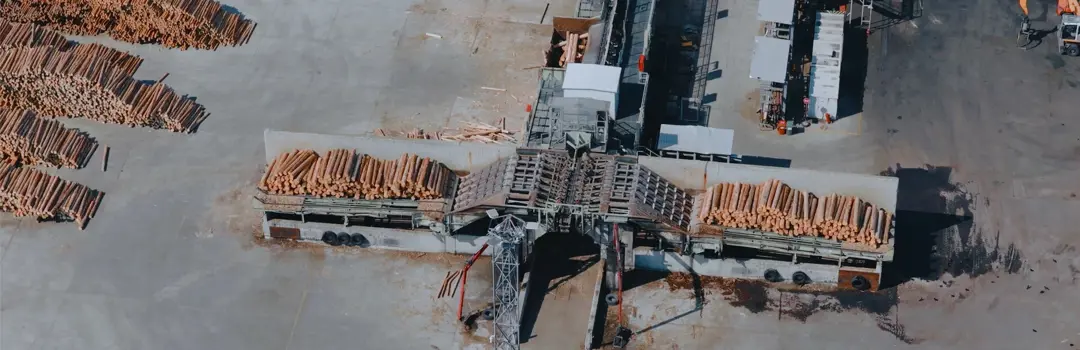
One of the most extensively documented examples of these patterns is the case of Phenix Lumber Co., an Alabama sawmill dubbed “the deadliest workplace in America” after an extensive Washington Post investigation revealed it had the highest rate of fatal workplace incidents per worker of any office or factory in the U.S. between 2019 and 2023.
Over the course of two decades, OSHA issued more than 180 citations and levied millions of dollars in fines against Phenix Lumber Co. and its owners. Investigators found the same conditions year after year: machines without guards, lockout/tagout procedures that were never followed, equipment in significant disrepair, and virtually no preventive maintenance.
In 2010, a 57-year-old worker died after his head was crushed between a steel beam and a 500-pound motor as he attempted to help a forklift operator guide it into place.
In 2015, worker injuries included a head wound, a broken ankle, a broken shin, and severe burns.
In early 2019, a 58-year-old worker was found dead on a sawmill catwalk.
In 2020, a 34-year-old night attendant lost his life while attempting to clear a jam in an auger. It jammed frequently, and workers were expected to climb inside a woodchip silo to clear it. Working alone, he entered the silo without the power fully shut down. The powerful equipment restarted, and he was killed.
In 2023, a 67-year-old supervisor climbed on top of an auger to unclog a wood chipper. The machine started while he was on it, and he was caught in the machinery and fatally injured. It was an almost identical scenario to the one that had killed the night attendant.
OSHA investigated and cited the company and its owners after these incidents, but it was powerless to shut Phenix Lumber down. The mill was finally forced to close not by federal safety regulators, but by Phenix City. When firefighters responded to the supervisor’s death, they noticed a plastic pipe connected to a fire hydrant on the property. Municipal investigators determined that the mill had been illegally tapping city water and owed nearly $3.8 million in unpaid water and sewage fees. The city issued a cease-and-desist order.
The conditions at the sawmill are examples of assumptions in action, and their deadly cost. A former longtime manager described the mill as having always been "a little bit slack" about safety. Safety guards were routinely left off machines, and tools were left on the ground. Another worker told the Washington Post that lockout/tagout was never used while he was there. No one used harnesses to prevent falls.
When unsafe practices like these go uncorrected long enough, they stop looking like deviations and start looking like the way things are done.
What Should Exist Instead of Assumptions
If a worker has to guess whether a situation is safe, the system has already failed.
The tools to prevent this are well established. Physical lockouts make it mechanically impossible for a machine to restart while someone is working on it. Visual indicators, such as lights, tags, and barriers, confirm whether a space is energized, occupied, or safe to enter. Mandatory atmospheric testing determines whether a tank or pit is safe before anyone goes inside. Audible alarms warn workers before equipment starts. Non-slip surfaces, guardrails, and secured covers protect workers from falls. Formal communication protocols for shift changes require documented sign-offs rather than verbal assurances.
OSHA requirements like machine guarding, lockout/tagout, fall protection, confined space entry permits, and walking-working surface standards all exist precisely because workers should never be in a position where their safety depends on correctly guessing the state of their environment.
The duty of implementing these requirements lies on the shoulders of employers. They are responsible for workplace safety, particularly in industrial workplaces like sawmills, factories, and refineries where hazards abound. This is true not in a general or abstract sense, but in a specific, legal, and enforceable one. They are responsible for identifying hazards, implementing controls, training workers, enforcing procedures, and maintaining the systems that keep people alive.
When those systems are absent or ignored, the door to assumptions is left wide open. And the next assumption may be someone’s last.