Federal Court Rules Government Liable for Reservoir Flooding During Hurricane Harvey
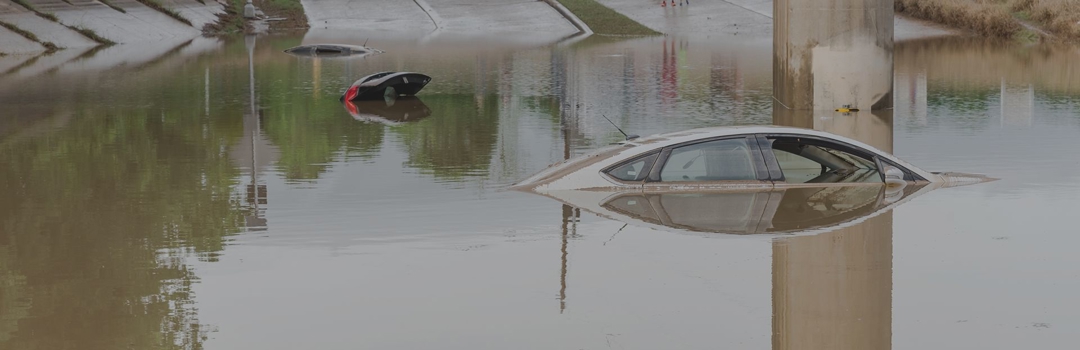
A federal judge has found the U.S. government liable for flooding that inundated homes and businesses downstream of the Addicks and Barker dams when the Army Corps of Engineers opened the reservoir gates during Hurricane Harvey in 2017. The ruling, issued this week by Senior Judge Loren Smith of the U.S. Court of Federal Claims, holds that the Corps' releases constituted a compensable taking under the Fifth Amendment of the United States Constitution—a decision with significant implications for potentially thousands of Houston-area property owners who have been waiting years for accountability.
The 48-page opinion found that the flooding caused both temporary and permanent damage to affected properties and concluded that the government’s decision to open the gates was not a response to any imminent structural threat, but the unwarranted application of operational procedure.
What the Dams Were Supposed to Do (& What Happened Instead)
The Addicks and Barker reservoirs were built by the Army Corps of Engineers in the 1940s as flood control infrastructure for the Houston area. When Hurricane Harvey stalled over the region in August 2017, it delivered record rainfall that drove reservoir levels toward mandatory release thresholds written into the Corps' operational procedures. Following that manual, the Corps opened the floodgates, dumping water onto downstream neighborhoods that had not flooded from Harvey’s rainfall alone.
The litigation that followed took nearly a decade to reach this point. The case wound through multiple courts, survived an appellate reversal that sent it back to Judge Smith for retrial, and was built around 12 test-case plaintiffs—11 homeowners and one business—selected to reflect the geographic range of downstream flooding.
The government’s position throughout was that the releases were necessary. That defense unraveled on the final day of trial, when Robert Thomas, the Corps' own chief of engineering, testified that there had been no significant threat to the structural integrity of either dam at the time the gates were opened. According to the plaintiffs' lead attorney, Richard Mithoff, there was no compelling reason to release the water when the Corps did. The court agreed.
What the Ruling Establishes
Judge Smith’s decision rests on a specific and consequential distinction: the flooding was not the unavoidable consequence of a historic storm. It was the direct result of the government following a procedure that directed it to release water at a level the reservoirs had not yet reached. That distinction—government action versus act of God—is the foundation on which the Fifth Amendment taking was found.
Under the Fifth Amendment, the government cannot take private property without just compensation. When a government decision, rather than natural forces, causes damage to private property, property owners have a constitutional right to recover for those losses. Judge Smith’s ruling affirms that right for downstream Harvey claimants.
The case now proceeds to a damages phase, in which the court will determine how much each of the 12 test-case plaintiffs is owed. Damages for those 12 cases alone are estimated at roughly $20 million. Mithoff represents 502 clients in total, and the full group of potential claimants could eventually number in the thousands. Once the damages phase concludes, the results from the 12 benchmark cases are expected to guide mediation and resolution of the remaining claims, though that process won’t begin until after a successful damages trial.
A Long-Awaited Reckoning
From the beginning, Harvey’s aftermath exposed two distinct failures: the decisions made by insurance companies in the weeks and months after the storm, and the decisions made by government officials in the hours before and during it. For communities downstream of Addicks and Barker, the second failure has often been the harder one to pursue, given that the government has substantial resources and the ability to delay litigation for years.
Our Hurricane Harvey claims attorneys at Arnold & Itkin have long argued that flood management officials bear real accountability for the damage Harvey inflicted on South Texas families and businesses. We’ve seen firsthand what it costs a family when their home is flooded without warning, when they receive no notice that floodgates are being opened upstream, and when they’re left to navigate competing claims against both their insurer and the government while trying to rebuild their lives.
Judge Smith’s ruling affirms what those families have known since August 2017: what happened to them was not simply an act of nature, but the result of deliberate choices. The people who bore the consequences of those choices deserve compensation.
If your property flooded downstream of the Addicks or Barker reservoirs during Hurricane Harvey, this is promising news. Federal courts have removed a major obstacle for thousands of flood damage claimants who’ve waited nearly a decade for justice. All that’s left is for the US government to honor those claims.
- Categories
- Insurance Claims