Hantavirus at Work: Cruise Ship Outbreak Pushes Hidden Hazard Back into Public View
For most Americans, hantavirus probably re-entered the news this month through coverage of the cruise ship outbreak that killed three passengers and triggered contact tracing across multiple countries. The strain involved in that outbreak, Andes virus, is the only hantavirus known to spread from person to person—a feature that explains how a single shipboard exposure could spiral into a multi-country investigation.
But for workers in agriculture, oilfields, construction, utilities, pest control, and building maintenance, hantavirus isn’t a story about a distant ship. It’s an occupational hazard that has killed Americans steadily and quietly since the early 1990s, and one that workplaces in the highest-risk industries have a long history of failing to recognize—or, in some cases, failing to disclose—until someone gets sick.
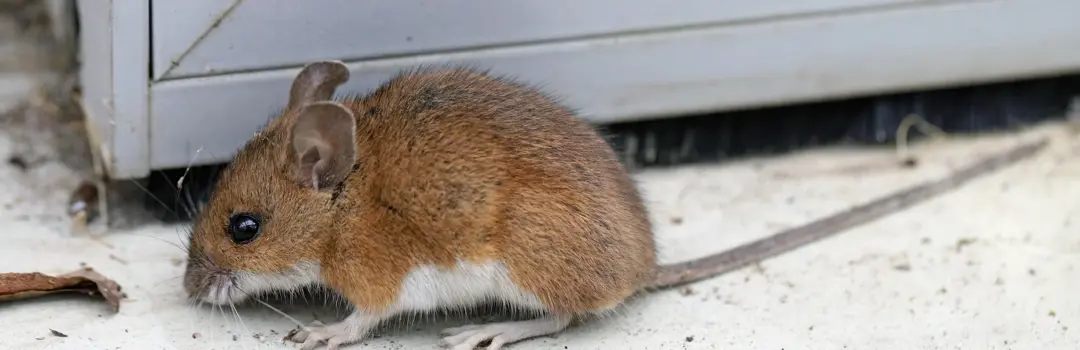
The Centers for Disease Control and Prevention has confirmed roughly 890 cases of hantavirus disease in the United States since 1993. Roughly a third of patients who develop hantavirus pulmonary syndrome die from it. The strain that drives most of these US cases, Sin Nombre virus, is carried by the deer mouse and shed in its urine, droppings, and saliva. Workers do not get infected by being bitten; they’re infected by breathing in microscopic particles of dried excreta that become airborne the moment something disturbs the dust.
That basic mechanism is why hantavirus is, at its core, a workplace problem hiding inside ordinary job duties.
What Happens When the Employer Knows & Says Nothing
In September 2019, a 38-year-old company man named Karl Schneider left his home in New Hampshire to work a hitch at a Terra Energy Partners drilling site in Western Colorado. He had spent close to fifteen years in offshore drilling and had been promoted to toolpusher—one of the highest-ranking jobs on a rig—before being recruited to the Colorado job in 2017. A few days into his hitch, he came down with what he thought was the flu and decided to work through it. Within a week of his arrival, he was in an emergency room, and a few hours later, he was dead.
The strain that killed Karl was Sin Nombre virus, the deer-mouse-borne hantavirus endemic to Western Colorado. He could not have contracted it at home in New Hampshire, which has never recorded a single hantavirus case in its history. He contracted it in housing his employer owned and operated, in a part of the country where the employer already knew the risk.
Deadly Risk Covered Up by the Employer
When Terra Energy Partners purchased the drilling assets that included that Colorado worksite, the previous owner handed them a detailed hantavirus safety procedure: prevention measures, symptom recognition, instructions about what to do at the first sign of flu-like illness. Terra Energy had been buying mouse traps for the worker housing for years. The workers had taken to competing over who could catch the most mice. None of them had ever been told that the rodents around their trailers might carry a disease that kills roughly a third of the people who get it, or that the flu they were shrugging off might be the first symptoms.
Arnold & Itkin represented Karl’s wife Laura and their children. After three years of litigation and a two-week trial, a jury returned a unanimous $209.2 million verdict against Terra Energy—$103.6 million in compensatory damages and $105.6 million in punitive damages, the latter intended to make sure no other family lost a husband or father the same way. The company had offered Laura $200,000 before trial.
Karl’s story is not unusual in its underlying mechanics. It is unusual only in how starkly the negligence was documented. The pattern, an employer that knew, workers who didn’t, and a hazard hiding inside ordinary tasks, repeats across the industries most exposed to hantavirus risk.
The Most Dangerous Day Is Often the First Day Back
The CDC’s published risk-reduction recommendations identify a specific scenario as one of the highest-probability exposure environments for hantavirus: occupying or cleaning a structure that has been closed, vacant, or seasonally inactive while rodents had the run of it.
These are the spaces where dried rodent excreta has had weeks or months to accumulate undisturbed, and where the first worker through the door is the one who stirs it into the air. A 2020 outbreak in Xi’an, China illustrates the pattern in unusually clear terms: nine construction workers contracted a related hantavirus illness after grading work on a new site disturbed long-established rodent burrows next to their dormitory. Investigators traced every one of the infections back to inhaled aerosols from disturbed excreta.
The American version of this scenario plays out every spring in agricultural buildings, every reopening of seasonal facilities, every demolition or renovation of a long-vacant structure, and, as Karl’s case showed, every time a remote field worksite is reopened for a new crew. The risk does not announce itself, and the worker who walks in first usually has no reason to think the dust is anything more than dust.
A Hazard You Cannot See Is Still a Hazard
One of the most consistent findings in the CDC’s hantavirus literature is that roughly one in three confirmed patients reports never having seen a mouse. The droppings, urine, and saliva that carry the virus dry, settle into the dust of an enclosed space, and become airborne the moment that dust gets disturbed. Sweeping a floor. Pulling boxes off a high shelf. Running compressed air through a piece of stored equipment. Vacuuming a crawl space. Hauling out old insulation. None of those tasks announces itself as a respiratory hazard, and most workers are never told they should be treated that way.
That invisibility is why hantavirus exposures so often happen in workplaces that would never have been flagged as biological-hazard environments. There is no warning sign on a barn door or ventilation requirement on a long-shut equipment shed. There’s no mandatory respirator policy for a custodian opening up a closed-off basement.
The hazard is real, but it is silent, and regulatory agencies have historically treated it that way too.
Prevention Is Genuinely Simple. The Failure Is in Doing It.
The protocols that protect workers from hantavirus are not exotic, expensive, or technically demanding.
What makes hantavirus a workplace problem isn’t that the prevention measures are hard. It is that they are inconsistently applied or skipped entirely. Sometimes it’s because no one has been assigned to assess biological hazards before work begins. Other times, it’s because the schedule doesn’t allow time to ventilate a space before crews enter. Sometimes, as the Schneider case made clear, it’s because the employer had the relevant safety information all along and failed to share it.
There is no hantavirus-specific OSHA standard. Enforcement falls back on the General Duty Clause, which requires employers to keep workplaces free of recognized hazards likely to cause serious harm or death, and on the sanitation standard, which requires employers to prevent rodent infestation and implement an effective extermination program when rodents are found. Those obligations exist; the problem is that they’re just routinely treated as someone else’s job until a worker ends up in an ICU.
What Workers & Their Families Should Know
Hantavirus pulmonary syndrome begins like the flu: fever, fatigue, muscle aches, headache. Within days, the cardiopulmonary phase can set in, and lung function can deteriorate within a few hours by that point. Anyone who has been working in a closed, dusty, or rodent-prone environment and develops flu-like symptoms in the days or weeks afterward should tell a clinician about the exposure directly.
Most physicians have never seen a case. The exposure history is often the only signal that distinguishes hantavirus from a respiratory virus that will pass on its own.
Workers who contract hantavirus on the job are generally entitled to file workers’ compensation claims, and surviving family members of workers killed by occupational hantavirus exposure may have additional civil remedies depending on the circumstances, particularly where, as in Karl Schneider’s case, an employer knew about the risk, had documentation of it in hand, and neglected to share it with the people working and sleeping in the affected environment.
Arnold & Itkin has been following the cruise ship outbreak closely and continues to track hantavirus exposure issues in the industries where US workers face the greatest risk. More information on hantavirus and worker safety is available for anyone with questions about an on-the-job exposure or illness.
The cruise ship deaths have made hantavirus a global headline for the first time in years. For the workers who have always lived closest to it—in barns, in attics, in crew trailers, in equipment sheds, in the first dusty room opened after a long quiet winter—that headline is overdue.
When a worker dies from an occupational illness their employer knew about and failed to disclose, the legal question goes beyond compensation. It's about whether the company is held accountable in a way that changes its behavior. Arnold & Itkin’s workplace wrongful death lawyers have represented families in cases where documented hazards were never shared with the workers most at risk. The firm has recovered more than $25 billion in verdicts and settlements since 2004 and handles cases across Texas and nationwide.
- Categories