Why Are Hundreds of Workers Crushed by Moving Machinery Each Year?
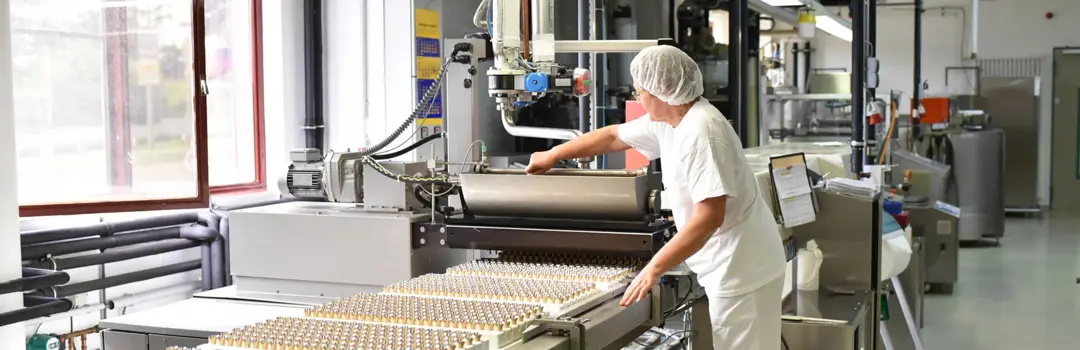
One of the worst types of industrial accidents occurs when a worker is caught and crushed between moving machinery. These incidents happen quickly, often involve complex rescue operations to free the trapped worker, and can cause life-altering injuries or death.
"Caught in or Between" Moving Machinery
In workplace safety terminology, "caught in or between" describes one of the most severe categories of industrial injury. It is also one of OSHA’s “Focus Four Hazards”—one of the four leading causes of construction fatalities nationwide. It refers to incidents in which a worker's body is compressed between two moving objects, between a moving object and a fixed surface, or is pulled into and crushed by a machine's moving parts.
The forces involved are immense. Industrial presses can exert hundreds of tons of pressure. Robotic arms move with precision and speed, but with no capacity to sense that a human being has entered their path. Forklifts weighing thousands of pounds can pin a worker against a wall, rack, or loading dock in an instant.
When a worker is caught between moving machinery, the injuries are often catastrophic: fatal chest compression, traumatic asphyxia (in which pressure on the torso prevents the lungs from expanding), crushed or severed limbs, internal organ damage, spinal injuries, and traumatic brain injuries. Medical literature describes crush injuries as causing a cascade of internal damage that can continue even after the pressure is released, including a condition called rhabdomyolysis, in which dying muscle tissue releases toxins into the bloodstream and can lead to kidney failure and death.
According to the Bureau of Labor Statistics (BLS), "contact incidents" is one of the leading categories of fatal workplace injuries in the United States every year, accounting for 756 worker deaths in 2024 alone. Within that category, workers crushed, caught, or compressed by “powered equipment” represent a significant share of the most serious and fatal incidents.
Types of Heavy & Powered Industrial Equipment
Crushing accidents can involve nearly any piece of heavy or powered industrial equipment. But certain machine types appear repeatedly in federal safety investigations.
Industrial Presses & Compactors
Mechanical and hydraulic presses are designed to apply enormous force to shape, cut, or compress materials. That same force, applied to the human body, is devastating. Workers' hands, arms, or torsos can be crushed between press dies when safety guards are missing, bypassed, or improperly calibrated. Compactors in waste and recycling facilities pose similar risks: workers who enter or reach into a compactor while it is active or not properly locked out can be caught and compressed.
Forklifts & Heavy Mobile Equipment
Forklifts are involved in roughly 73 worker fatalities per year, according to NSC's analysis of BLS data. Many of these deaths involve workers being pinned between a forklift and a wall, rack, trailer, or another vehicle. Because forklifts operate in tight spaces with limited sightlines, operators may not see a worker standing behind or beside the vehicle until it is too late. OSHA's powered industrial truck standard (29 CFR 1910.178) requires training, maintenance, and operational safety measures for all forklift operators.
Robotic Arms & Automated Systems
Industrial robots are increasingly common on factory floors, performing welding, assembly, material handling, and packaging tasks at high speeds. These machines operate within defined "work envelopes," and any worker who enters that space during operation risks being struck, pinned, or crushed. A 2024 study published in Applied Ergonomics analyzed OSHA severe injury reports and identified 77 robot-related accidents from 2015 to 2022, with crushing and pinning injuries included among the most common outcomes. OSHA's robotics hazard evaluation page catalogs multiple fatality investigations involving workers who were crushed by robotic platforms and mechanical arms.
One particularly alarming finding: 41 robot-related fatalities were documented in the U.S. between 1992 and 2017. As automation expands, safety must keep pace.
Industrial Doors, Gates & Lift Platforms
Powered doors, rolling gates, loading dock levelers, and vertical lift platforms can all create crushing hazards if workers are caught between the moving component and a fixed surface. These incidents may occur in warehouses and logistics facilities, where workers move frequently between zones with powered equipment. Unlike presses or robots, these machines are often overlooked as serious hazards, which can result in employers providing fewer safeguards and less safety training around them.
When (& Why) Crushing Accidents Happen
Maintenance and repair work is one of the highest-risk activities involving heavy machinery and powered equipment. A machine is shut down for service, but it is not properly locked out or de-energized. A coworker, unaware that someone is inside or behind the equipment, restarts it. The worker performing the repair is caught. This scenario is far too common in OSHA and NIOSH investigation reports alike, such as the November 2024 incident at a Clifton, New Jersey recycling facility, where a worker was crushed by a conveyor belt while attempting to clear debris from underneath.
Clearing jams and blockages is another common factor. In many workplaces, workers are expected to address these issues quickly, sometimes without any clear guidance on when a full shutdown is required, and how to proceed. Without established (and enforced) protocols for safely stopping equipment before workers intervene to clear a jam or blockage, the consequences can be devastating—and irreversible.
Startup and shutdown sequences create windows of vulnerability. Machines that cycle through startup or shutdown may move unpredictably, and workers who are positioning materials or making adjustments during these transitions may be caught.
Routine production work near moving equipment also contributes to crushing risks. Workers who are not directly operating a machine but are positioned within its range of motion, near a forklift path, or alongside a robotic cell, can be struck or pinned without warning.
In nearly all of these scenarios, a common thread emerges: the safety systems that should have prevented the incident were either absent, broken, bypassed, or not enforced.
Production pressure plays a role, too. When stopping a machine is considered a disruption to production rather than a safety requirement, workers may feel pressured to keep equipment running during tasks that should require a full shutdown and lockout/tagout procedures. That pressure is a product of the workplace culture that employers create and reinforce with actual policies as well as accepted, routine practices.
Old Machines, New Risks
Many factories, processing plants, and warehouses across the country still operate equipment that was built decades ago, before current safety standards were established.
Older machines often lack the safeguards that newer equipment includes by default: presence-sensing devices like light curtains and laser scanners, safety-rated control systems, interlocked guards, and pressure-sensitive mats that can detect a worker's presence and halt operation. Retrofitting older machines with these safeguards is possible, but it is expensive and stops production.
At the same time, newer automated systems introduce hazards that many workers have not been trained to recognize. Robotic work cells, automated guided vehicles, and computer-controlled manufacturing lines can move suddenly, change direction, or resume operation after a pause without warning. Traditional safety training may not adequately prepare workers for these environments, particularly when human workers are expected to collaborate alongside robotic systems rather than remaining fully separated from them.
The result is working conditions where a combination of aging infrastructure and new technology can endanger workers in different ways. Some employers choose not to invest in training and safety to manage these hazards, and it is their workers who bear the risk.
Federal Safety Standards to Prevent Machine Crushing Accidents
The OSHA standards that apply to crushing hazards are the same ones that appear on the agency's most frequently cited violations list year after year.
Machine guarding (29 CFR 1910.212) requires employers to install guards on any machine with moving parts that could injure a worker. Lockout/tagout (29 CFR 1910.147) requires that machines be fully de-energized, isolated, and locked before any maintenance or servicing work begins.
OSHA estimates that lockout/tagout compliance alone prevents approximately 120 deaths and 50,000 injuries every year, yet both machine guarding and lockout/tagout standards remain among the most violated in the country. In 2024 alone, machine guarding violations totaled 1,541 citations, and lockout/tagout violations reached 2,655 citations.
When OSHA investigates a fatal crushing incident, the findings are almost always familiar. Guards were missing or had been removed. Lockout/tagout procedures were not followed. Workers were not adequately trained. The hazard had been identified before, sometimes through a previous injury on the very same machine, and nothing was done. In a 2024 case in Alabama, for example, a supervisor at a GE Appliances factory died after being caught in running machinery. OSHA's investigation found that the company had allowed workers to bypass safety doors and skip required safety measures. The agency issued the maximum penalty it could legally recommend.
The rules exist, and the hazards are known, but employers continue to fall short.
Surviving a Machine Crushing Injury
Not all crushing accidents are fatal, but survival does not mean recovery.
Workers who survive being caught between moving machinery often face amputations, permanent nerve damage, chronic pain, and loss of mobility. Crush injuries to the chest and torso can result in long-term respiratory impairment and cardiovascular complications. Internal injuries, including organ damage and conditions like rhabdomyolysis, may require emergency surgery, dialysis, or extended intensive care. Some survivors develop acute compartment syndrome, a condition in which swelling within the muscles cuts off blood flow and can lead to tissue death if not treated quickly. Returning to work, if at all possible, may require months or years of physical rehabilitation.
The psychological toll is significant as well. Many crush injury survivors experience post-traumatic stress disorder, depression, and anxiety, particularly if they were conscious while trapped.
For families, a serious crushing injury can mean lost income, mounting medical debt, and the long-term burden of caregiving. The financial and emotional impact extends far beyond the moment of the accident.
Common Questions & Helpful Insight
How quickly can a crushing accident become fatal?
In many cases, seconds. Industrial presses cycle in fractions of a second. Forklifts can pin a worker against a wall before either the operator or the victim has time to react. Chest compression can cause fatal traumatic asphyxia in under five minutes.
Are robotic systems safer than traditional machinery?
Not necessarily. While robots can remove workers from some hazardous tasks, they introduce new risks. Robotic arms move at high speeds within defined work envelopes, and workers who enter those zones during operation can be struck or pinned. Collaborative robots ("cobots") are designed to work alongside humans, but even these systems require proper risk assessment and safeguards.
What should a coworker do if someone is trapped by machinery?
Activate the nearest emergency stop immediately. Do not attempt to move the trapped person unless they are in immediate danger of further harm (such as a fire). Call 911 and provide as much detail as possible about the situation. Do not attempt to restart or reverse the machine unless cleared by emergency personnel and trained to do so safely.
Are employers required to have emergency stop systems on all machinery?
OSHA requires that machinery be equipped with accessible stop controls. For certain equipment, such as conveyor systems and power presses, specific emergency stop requirements apply. However, the broader obligation under OSHA's General Duty Clause is that employers must provide a workplace free from recognized hazards that are likely to cause death or serious injury.
Who is responsible when a worker is crushed by machinery?
Employers have the primary legal obligation to provide a safe workplace, including proper machine guarding, lockout/tagout procedures, and worker training. Depending on the circumstances, equipment manufacturers, contractors, or maintenance providers may also bear responsibility if defective design, improper installation, or inadequate servicing contributed to the incident.
These Machines Are Designed to Apply Force
Every machine discussed in this article has one thing in common: it was built to move and exert force. The question is not whether these machines are powerful enough to kill. They are. The question is whether the people responsible for operating, maintaining, and overseeing them are doing enough to make sure that power is never applied to a human being.