Texas Data Centers By the Numbers
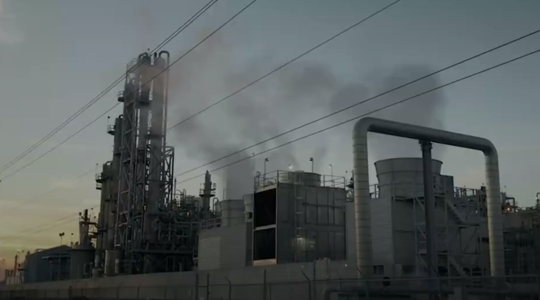
Texas is currently the epicenter of one of the most significant construction booms in modern American history. Fueled by artificial intelligence, cloud computing, and the insatiable demand for digital infrastructure, data centers are going up across the state at historic rates. As of early 2026, Texas leads the nation with 140 data centers under construction, more than any other state. Unfortunately, it’s the workers building and maintaining those facilities who are paying a price that, in many cases, never makes the headlines.
At a glance
The Texas Data Center Boom
National rank
#1
Texas leads the nation in data centers currently under construction
Under construction
140
Data centers currently being built in Texas as of early 2026
Already operating in Texas
300+
Data centers currently operational across the state
Projected U.S. spending
$425B
Projected U.S. data center average spending in 2025
Monthly construction starts
$14B
Value of U.S. data center construction starts in July 2025
National vacancy rate
1%
National data center vacancy at end of 2025; second consecutive year at a historic low
Sources: Aterio via Visual Capitalist (March 2026); Network Installers; JLL
Some may assume data center work is safe, but these facilities see some of the most dangerous conditions in industrial construction: extreme high-voltage electrical systems, arc flash hazards, heavy equipment, confined spaces, toxic chemical exposure, and relentless pressure to meet aggressive deadlines. Workers in Texas and nationwide have been electrocuted, crushed by vehicles, struck by falling objects, and killed by failures that were entirely preventable. If you suffered a data center accident in Texas, you may have more legal options than you realize.
Data Centers: The Physical Backbone of the Internet
A data center is a large, purpose-built facility that houses the computer systems, servers, storage hardware, networking equipment, and supporting infrastructure used to process, store, and distribute data. They are the physical backbone of the internet, the buildings that make cloud computing, streaming services, financial transactions, healthcare records, and artificial intelligence possible.
Data centers are not small buildings. A hyperscale data center, the kind being built across Texas by companies like Amazon, Google, Microsoft, Oracle, and Meta, can span hundreds of thousands of square feet. Oracle's Texas-based Stargate buildout, announced in January 2025, involves individual buildings of half a million square feet. Digital Realty's campus in Garland is planned to total more than one million square feet.
Inside those walls are thousands of servers generating enormous amounts of heat, requiring massive cooling infrastructure, industrial electrical systems operating at voltages far beyond what most workers encounter in other industries, backup power systems including diesel generators and large-scale battery arrays, and miles of cabling. Keeping all of it running requires a large, skilled, and physically active workforce, and building it requires an even larger one.
Workers & Roles in Data Centers
The data center industry employs two distinct categories of workers: those who build the facilities and those who operate them. Both groups face serious physical risks, with data center work injuries affecting both.
Construction & Build-Out Workers
The construction phase of a data center project involves a complex network of contractors and subcontractors working together, often with tight turnarounds and deadlines.
Common types of workers on these sites include:
- Electricians/electrical helpers, who install and connect the high-voltage systems that power thousands of servers
- Ironworkers and structural steel workers, who erect the framework of massive warehouse-scale buildings
- HVAC and mechanical technicians, who build and install the cooling systems that prevent server overheating
- Equipment operators, who run cranes, forklifts, articulating trucks, and other heavy machinery throughout the site
- General laborers and construction workers, who perform foundational work, concrete pours, and support tasks
- Welders, who work throughout the structural and mechanical phases
- Commissioning engineers, who test systems as they come online, often working close to energized equipment
As one industry analysis notes, the temporary construction workforce on large data center projects often dwarfs the permanent workforce that will eventually run the facility.
Operations & Maintenance Workers
Once a data center is operational, the permanent workforce includes:
- Data center technicians, who install servers, manage hardware upgrades, troubleshoot equipment failures, and work in racks of live electrical equipment on 24/7 shift schedules
- Facility engineers, who monitor the physical infrastructure, including the site's generators, power supply units, and battery backup systems
- Maintenance technicians, who routinely inspect equipment, test it for issues, and make necessary repairs throughout the facility
- Cooling system technicians, who manage CRAC/CRAH units, cooling towers, and refrigerant systems, carrying out inspections, testing, and repairs
- Security staff, who control access to the facility and its various components, as well as monitor the site for safety and personnel risks
- Network engineers and IT specialists, who work to manage the software and connectivity layers of the center's infrastructure
These workers typically operate in an environment that never stops running. Data centers are designed for continuous uptime, which means maintenance and repairs often happen while systems remain partially energized, increasing the risk of exposure to live electrical hazards.
What Types of Accidents Happen at Data Centers?
Data centers contain many hazards, both during construction and during ongoing operations. The risks to workers are serious, varied, and sometimes fatal. Some of the most common are outlined below.
Know the risks
The Hidden Dangers of Data Center Work
Electrocution
High-voltage systems, improperly grounded equipment, and live work expose workers to life-threatening electrical contact.
Arc Flash
Electrical faults can trigger plasma explosions reaching 35,000°F, far hotter than the surface of the sun.
Struck-By / Heavy Equipment
Cranes, articulating trucks, and forklifts operate in tight spaces with limited visibility, often near workers on foot.
Falls from Heights
Scaffolding, elevated platforms, scissor lifts, and rooftop work present fall hazards throughout construction and operations.
Fire & Explosion
Battery thermal runaway, electrical faults, and fuel systems create multiple ignition sources throughout the facility.
Chemical Exposure
Refrigerants, battery acids, fire suppression agents, and construction solvents can cause respiratory damage and chemical burns.
Confined Spaces
Underfloor vaults, cable corridors, and restricted-access areas risk oxygen deficiency, toxic gas buildup, and entrapment.
Noise / Hearing Loss
Continuous industrial noise from server fans, cooling towers, and CRAC units can exceed OSHA's permissible exposure limits.
Sources: OSHA; NFPA 70E; U.S. Bureau of Labor Statistics
Electrocution & Electrical Burns
Electricity is the central hazard of data center work, both during construction and in ongoing operations. Data centers require extraordinary amounts of power; a single hyperscale facility can consume as much electricity as a small city. The electrical systems that supply and distribute that power often operate at voltages that can be immediately life-threatening on contact. Workers can be electrocuted through direct contact with energized equipment, through failures in lockout/tagout procedures, through improperly grounded systems, or through equipment that was incorrectly installed by subcontractors.
In June 2025, a 25-year-old electrical helper died after being electrocuted on a scissor lift at a QTS data center under construction in Fayetteville, Georgia. According to the wrongful death lawsuit filed by his family, an electrical subcontractor had installed the wrong fittings on a temporary power system and failed to properly ground the cables, in violation of the National Electrical Code. The metal conduit that should have been inert was energized. The worker was electrocuted for several minutes before losing consciousness. He died four days later.
Arc Flash Incidents
Arc flash is one of the most dangerous and underappreciated hazards in data center work. An arc flash occurs when an electrical fault causes a sudden discharge of energy between conductors, creating a plasma fireball that can reach temperatures of 35,000 degrees Fahrenheit, significantly hotter than the surface of the sun. This puts workers at significant risk of severe bodily injury and death.
An estimated 30,000 arc flash incidents occur each year in the United States, resulting in approximately 7,000 burns, 2,000 hospitalizations, and 400 deaths annually. Data centers are particularly susceptible because of their high-density power infrastructure. Even experienced electricians can be seriously burned or killed if they are working near energized panels without proper arc flash protective equipment, or if the facility's electrical systems have not been accurately assessed for arc flash risk.
Struck-By & Caught-In Accidents
Data center construction sites are active with heavy equipment: cranes, loaders, articulating trucks, dump trucks, forklifts, and more. These vehicles operate in tight spaces with limited visibility, often near workers on foot, and documented accidents in Texas data centers have proven that the consequences can be fatal.
In October 2025, a 28-year-old subcontractor for Turner Construction was killed at the construction site of Rowan Digital Infrastructure's superscale data center in Medina County, Texas, after being struck by an articulating truck. He was pronounced dead at the scene. Construction was halted, OSHA was notified, and an investigation was opened.
Falls from Heights
Falls remain the leading cause of death in construction nationally, and data center projects are no exception. Workers perform tasks on scaffolding, elevated platforms, rooftops, and scissor lifts throughout both the construction and operational phases. Without adequate fall protection, edge guarding, or proper equipment maintenance, falls from even moderate heights can lead to catastrophic injuries or fatalities.
Fires & Explosions
Fire is an ongoing risk in operational data centers. The combination of dense cabling, high-voltage electrical systems, lithium-ion battery arrays, and diesel backup generators creates multiple potential ignition sources. Lithium-ion batteries, increasingly common in UPS (uninterruptible power supply) systems, can undergo thermal runaway, generating toxic gases, hydrogen accumulation, and fires that are difficult to extinguish.
Making matters worse, traditional water-based fire suppression systems are often replaced in data centers with chemical agents like FM-200 or Novec 1230. While these agents are meant to suppress fires, they can displace oxygen, posing their own risks to workers who are caught in a suppression event without warning.
Chemical Exposure
Data centers use a range of hazardous substances that workers can be exposed to during both construction and operations. These include refrigerants in cooling systems, cleaning solvents, battery chemicals (including sulfuric acid in lead-acid UPS systems), fire suppression agents, epoxies and adhesives used during construction, and the chemical off-gassing that occurs when new equipment is first powered on.
Exposure to these substances without proper training, handling protocols, or personal protective equipment can cause respiratory damage, chemical burns, and long-term health effects. It is critical that companies provide workers with adequate training and protection to help reduce or eliminate the risk of toxic exposure, particularly in environments like data centers, where these hazards are especially prevalent.
Confined Space Hazards
Data centers contain numerous confined spaces: underfloor areas beneath raised flooring systems, cable management vaults, utility corridors, and equipment rooms with restricted entry and exit. Workers who enter these spaces without proper confined space entry procedures, atmospheric monitoring, or attendants risk oxygen deficiency, toxic gas buildup, engulfment, and entrapment.
Ergonomic Injuries & Musculoskeletal Damage
Data center technicians routinely lift and install heavy server equipment; individual servers can weigh 60 to 80 pounds, often moved in awkward positions within tight rack spaces. Repetitive motion, heavy lifting without adequate equipment, and sustained work in cramped conditions can contribute to musculoskeletal injuries that may become permanently disabling.
Noise-Induced Hearing Loss
Server farms and cooling systems generate continuous noise that can exceed OSHA's permissible exposure limits. As AI-driven data centers increase their server density, the noise generated by server fans, cooling towers, and CRAC/CRAH units intensifies. Workers who spend significant time in these environments without hearing protection are at risk for permanent hearing loss.
How Common Are Data Center Accidents?
The data center industry has grown so rapidly that its safety record is still coming into full view. Unlike established industrial sectors with decades of OSHA data, data centers are a relatively new type of workplace, and the current construction boom has brought an influx of new contractors, many of whom lack deep experience with the specific hazards these facilities present.
What the available data suggests is concerning. Two Amazon data centers in Jerome Township, Ohio, made 84 calls to firefighters in roughly four years, about two emergency calls per month. Two workers also died during construction at those sites. Multiple data center construction workers have been killed in Texas alone over just the last two years, including at sites in Medina County and Haskell County. And the wrongful death lawsuit filed in connection with the data center electrocution in Georgia illustrates how preventable failures can harm or even kill workers.
Industry safety analysts have identified several structural reasons why data center projects are especially hazardous:
- Scale and speed: The current boom in data centers is driven, in large part, by relatively new demand from artificial intelligence. It’s a demand that hyperscalers are racing to meet. Project timelines are often compressed, and workers may be pressured to move faster than is safe.
- Contractor layering: Large data center projects typically involve a developer, a general contractor, and dozens of specialty subcontractors. Each layer creates opportunities for safety protocols to be lost in translation and for accountability to be diffused across multiple parties.
- Inadequate specialization: With an influx of new contractors entering the data center construction market, some firms may lack the specific expertise required to manage the unique electrical and mechanical hazards these facilities present.
In Texas, workers who are injured in data centers face additional obstacles. Texas is the only state in the country where employers are not required to carry workers' compensation insurance. Smaller specialty subcontractors scaling up to meet data center demand sometimes operate without coverage at all, creating financial exposure that can reach all the way up to the general contractor and developer.
Who Is Liable When a Data Center Worker Is Injured?
One of the most important questions injured workers and their families ask is, Who is responsible? At a data center construction or operations site, the answer is rarely straightforward, and companies can sometimes exploit that complexity in an attempt to avoid accountability. A Texas data center accident attorney from Arnold & Itkin can help identify every party that may share liability.
Who can be held responsible
The Data Center Liability Chain
Level 1
Developer/Owner
Sets the project timeline, budget, and overall safety culture; examples include Amazon Web Services, Microsoft, Google, QTS, Digital Realty, and Rowan Digital Infrastructure.
Level 2
General Contractor
Manages all site activity and safety protocols. Under Texas law, a general contractor can be held liable when it retained control over the work, knew about a dangerous condition, and failed to act.
Level 3
Specialty Subcontractors
The direct employers of most tradespeople on site—electricians, ironworkers, HVAC technicians, and others. Their negligence frequently traces back to conditions and pressures set by those above them.
Level 4
Equipment Manufacturers & Suppliers
Companies that designed, manufactured, or supplied defective equipment, tools, or safety gear. When a product failure contributes to an injury, the manufacturer may be directly liable regardless of how careful the worker was.
Level 5
Property Owners
In some cases, the entity that owns the actual facility where an injury occurs carries independent liability for dangerous conditions or hazards on their property.
Important
Multiple parties in this chain can share liability. Texas law allows injured workers and families to pursue claims against all negligent parties, not just the direct employer.
Source: Texas Civil Practice & Remedies Code
Knowing who is liable for a data center accident or injury is especially important for Texas workers, as the state does not require employers to carry workers’ compensation. If you are injured while working at a data center, you are likely not entitled to no-fault workers’ comp benefits. Instead, you will need to pursue a third-party work injury claim against the liable party or parties.
Third-Party Work Injury Claims & What They Mean for You
In Texas, if your employer carries workers' compensation insurance, the workers' comp system typically limits what you can recover from your direct employer. It does not, however, limit claims against other parties whose negligence contributed to your injury. These are called third-party claims, and they often allow injured workers to pursue the full range of damages, including pain and suffering, lost earning capacity, and in egregious cases, punitive damages.
If your employer is a Texas non-subscriber, meaning they have opted out of the workers' compensation system, your legal options may be even broader. Non-subscribing employers cannot use several standard defenses in personal injury cases, which means injured workers are often in a stronger position to recover full compensation. This is where the help of an experienced work injury lawyer becomes critical.
How Our Texas Data Center Injury Attorneys Can Help
Building a strong data center accident case requires an in-depth understanding of the state’s workers’ compensation and third-party work injury laws. It also hinges on critical evidence, much of which must be preserved quickly and carefully to support a strong claim.
In many work injury cases, the most important evidence includes:
- OSHA investigation records and inspection reports
- The general contractor's safety plan and daily logs
- Subcontractor contracts and scope-of-work agreements
- Photographs and video from the accident scene
- Witness statements from coworkers and others
- Medical records documenting the nature and severity of injuries
- Equipment maintenance and inspection records
- Code compliance documentation (where appropriate)
Evidence disappears quickly at construction sites. Conditions change, and surveillance footage is routinely overwritten within weeks. This is why it is so important to speak to data center accident lawyer in Texas as soon as possible. If you or a loved one has been hurt at a Texas data center, the time to act is now.
Your Rights After a Data Center Accident in Texas
If you were injured, or if you lost a family member, at a Texas data center construction or operations site, you have rights that are worth fighting for. Here’s what you need to know.
You have two years to file a third-party injury claim.
Texas has a two-year statute of limitations for most personal injury and wrongful death claims. Missing that deadline can permanently eliminate your right to seek compensation. Evidence at construction sites can disappear within days, so speaking with a Texas data center accident attorney as soon as possible is important.
Workers' compensation is not the whole picture.
Workers' compensation, when it applies, provides limited benefits and prohibits suing your employer directly. It does not, however, prevent claims against every other party whose negligence contributed to your injury. A skilled attorney can identify all available avenues for recovery and pursue the full value of your case.
Families have rights, too.
Texas wrongful death law allows spouses, children, and parents of a deceased worker to bring claims for the loss of financial support, loss of companionship, and the grief caused by their loved one's death. These cases require thorough investigation and attorneys who are deeply familiar with the state’s wrongful death statute.
Serious Injuries Deserve Serious Representation
Data center accident injuries are often catastrophic, ranging from spinal cord damage to traumatic brain injuries, severe burns, amputations, and, in the worst cases, death. The companies and insurers on the other side of these cases have significant resources and experienced legal teams. You should, too.
Arnold & Itkin has spent decades fighting for workers who were injured or killed when the companies responsible for their safety failed them. We have recovered more than $25 billion for our clients, a number built case by case, verdict by verdict, against some of the largest and best-defended companies in the industrial world.
We take data center accident cases on a contingency fee basis, which means you pay nothing unless we win. We only get collect fees if we recover compensation for you. Our Texas data center accident lawyers can speak with you at no cost, review your case for free, and tell you honestly what options you may have.
Texas data center workers deserve better than the lax safety culture too many of these projects are producing. If you or someone you love was injured while working in a data center or on a data center build, we are ready to hold the responsible parties accountable. No matter what.
Talk to a data center injury lawyer in Texas today; call (888) 493-1629 or contact us online to schedule a completely free consultation.